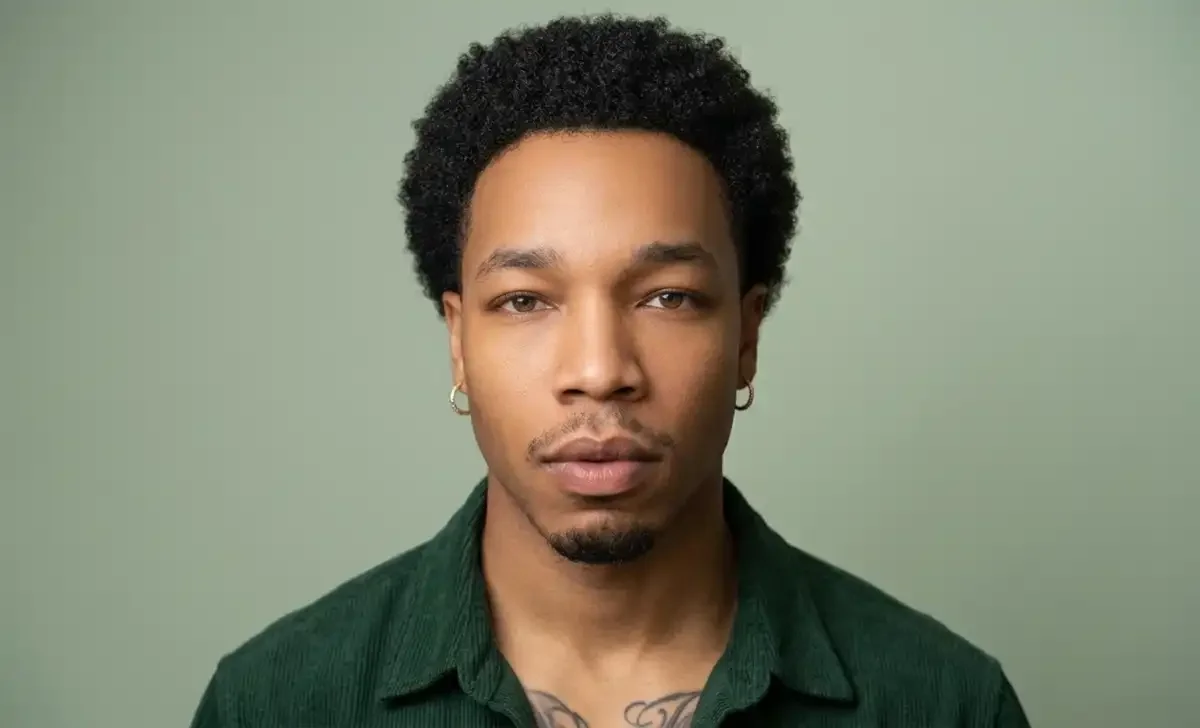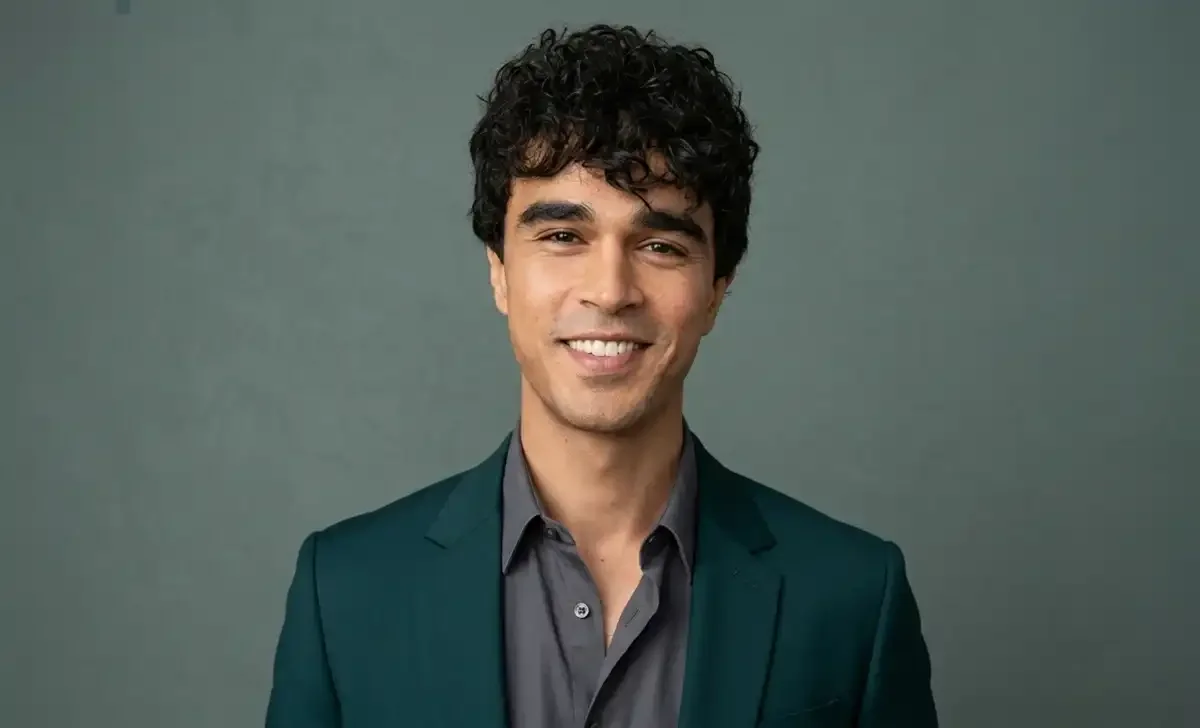
If you've never heard the name Abubakr Ali before, don't worry — you're about to. He's one of those actors who doesn't chase the spotlight, but somehow the spotlight keeps finding him anyway. You might know his face from Billy Porter's Anything's Possible, or from smaller but memorable spots on Power Book II: Ghost and Law & Order: Organized Crime. If you're more of a theater person, though, chances are you first clocked him on an Off-Broadway stage, doing the kind of quiet, controlled work that makes an entire room lean forward.
Here's the truth: I didn't plan on writing about Abubakr Ali. But once I started digging into his career, I couldn't stop. He's not an actor who's trying to be famous. He's an actor who seems to be trying to be good — and those aren't always the same goal in this industry.
This guide covers who Abubakr Ali is, his path from Yale to the screen, his full list of movies and TV shows, the real story behind the Netflix Grendel project, and what he's working on right now.
Who Is Abubakr Ali?
Abubakr Ali is an Arab Muslim American actor and filmmaker who's built his career on choosing projects that actually mean something to him, rather than whatever role pays the most or gets the most buzz. Public details about his childhood and early life are pretty limited — he tends to keep the focus on his work rather than his personal story, which honestly feels consistent with everything else about how he carries himself.
What comes through clearly, though, is his training. Serious, disciplined, thoughtful. That shows up in how he talks about acting and in the choices he's made since graduating.
From Yale to the Spotlight
Ali graduated from the Yale School of Drama in 2019, in the same class as playwright Jeremy O. Harris. That program has a reputation for turning out actors who treat the craft with real rigor, not actors who are just waiting to get discovered. You can feel that discipline in how Ali approaches his roles — there's nothing thrown-together about his performances.
After Yale, the film and TV offers came fairly quickly. He picked up guest spots on The Walking Dead: World Beyond, Katy Keene, and Little Voice. Then came the role that really put him on people's radar: Khal in Billy Porter's directorial debut, Anything's Possible, which premiered at the 40th Anniversary Outfest Los Angeles LGBTQ+ Film Festival.
In the film, Khal falls for a classmate named Kelsa, played by Eva Reign, who happens to be trans. It's the kind of role that could've easily turned into a message movie or a box-ticking exercise. Ali didn't let that happen. He's described the role as being about honoring that first, honest impulse of love — no walls, no judgment attached to it. When you hear him talk about it, it doesn't sound like a rehearsed press line. It sounds like something he actually believes.
That same instinct — training that takes the work seriously without taking itself too seriously — is something you also see in actors like Lewis Gribben, who's carved out a similar reputation for picking roles that stretch him rather than roles that just look good on a poster.
Abubakr Ali Movies and TV Shows
Instead of making you dig through paragraphs to piece together his résumé, here's a clean rundown of his key credits so far:
- The Walking Dead: World Beyond — guest role
- Katy Keene — guest role
- Little Voice — guest role
- Anything's Possible (2022) — lead role as Khal, directed by Billy Porter, streaming on Prime Video
- Power Book II: Ghost — recurring role
- Law & Order: Organized Crime — recurring role
- Grendel (Netflix, announced 2021) — cast as the lead; series never moved forward
- This Jungo Life — co-director
- Toros (Second Stage Theatre) — stage role
- Dakar 2000 (Manhattan Theatre Club, 2025) — lead role as Boubs
- A House of Dynamite (Kathryn Bigelow, in production/released) — cast member
- Selected Shorts at Symphony Space — live storytelling performances
This is a career built in layers — screen work, stage work, and behind-the-camera work, all stacked on top of each other rather than one replacing another.
The Grendel Story, Explained
In September 2021, Ali became entertainment news when he was cast as the lead in Netflix's planned adaptation of Grendel, based on the Dark Horse comic books by Matt Wagner. That casting made him the first Arab Muslim man to lead a screen comic book adaptation. It was a genuinely big deal — the kind of casting decision that opens a door nobody else had walked through before.
Then the project quietly fell apart. Netflix abandoned the series before it moved forward, and that's really all the public record shows. No dramatic scandal, no detailed explanation — it just didn't happen.
It's worth sitting with that for a second. The casting mattered. It signaled something. But when a project gets shelved before it reaches an audience, you have to ask: how much did the moment actually change, beyond the headline? I don't think there's a clean answer. The door opened. Whether anything walked through it yet is a different question — one Ali's later career choices seem to be answering slowly, on his own terms, project by project.
If you're the kind of reader who follows how young actors carry a big, high-profile setback and keep building anyway, it's a similar story to what you'll find with Arty Froushan, another actor whose early breaks didn't always play out as planned but never derailed the bigger picture.
Representation, On His Own Terms
Ali doesn't talk about representation like it's a talking point. He's said, more than once, that a central question for him — personally and professionally — is how he can use whatever privilege he has to lift up the people around him. It's not a flashy sentence, and it's not the kind of thing actors usually say in interviews. But when someone repeats an idea like that across several years and backs it up with actual choices — like co-directing a documentary made with refugees — it stops sounding like a talking point and starts sounding like an actual principle he's operating by.
That's really the throughline of his career. He's not just accepting roles that happen to be about representation. He's making decisions, on and off camera, that put that value into practice.
Returning to the Stage: Dakar 2000 and Toros
After a stretch of screen-focused work, Ali made a deliberate move back to theater. He appeared in Toros at Second Stage Theatre in New York, then landed the lead in the world premiere of Dakar 2000 at Manhattan Theatre Club.
Dakar 2000 is a two-character thriller from Rajiv Joseph, a Pulitzer Prize finalist best known for Bengal Tiger at the Baghdad Zoo. Directed by May Adrales, the play follows a Peace Corps volunteer in Senegal on the eve of Y2K who gets pulled into something much bigger by a State Department operative. Ali plays the volunteer, Boubs, opposite Obie Award-winner Mia Barron.
What's genuinely interesting is how much the role shifted during previews. After the second preview, Boubs basically transformed overnight — from a loud, arrogant, streetwise character into someone with a much quieter, more unsettling edge, angelic on the surface with something darker underneath. That's the kind of overnight rewrite that would rattle most actors. Ali called it "so much fun" and mentioned his New Year's resolution that year was to work on something where the story mattered more than his own performance. Letting go of control like that, mid-run, isn't easy. It's the kind of flexibility that separates actors who are good from actors who are genuinely compelling to watch — a quality that also shows up in stage-trained performers like Dimitri Abold, who's built a similar reputation for adapting on the fly without losing the thread of a character.
This Jungo Life: The Documentary
One of the most overlooked parts of Ali's résumé is This Jungo Life, a documentary he co-directed and shot collaboratively with refugees using mobile phones. The film looks at the lived experience of migrants in makeshift camps, and the way it's built matters just as much as the subject: the people in the film had direct authorship over how their own stories got told, rather than having a filmmaker impose a narrative from the outside.
That approach lines up almost perfectly with everything Ali has said about privilege and uplift. It's not a side project disconnected from his values — it's one of the clearest examples of those values actually being put into action.
A Quick Timeline
- 2019 — Graduates from the Yale School of Drama
- 2019–2021 — Guest roles on The Walking Dead: World Beyond, Katy Keene, and Little Voice
- 2021 — Cast as the lead in Netflix's Grendel; project later shelved
- 2022 — Anything's Possible premieres at Outfest Los Angeles
- 2023–2024 — Recurring work on Power Book II: Ghost and Law & Order: Organized Crime
- 2025 — Stars in Dakar 2000 at Manhattan Theatre Club, following Toros at Second Stage
- 2026 — Appears in Kathryn Bigelow's A House of Dynamite, continues stage work, and performs with Selected Shorts
What's Next for Abubakr Ali
As of mid-2026, Ali is balancing A House of Dynamite, directed by Kathryn Bigelow, alongside his run in Dakar 2000. He's also been showing up for live storytelling nights with Selected Shorts at Symphony Space, sharing a bill with performers like Becca Blackwell and Zach Grenier. And if you missed Anything's Possible the first time around, it's still streaming on Prime Video.
There's a clear pattern in how he picks projects. He keeps gravitating toward work that's either socially meaningful, artistically ambitious, or both. He's not building a career around the biggest paycheck available. He's building one that actually reflects what he cares about — which, in an industry built on quick wins, is a slower and honestly harder path to choose.
Final Thoughts
Abubakr Ali isn't the kind of actor who's trying to be everywhere at once. He's the kind who shows up, does careful work, and lets that work speak louder than any headline could. Between his stage roles, his screen credits, and projects like This Jungo Life, there's a real thread running through his career — one built on intention rather than noise. Whatever comes next for him, it's a safe bet it'll be chosen for a reason.
Frequently Asked Questions
Who is Abubakr Ali?
Abubakr Ali is an Arab Muslim American actor and filmmaker, a 2019 graduate of the Yale School of Drama, known for his work in film, television, and theater — including Anything's Possible, Dakar 2000, and the shelved Netflix series Grendel.
What movies and TV shows has Abubakr Ali been in?
His screen credits include Anything's Possible, A House of Dynamite, guest roles on The Walking Dead: World Beyond, Katy Keene, and Little Voice, and recurring roles on Power Book II: Ghost and Law & Order: Organized Crime.
Was Abubakr Ali really the first Arab Muslim to lead a comic book adaptation?
Yes. His 2021 casting as the lead in Netflix's Grendel made him the first Arab Muslim man to lead a screen comic book adaptation. The series was later abandoned by Netflix before production moved forward, so the show itself never reached audiences — though the casting milestone still stands.
What is Abubakr Ali working on now?
As of 2026, he's appearing in Kathryn Bigelow's A House of Dynamite while also starring in Dakar 2000 on stage, plus occasional live storytelling appearances with Selected Shorts.
Where did Abubakr Ali study acting?
He trained at the Yale School of Drama, graduating in 2019.
Has Abubakr Ali done theater work?
Yes — his stage credits include Toros at Second Stage Theatre, Dakar 2000 at Manhattan Theatre Club, and live readings with Selected Shorts at Symphony Space.
This article is based on publicly available information as of mid-2026 and may not reflect the most recent updates to Abubakr Ali's career.