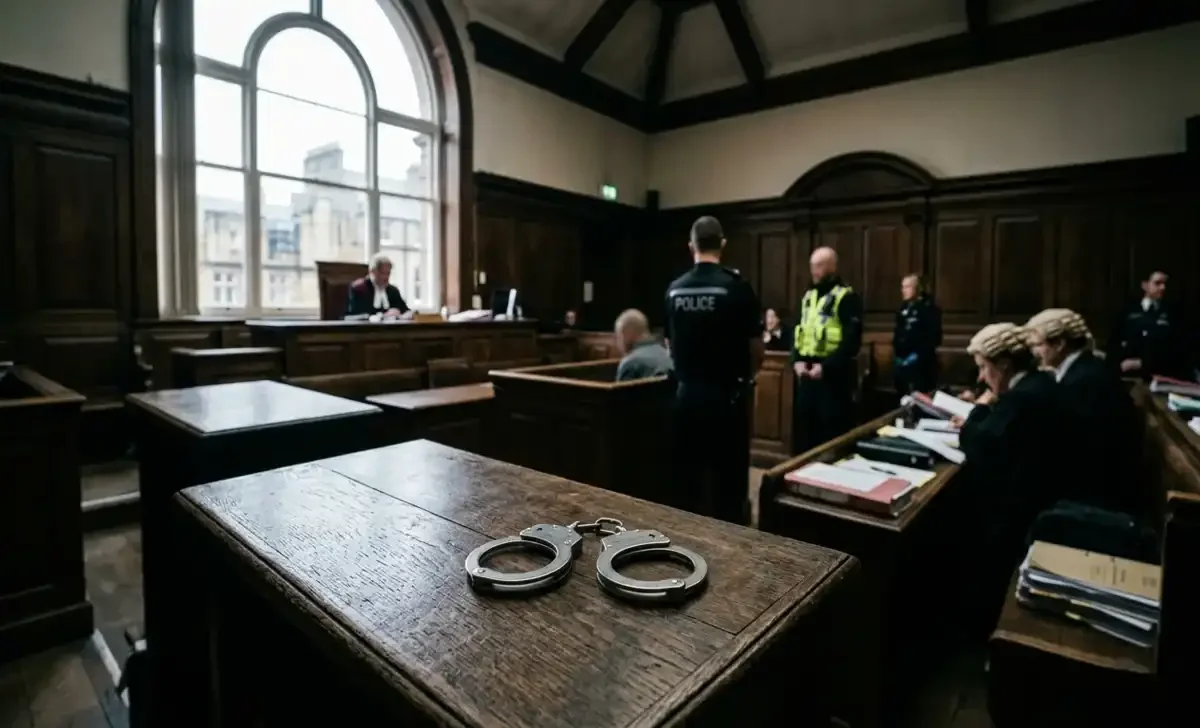
When you read the headline "drug-dealing gang jailed," it can feel like a simple story. Bad people got caught, and justice was served. But there's far more happening beneath the surface.
Drug-dealing operations in the UK and beyond have become increasingly sophisticated. Gangs use encrypted apps, burner phones, and county lines networks to distribute drugs across cities and rural areas. Prosecutors, in turn, have had to evolve just as fast.
Understanding how these cases come together matters — for communities affected by drug crime, for people following criminal justice, and for anyone trying to make sense of the news. In this article, we break down the 10 most important things to understand when a drug-dealing gang is brought to justice.
1. What "County Lines" Really Means
Most major drug-dealing gang prosecutions in recent years involve what police call "county lines" — a model where urban gangs expand their operations into smaller towns and rural areas.
The name comes from the dedicated phone line (or "line") used to take drug orders. Gangs recruit vulnerable young people, often teenagers or those with addiction issues, to travel along transport routes and sell drugs in areas with less police presence.
These operations are particularly dangerous because they often involve modern slavery and exploitation. Children as young as 13 have been used as drug runners, making prosecution complex and safeguarding critical.
When a drug-dealing gang is jailed in connection with county lines activity, charges can include:
- Conspiracy to supply Class A drugs
- Exploitation of children
- Modern slavery offences
- Money laundering
The National Crime Agency (NCA) estimates thousands of county lines are active across England and Wales at any given time.
How Police Investigations Begin
Most drug investigations don't start with a dramatic tip-off. They begin quietly — with community intelligence, routine stop-and-searches, or data flags from financial transactions.
Local police forces work closely with regional organised crime units (ROCUs) to identify patterns. A spike in drug-related calls in a town, an increase in county lines referrals from schools, or even social media posts can all trigger an investigation.
Key triggers include:
- Anonymous tip-offs via Crimestoppers
- Intelligence from other ongoing investigations
- Surveillance of known offenders
- Interception of communications under warrant
Once sufficient intelligence is gathered, a senior investigating officer (SIO) is appointed, and the operation gets an official codename. From that point, the clock is ticking.
3. The Role of Surveillance and Intelligence
Physical surveillance remains one of the most powerful tools in any drug investigation. Officers may spend weeks or months monitoring known associates, photographing meetings, and logging movement patterns.
Surveillance teams document:
- Who meets whom, and when
- Vehicles used and registered keepers
- Properties used for storing or cutting drugs
- Cash and goods movements
This information builds what investigators call a "social map" — a picture of the entire network, not just the foot soldiers. Targeting only low-level dealers is ineffective. Successful prosecutions aim at the organiser, the financier, and the supplier.
Intelligence also comes from partner agencies. HMRC, the UK Border Force, and even the Department for Work and Pensions share data that can reveal unexplained wealth or suspicious travel patterns. Just as understanding UK inflation and economic pressures requires looking at multiple data sources, so does building a complex drugs case.
4. Digital Evidence: The Modern Game-Changer
In the past decade, digital evidence has transformed drug prosecutions. Encrypted messaging apps like Snapchat, WhatsApp, and — more commonly in gang cases — dedicated encrypted phones (known as "encro" phones) have created both a challenge and an opportunity for investigators.
When police seize phones, specialists can often recover deleted messages, GPS location data, and financial transaction records. In high-profile cases, entire drug networks have been dismantled after encrypted phone servers were cracked.
EncroChat, a platform used by thousands of criminals across Europe, was breached by French and Dutch law enforcement in 2020. The resulting data led to hundreds of arrests across the UK alone, including numerous drug-dealing gangs subsequently jailed.
Digital evidence now includes:
- Encrypted message logs
- GPS tracking data
- Financial app records and cryptocurrency wallets
- CCTV footage cross-referenced with phone location
5. Undercover Operations and Informants
Not every lead comes from technology. Human intelligence (HUMINT) remains critical in drug investigations. This includes both undercover officers and civilian informants.
Undercover officers may pose as buyers, mid-level dealers, or even business contacts to gather evidence from inside a network. These operations require strict legal authorisation under the Regulation of Investigatory Powers Act 2000 (RIPA) and are tightly overseen to prevent entrapment.
Informants — people already connected to a gang who agree to pass information to police — are managed carefully. Their safety is paramount, and their identities are protected under public interest immunity (PII) during trials.
The risks are real. Undercover officers and informants operate in environments where trust is everything, and exposure means danger. The evidence they gather, however, can be decisive.
6. How Arrests Are Coordinated
When investigators believe they have enough evidence, they move towards a coordinated arrest operation. This is typically a single day of simultaneous raids across multiple locations — designed to prevent suspects from warning each other or destroying evidence.
A well-executed operation might involve:
- Hundreds of officers from multiple forces
- Warrant executions at homes, storage units, and businesses
- Simultaneous arrests in different cities
- Specialist teams to seize cash, drugs, and digital devices
Timing is critical. A raid too early means not enough evidence. Too late, and key suspects may flee. Senior investigators work with the Crown Prosecution Service (CPS) weeks in advance to ensure charges can be brought immediately upon arrest.
7. The Crown Prosecution Service's Role
Arresting suspects is only the beginning. The Crown Prosecution Service (CPS) decides whether there is sufficient evidence to charge and prosecute. This is called the "Full Code Test" — balancing evidential sufficiency with public interest.
In complex gang cases, specialist CPS prosecutors work alongside police long before arrests are made. They advise on how evidence should be gathered to ensure admissibility in court and help structure the charging strategy.
Charges in gang cases are often layered:
- Conspiracy charges allow prosecution of those who organised crimes but weren't present
- Serious Crime Prevention Orders (SCPOs) can restrict defendants' activities even after serving a sentence
- Joint enterprise principles can hold multiple defendants responsible for the acts of one
8. Sentencing Guidelines for Drug Offences
When a drug-dealing gang is jailed, sentences vary significantly based on role, drug type, and quantity. UK sentencing guidelines from the Sentencing Council provide a structured framework.
For Class A drug supply (heroin, cocaine):
- Street dealer: 1–7 years
- Mid-level supplier: 4–11 years
- Organiser/significant role: 8–16 years
- Leading role in major operation: 14+ years, up to life
Aggravating factors that increase sentences include:
- Using children or vulnerable adults
- Possession of weapons
- Prior convictions
- Supply near schools or prisons
Judges also consider personal mitigation — age, mental health, coercion — which is particularly relevant when young or exploited individuals are sentenced.
9. Asset Seizure and Confiscation Orders
Jailing gang members is only part of the goal. Stripping criminal networks of their financial gains is equally important — and increasingly effective.
Under the Proceeds of Crime Act 2002 (POCA), courts can issue confiscation orders requiring convicted defendants to hand over assets equal to their criminal benefit. This can include:
- Property and vehicles
- Cash and jewellery
- Cryptocurrency holdings
- Business interests
If defendants don't pay within the set period, their prison sentence is extended. The Home Office has invested heavily in financial investigation, recognising that disrupting money flows is as damaging to criminal networks as arrests.
Unexplained Wealth Orders (UWOs) can also compel individuals to explain the source of assets, reversing the usual burden of proof — a significant legal tool in organised crime cases.
10. Community Impact and What Happens After
A drug-dealing gang being jailed is cause for relief in affected communities. But the aftermath is complex, and experienced community workers know that simply removing one gang doesn't automatically make an area safer.
Power vacuums often emerge. Rival networks move in quickly, and former gang members — particularly younger, peripheral ones — may be vulnerable to recruitment again without proper support.
Effective community recovery involves:
- Investment in youth services and education
- Coordinated support for exploitation victims
- Drug treatment and rehabilitation services
- Long-term police presence to deter resurgence
Research consistently shows that purely punitive approaches are insufficient. Mental health and lifestyle support — similar to what's explored in resources about lifestyle habits for managing depression and recovery — is part of the picture when helping young people exit criminal environments.
Expert Tips
From criminal justice professionals and community advocates:
- Don't conflate all gang members. Sentencing courts increasingly recognise the difference between exploited young runners and calculating organisers. The law is catching up.
- Digital hygiene matters to criminals — and investigators. Modern policing is as much about data forensics as anything else. Investigators say encrypted phone evidence alone has transformed conviction rates.
- Community intelligence is irreplaceable. The most powerful tip-offs often come from ordinary people in affected communities. Anonymous reporting through Crimestoppers (0800 555 111) saves lives.
- Confiscation is the long game. Financial investigators sometimes pursue assets years after a sentence is served. Criminal benefit isn't forgotten.
- Support services matter. Young people pulled into gang activity through coercion or desperation need pathways out. Prosecution alone doesn't create those pathways. For those seeking deeper reading on navigating difficult social environments, stories of human resilience offer a real perspective.
Common Mistakes People Make When Understanding These Cases
1. Assuming the headline tells the whole story. Sentencing hearings involve years of investigation, legal argument, and human complexity. A brief news report rarely captures that.
2. Thinking only the arrested people are guilty. Conspiracy charges exist precisely because gang leaders avoid direct involvement. The person not arrested may have the most culpability.
3. Believing that jailing a gang ends the problem. Drug supply networks are resilient. Recruits replace those jailed. Without systemic intervention, new operations emerge.
4. Ignoring the victim status of lower-level members. Many individuals convicted of supply offences were themselves victims of coercion, exploitation, or modern slavery. Courts increasingly take this seriously.
5. Equating drug use with criminality broadly. Public health advocates argue that treating addiction as a health issue — rather than purely criminal — reduces harm more effectively than enforcement alone.
FAQs
How long does it take to prosecute a drug-dealing gang?
Complex gang cases typically take 2–5 years from the start of an investigation to final sentencing. Intelligence gathering, evidence preparation, and court proceedings all take significant time.
What is the longest sentence ever given in a UK drug case?
Some defendants in large-scale Class A drug conspiracies have received sentences of 25+ years. Sentences at this level are reserved for those proven to have led major import and distribution networks.
Can gang members be prosecuted after fleeing abroad?
Yes. The UK has extradition agreements with many countries. Additionally, international agencies like Europol and Interpol assist in locating and returning fugitives.
What happens to the drugs seized during an operation?
Seized drugs are catalogued as evidence, weighed and tested by forensic scientists, used in court proceedings, and then destroyed — typically through specialist incineration.
How are victims of county lines exploitation supported?
Victims are referred through the National Referral Mechanism (NRM), which provides support, accommodation, and legal advice. Specialist NGOs and local authorities work alongside statutory services to provide longer-term rehabilitation.