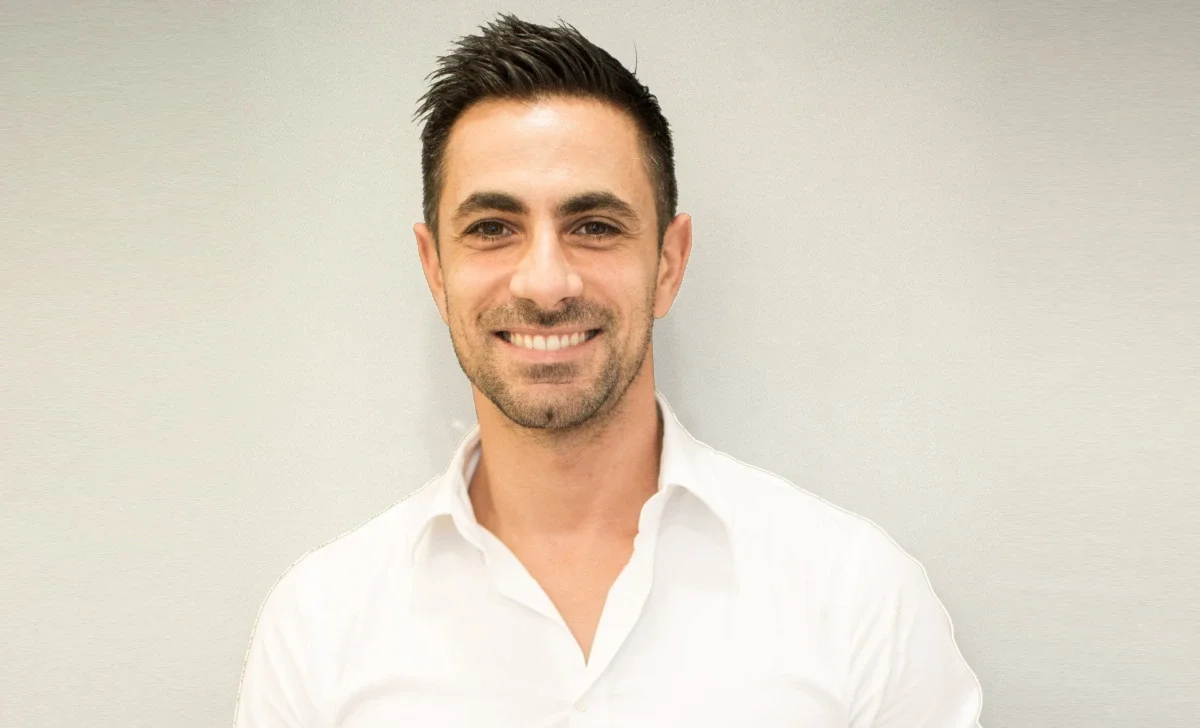
Not every architect builds a reputation in their home country. Fabrizio Gurrado built his in one of the most architecturally competitive cities on the planet — Beijing.
Born in Milan, Italy, Gurrado took an unconventional path. Rather than staying close to his Italian roots, he moved to China, founded his own design firm, and carved out a space that sits directly at the crossroads of Eastern and Western aesthetics. His studio, IS Architecture and Design, has since been recognised three times in the prestigious Architectural Digest China 100 list — a ranking of the country's most influential designers and architects.
If you've searched for Fabrizio Gurrado and want a clear, well-structured picture of who he is, where he came from, what he's built, and what his career is actually worth — this is the right place to start.
Fabrizio Gurrado Biography and Early Life
Fabrizio Gurrado was born in Milan, one of the world's great capitals of design, architecture, and fashion. Growing up in that environment shaped his sensibility early — Milan is a city where good design isn't a luxury, it's a standard.
He pursued a formal architectural education, studying at the École d'Architecture in Montpellier, France, before graduating with distinction from the Politecnico di Milano's Faculty of Architecture in 2001. His graduation thesis focused on contemporary suburban architecture and social issues — a topic that showed an early interest in the relationship between people and built space.
After graduating, he began practising architecture immediately, starting in Milan in 2002. His early work centred on residential architecture, with a specific focus on how buildings relate to their surrounding environment. From the very beginning, his approach was clear: details matter, and scale doesn't exempt a project from craft.
What Brought Him to China?
The move to Beijing was a career decision that changed everything. China in the early 2000s was in the middle of a massive architectural transformation — new districts rising, commercial developments expanding, and an enormous appetite for design talent. For an internationally trained architect with an eye for blending cultural references, it was an obvious opportunity.
Gurrado relocated to Beijing, where he practised for over a decade before formally establishing IS Architecture and Design in 2016. The studio is based in the Chao Yang District of Beijing and serves clients across residential, commercial, retail, and cultural sectors.
Fabrizio Gurrado Age and Personal Background
While Fabrizio Gurrado's exact birth date is not widely published in public records, he graduated from the Politecnico di Milano in 2001 and has been practising architecture since 2002 — placing him in his mid-to-late forties as of 2025. He has maintained a relatively private personal life, rarely discussing family or personal matters in interviews.
What comes through consistently in interviews is his identity as a practitioner first. He defines himself through the work — through the projects, the materials, the ideas — rather than through personal branding or public persona.
IS Architecture and Design: The Firm Behind the Name
To understand Fabrizio Gurrado's career and financial standing, you need to understand the firm he built.
IS Architecture and Design — known in Chinese as 意思建筑设计公司 — was formally established in 2016, though Gurrado had been operating under this model for years before. The name carries a dual meaning: "IS" stands for "Italian Style," while the Chinese characters 意思 (yìsi) translate to "meaning" or "significance." That kind of intentional layering is typical of how Gurrado approaches everything.
The firm describes itself as a "boutique studio" — deliberately small and selective rather than high-volume. Every project is tailored to be unique. The philosophy, as stated on the firm's website, is to design architecture "conceived and seen through the lens of history and specificities of places." In other words, no project looks like the last one.
What Kinds of Projects Does IS Architecture and Design Take On?
Gurrado's portfolio is wide:
- Private residential interiors — from luxury apartments in Beijing's CBD to penthouses that blend tropical and modern aesthetics
- Commercial spaces — shopping malls, outlet centres, and high-end retail environments
- Hospitality and wellness — including the acclaimed Ego Hair Salon in Beijing, which won attention for its space-age interior inspired by 1960s design
- Cultural buildings — projects that sit at the intersection of public and private space
The firm's signature approach is working "between opposites." In the 350 sqm Beijing apartment that brought Gurrado wider recognition, this meant balancing contemporary against traditional, Western against Eastern, and minimal against layered. The result, as described by design media, was an elegant fusion of styles rather than a compromise between them.
Fabrizio Gurrado Career Timeline
Here's how his career has developed across more than two decades of practice:
2001 — Graduated with distinction from Politecnico di Milano, Faculty of Architecture
2002 — Begins practising architecture in Milan, working primarily on residential projects
Early 2000s — Relocates to Beijing, China, as the city's architectural scene accelerates
2013 — IS Architecture and Design begins formal operations in Beijing
2016 — Officially establishes IS Architecture and Design as a registered studio
2016 — The 350 sqm Beijing apartment project gains widespread coverage on Designboom
2017 — Named in Architectural Digest China 100 for the first time
2019 — Named in Architectural Digest China 100 for a second time; Beijing penthouse published on Designboom
2021 — Ego Hair Salon featured in Dezeen and Designboom for its space-age aesthetic
Ongoing — Continues to take on projects across residential, commercial, and cultural sectors in China and internationally
Fabrizio Gurrado's Design Philosophy
What separates a boutique studio from a large commercial practice? Usually, a clear point of view.
Gurrado's is expressed in his own words: "The attention to detail has been the key word of my career. Even the biggest ideas are all made of small details and more; in my design, style has never had a predefined role. In every situation, the right design is made by the matching between style and context."
This isn't marketing language — it shows up in every published project. He doesn't have a house style in the traditional sense. He doesn't default to pure minimalism, nor does he lean entirely into ornament. Instead, each project is a response to a specific place, client, and brief.
Working in China as a foreign architect also gives his practice a particular energy. As he explained in one Designboom interview: "China — in all its contradictions, opposites and tensions — is a perfect breeding ground for creative energies. We tried to express our experience as a foreign firm practising in this incredible country through materials, colours, space and textures."
Comparing Fabrizio Gurrado to Other Notable Architects
To put Gurrado's work and position in context, it helps to look at some of the architects who have shaped the world he operates in.
Who Is the Most Famous Female Architect?
When people ask about the most famous female architect, one name comes up consistently: Zaha Hadid. Born in Baghdad, Iraq in 1950, Hadid became the first woman to win the Pritzker Architecture Prize in 2004 — widely regarded as the Nobel Prize of architecture. Known as the "Queen of the Curve," she built a global reputation for fluid, organic structures that appeared to defy construction logic. Her studio, Zaha Hadid Architects, designed projects worldwide, including the Guangzhou Opera House in China and the MAXXI Museum of Contemporary Art in Rome. She passed away in 2016, but her firm continues to take on major commissions globally. For anyone reading broader profiles in architecture and design — including the kind of celebrity biography content that covers creative figures across multiple disciplines — Zaha Hadid remains one of the defining names.
Who Is the Most Famous Chinese Architect?
In the context of Gurrado's Beijing-based practice, it's worth noting the architects who have shaped Chinese contemporary design. I.M. Pei, born in Guangzhou in 1917, is widely considered one of the most internationally celebrated Chinese architects, best known for the glass pyramid at the Louvre in Paris. In more recent decades, Ma Yansong, the Beijing-born founder of MAD Architects, has earned recognition as the most internationally influential contemporary Chinese architect, becoming the first Chinese designer to win a major landmark commission outside of China.
Gurrado operates alongside this generation of Chinese design talent, often collaborating with Chinese firms and positioning IS Architecture and Design as a bridge between Italian sensibility and Chinese context.
What Firm Did Neri and Hu Work For?
Neri & Hu is another studio whose story parallels elements of Gurrado's — a practice built in China by designers with deep international training. Lyndon Neri and Rossana Hu, the husband-and-wife founders of Shanghai-based Neri&Hu Design and Research Office, both worked at Michael Graves & Associates in Princeton, New Jersey, for over a decade before establishing their own firm in Shanghai in 2004. Their trajectory — international education, experience at a major established firm, then a move back to China to build something original — reflects a broader pattern of architects who chose the complexity of China's design landscape over more predictable Western markets.
Gurrado's path is different in that he came to China as an outsider, a Milanese architect with no Chinese roots. But the commitment to operating there, on its own terms, carries a similar discipline.
Who Is Eduardo Souto de Moura?
Eduardo Souto de Moura is a Portuguese architect born in Porto in 1952, and one of only two Portuguese architects to have won the Pritzker Architecture Prize, which he received in 2011. The jury praised his architecture for appearing "effortless, serene, and simple" while carrying real depth of intelligence. Often described as a neo-Miesian, he is known for using local materials — granite, wood, marble, stone — in ways that feel both contemporary and rooted in place. His Braga Municipal Stadium (2003), built into a granite quarry, is one of the most photographed stadiums in the world. More recently, he received the 2025 Praemium Imperiale award, one of the most prestigious honours in global art and architecture.
The connection to Gurrado's work is more philosophical than stylistic: both architects believe the right design comes from the specificity of a site, not from a formula applied over and over.
For broader profiles on creative figures like these, Snoopy Magazine covers a range of personalities across architecture, media, and public life.
Fabrizio Gurrado Net Worth: What We Know
Fabrizio Gurrado does not publicly disclose his net worth, which is standard for principals of boutique architecture studios. Unlike celebrity-tier architects who build personal brands through media appearances, Gurrado runs a deliberately understated practice focused on project quality.
That said, based on publicly available information about his firm and career, it's possible to make a reasonable assessment.
Income Sources and Business Model
IS Architecture and Design's revenue comes from several streams:
1. Design Fees Architecture and interior design fees in Beijing's luxury residential and commercial market are substantial. For a studio of IS Architecture and Design's scale and profile — boutique, high-end, with recognised award credentials — project fees on a luxury residential project can range from 5% to 15% of the total construction value. A 350 sqm high-spec Beijing apartment alone could command significant fees.
2. Commercial and Retail Projects Shopping malls, outlets, and large-scale commercial spaces carry much higher contract values than residential work. While margins are often tighter, the total revenue from commercial commissions is considerable.
3. Cultural and Hospitality Projects Cultural buildings and specialist interiors like the Ego Hair Salon — which received international press coverage — raise the firm's profile and bring in higher-prestige commissions.
4. Recognition and Repeat Clients Being listed in Architectural Digest China 100 three times signals that the firm is trusted by a high-calibre client base. Repeat work from luxury developers and private clients is likely a significant contributor to the firm's income.
Net Worth Estimate
Based on the studio's portfolio scale, market positioning in Beijing's premium design sector, and consistent AD 100 recognition, Fabrizio Gurrado's estimated net worth likely falls in the $1 million to $3 million range as of 2025. This is a conservative estimate for a boutique studio principal with over two decades of active practice. The actual figure could be higher depending on real estate holdings, project pipeline, and any unreported business interests.
It's worth being direct: this is an informed estimate, not a verified figure. Anyone claiming an exact number for a private architect with no public financial disclosures is speculating.
Achievements and Recognition
Gurrado's professional recognition is concentrated in China's design community, where it counts most:
- Architectural Digest China 100 — Selected three times as one of China's most influential designers and architects (2017 and 2019 confirmed)
- International Design Press — Projects published by Dezeen and Designboom, the two most widely read architecture and design publications globally
- Distinctive Project Portfolio — Spanning private residences, commercial interiors, hospitality, and cultural spaces across Beijing
What Sets Fabrizio Gurrado Apart?
There are hundreds of European architects working in China. What made Gurrado's practice distinctive enough to be recognised among the country's top 100 designers?
A few things stand out:
He didn't try to import Italian design wholesale. The work at IS Architecture and Design consistently engages with Chinese materials, Chinese context, and Chinese clients on their own terms. The firm's Chinese name, 意思, was not an afterthought — it was built into the brand identity from the start.
He chose depth over volume. The boutique studio model means fewer projects, done with more care. That's a harder business decision than scaling up, but it's what earns the kind of press and client loyalty that sustains a high-end practice.
He stayed. Many Western architects go to China for a project or two and leave. Gurrado built his professional life there, which gave him a level of cultural fluency that shows up in the work.
Fabrizio Gurrado's Future Outlook
IS Architecture and Design is positioned well for the next phase of Chinese design. As the country's wealthy residential and cultural sectors continue to mature, the demand for internationally credentialed boutique studios — ones that bring something genuinely different without being culturally tone-deaf — is likely to grow.
Gurrado's consistent media presence, award recognition, and clearly articulated design philosophy put the firm in a strong position to expand its commercial portfolio while maintaining its boutique identity. Whether that means growth in project size, international commissions, or a broader public profile, the foundation is there.
For readers interested in how creative professionals like Gurrado build careers that cross cultural and geographic boundaries, it's also worth exploring profiles like Emily Berger's story — another example of someone who built recognition through focused, original work rather than volume.
Final Thought
Fabrizio Gurrado is not a household name outside of architecture and design circles. But within those circles, and especially in China's premium design market, the name IS Architecture and Design carries real weight. Three-time AD 100 recognition doesn't happen by accident.
What his career demonstrates is that building something meaningful often requires going somewhere unexpected, staying long enough to understand it properly, and doing the work with enough care that quality speaks before marketing does.
Frequently Asked Questions
Who is Fabrizio Gurrado?
Fabrizio Gurrado is a Milan-born architect and the founder of IS Architecture and Design, a boutique studio based in Beijing, China. He has been practising architecture since 2002 and has been recognised three times in the Architectural Digest China 100 list.
What is Fabrizio Gurrado's net worth?
Gurrado's net worth is not publicly disclosed. Based on his firm's market positioning and project portfolio, an informed estimate places it between $1 million and $3 million. A
No more specific figure should be treated as speculation.
What is IS Architecture and Design?
IS Architecture and Design is the architecture and interior design studio founded by Fabrizio Gurrado in Beijing. Formally established in 2016, it has been recognised as one of China's most influential design firms by Architectural Digest China. "IS" stands for Italian Style, while the Chinese name 意思 translates to "meaning."
What are Fabrizio Gurrado's most notable projects?
His most widely covered projects include a 350 sqm luxury apartment in Beijing's CBD (2016), a modern Beijing penthouse (2019), and the Ego Hair Salon in Beijing (2021) — a space-age interior that received international press in Dezeen and Designboom.
Where did Fabrizio Gurrado study?
He studied architecture at the École d'Architecture in Montpellier, France, and graduated with distinction from the Politecnico di Milano in 2001.
Why did Fabrizio Gurrado move to China?
Gurrado relocated to Beijing to take advantage of China's rapidly expanding architectural landscape. As a Milanese architect, he saw the opportunity to build a practice that bridges Italian design sensibility with Chinese cultural context — something that the AD 100 recognition suggests he has achieved.