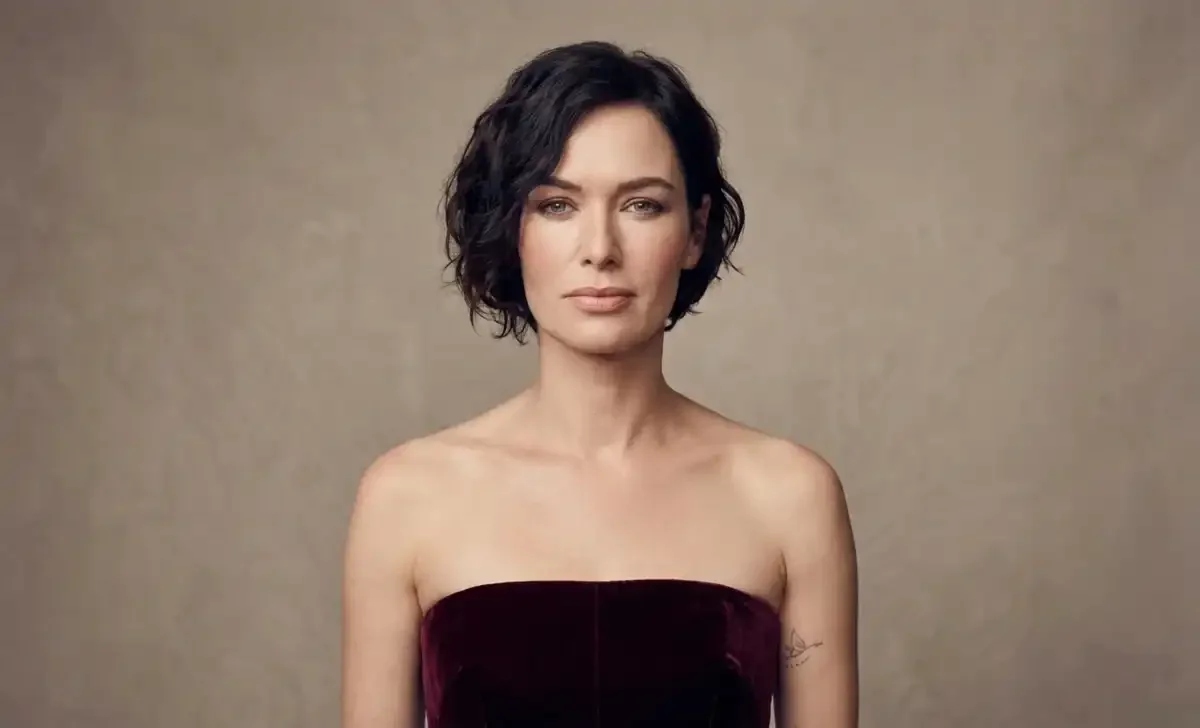
In April 2013, Lena Headey told the public she was nearly broke. At the time, she was pulling in $150,000 an episode on Game of Thrones. Her bank account, by her own account, held less than $5. A messy divorce had burned through the money about as fast as the show paid it out.
If you came here looking for the actress behind Cersei Lannister, that's her — and her story is a lot more interesting than just a number. Fast forward to today, and Lena Headey's net worth sits at roughly $12 million. Between that bankruptcy headline and where she stands now is one of the sharpest financial turnarounds in the entire Game of Thrones cast — and it sits behind what I'd call the most underrated performance the show ever gave us.
Cersei Lannister earned Headey five Emmy nominations and zero wins. The nominations tell you what the industry actually thought of her work. The fact that she never won is the part nobody's really explained well — so let's get into all of it.
The Before: Bermuda, Yorkshire, and the School Play That Changed Everything
Born in Bermuda, Raised in Yorkshire
Lena Kathren Headey was born on October 3, 1973, in Hamilton, Bermuda. Her dad, John Headey, was a Yorkshire police officer stationed out there with the Bermuda Police Service. When Lena was five, the family moved back to England and settled in Somerset. A few years later, when she was eleven, they relocated again to Shelley, a small village in West Yorkshire. She did ballet. She did school plays. Nothing about it screamed "future movie star."
At seventeen, that changed. She performed in a school production at London's Royal National Theatre, and a casting agent sitting in the audience photographed her afterward and asked her to audition. No formal training, no agent — just a school play and a business card handed over at the right moment. That audition landed her a supporting role in Waterland (1992), a British film starring Ethan Hawke and Jeremy Irons. She was eighteen. Honestly, the rest of her career kind of fell into place from there.
The Early Career: Remains of the Day, The Jungle Book, and the Quiet Foundation
In 1993, Headey had a small part in James Ivory's The Remains of the Day, a film that picked up eight Academy Award nominations, including Best Picture. Her role wasn't big. But being in a production like that, at that age, taught her more than any acting class could.
The following year, she played Katherine in Disney's live-action Jungle Book (1994), which made $44 million domestically and put her in front of a much wider audience. Through the rest of the '90s and into the early 2000s, she kept working steadily — Mrs. Dalloway (1997), Onegin (1999), Gosford Park (2001), and the romantic comedy Imagine Me and You (2005).
None of these was the kind of single career-defining role that, say, Philippa Northeast landed early on. But together, they built something just as valuable: a working actress with real range, someone studios trusted with serious material. That trust is the quiet foundation on which everything else is built.
The Pivot: 300, Sarah Connor, and the Roles That Built Her Reputation
Queen Gorgo and the Global Breakthrough
In 2006, Zack Snyder's 300 cast Headey as Queen Gorgo — Leonidas's wife, the film's narrator, and honestly, its real backbone. The movie was built almost entirely around stylized, slow-motion combat. Gorgo was the one actually thinking. She negotiates, she argues, she endures, and eventually she acts with a political sharpness none of the warriors around her bother with, since they're all too busy chasing a "beautiful death."
Headey played that intelligence without ever apologizing for it. The film made over $450 million worldwide on a $65 million budget, and almost overnight, she was an international name. Looking back, the role basically foreshadowed the character she'd spend the next decade of her life inside.
Sarah Connor and the TV Education
From 2008 to 2009, Headey starred as Sarah Connor in Fox's Terminator: The Sarah Connor Chronicles. Two seasons, 31 episodes, then cancellation. The role asked for sustained intensity over a long shoot, and she earned two Saturn Award nominations for it.
The cancellation stung, no doubt. But it gave her something Game of Thrones would need from her later: real proof she could lead a prestige genre series, hold a complicated character across dozens of episodes, and never let the performance go flat on autopilot. If you're curious about other people who turned a cancelled show into a stepping stone instead of a dead end, Wayne Perry's net worth journey follows a pretty similar arc.
The Game of Thrones Chapter: Cersei Lannister and the Art of Playing a Villain Who's Never Wrong
How She Got the Part
Headey was cast as Cersei Lannister in 2011 after her friend Peter Dinklage recommended her to the show's casting directors. Dinklage had already signed on to play Tyrion, and he knew exactly what the show needed. That detail matters more than it sounds like it should — the two actors who'd go on to anchor the show's most complicated sibling relationship found their way into the cast through each other.
Who Cersei Was, and What Playing Her Actually Took
Cersei Lannister is the Queen Regent of the Seven Kingdoms, mother to the king, and for most of the show's run, the sharpest political operator in King's Landing. She's also, by pretty much any moral measure, one of the show's main villains.
Here's what makes her interesting, and what Headey nails across all eight seasons: Cersei never lies to herself. Most of the show's morally gray characters convince themselves they're serving something bigger. Cersei doesn't bother with that. She wants power because she wants it. She wants her kids safe because they're hers. Her logic is plain to her, even when nobody else can follow it.
Playing someone who never self-deceives takes real discipline. Headey can't reach for a redemption note that the character wouldn't reach for herself. She can't soften Cersei's cruelty with easy warmth or make it look accidental. And she still has to make the audience understand exactly why Cersei does what she does — not agree with it, just get it — without ever letting that understanding slide into approval. That's a narrow target to hit. She hit it for sixty-two episodes across five Emmy nomination cycles.
The Awards Record and the Walk of Shame
Headey picked up five Emmy nominations for Outstanding Supporting Actress in a Drama Series — in 2012, 2014, 2015, 2016, and 2018 — plus a Golden Globe nomination. She won none of them.
The Season 5 "walk of shame" scene, probably Cersei's most talked-about moment, used a body double for the nude portions, with Headey's face added in afterward. She's spoken openly about it, and it stirred up some debate at the time. But honestly, the body double is a footnote. What she actually did — holding Cersei's emotional state together across multiple days of filming the most humiliating moment of the character's life — that's the real performance.
Her Game of Thrones Salary, Season by Season
People searching for Lena Headey's salary from Game of Thrones end up wanting the numbers laid out plainly, so here they are:
- Seasons 1–4: Around $150,000 per episode
- Seasons 5–6: Bumped up to $500,000 per episode — about $10 million across twenty episodes
- Seasons 7–8: $1.1 million per episode, putting her alongside Dinklage, Emilia Clarke, Kit Harington, and Nikolaj Coster-Waldau in the five-lead equal-pay deal for the final season
All told, her total Game of Thrones earnings crossed $30 million before taxes. That's a big number on paper, which makes what happened in 2013 even harder to wrap your head around.
The Bankruptcy Year
In 2013, while earning that $150,000-an-episode salary, Headey told E! News, in her own words, that she had less than $5 in her bank account. A long, draining divorce from musician Peter Loughran, whom she'd married in 2007, had eaten through her earnings about as fast as they came in.
That year isn't just a sad footnote in her story — in my opinion, it's the actual core of it. She was one of the most respected actresses on the biggest drama on television, and her bank account was basically empty. You rarely see that gap between professional success and financial reality documented so plainly. She's talked about that period with her usual no-nonsense honesty — no self-pity, no theatrics. What came after was the rebuild.
The Cersei Argument: Why This Performance Belongs in the Conversation About TV's Best
What Cersei Demanded That No Other Role on the Show Did
Jon Snow gets to be heroic. Tyrion gets to be witty. Daenerys gets to be inspiring. Each of them has moments where the audience does half the work — where viewers already want to feel something, and the actor just has to confirm it.
Cersei never gets that gift. Every single emotional beat has to be earned against the audience's active resistance.
Headey earned them anyway. The Season 1 scene where Cersei counsels Sansa Stark about the cold reality of being a queen is, in my opinion, one of the best scenes in the show's whole run. Cersei is honest, even kind, while being the one person the audience least wants Sansa to trust. That contradiction is the whole performance, right there.
How Cersei Stacks Up Against TV's Other Great Villains
It's worth putting this in perspective. Walter White and Stringer Bell get talked about as two of the best villains television has ever produced, and rightly so. But both of those characters get redemption beats, or at least moments where the show lets you root for them. Cersei never gets that. She's never softened for the audience's comfort, not once across eight seasons. That's arguably a harder note to play consistently, and it's a big reason her performance deserves to be mentioned in the same breath.
The Final Season and What the Ending Asked of Her
Cersei's ending — dying in Jaime's arms as the Red Keep collapses around her — sparked plenty of debate about whether it actually honored the character's arc. Whatever you think of the writing, what Headey does in that final scene is precise. She plays a woman who spent eight seasons refusing to show fear, finally letting it surface only once there's no political cost left to being honest. That choice fits everything the performance built up to that point. Cersei lets herself be scared only when it no longer matters strategically. Headey understood that, and she played it exactly that way.
After Westeros: Fighting, Western Drama, Voice Work, and the Rebuilt Life
The Post-Game of Thrones Portfolio
After Game of Thrones wrapped, Headey appeared in Fighting with My Family (2019), the Dwayne Johnson–produced comedy about wrestling siblings Paige and Zak Bevis. It made over $40 million globally on an $11 million budget and showed a much lighter side of her than anything Cersei ever let her show.
She went on to star in The Abandons, a Netflix Western drama where she plays Fiona Nolan, an Irish mother protecting her family's land from powerful forces. It carries the same controlled authority that made Cersei work, just transplanted into a completely different world.
What gets overlooked, though, is how much voice work she's done. She's lent her voice to The Dark Crystal: Age of Resistance, Danger Mouse, Tales of Arcadia, Infinity Train, and Rise of the Teenage Mutant Ninja Turtles. None of those headlines get the attention her live-action roles do, but voice acting is a steady, reliable income, and it's a real part of how her net worth keeps ticking upward between bigger projects. If you've ever wondered how actresses like Monica Barbaro balance big franchise roles with smaller, more personal projects, Headey's career is basically the blueprint.
Personal Life: Two Marriages, Two Kids, and Starting Over
Here's the timeline, laid out simply:
- 2007: Married musician Peter Loughran. They had a son together.
- 2013: Divorce proceedings drain her finances, leading to the bankruptcy claim.
- 2015: Daughter Teddy is born, with director Dan Cadan, a childhood friend.
- 2017: Gets engaged to Cadan.
- 2019: The engagement ends.
- October 2022: Marries actor Marc Menchaca.
As of 2026, her financial picture is the most stable it's ever been — proof that one rough year doesn't have to define the next decade.
The Numbers: What Lena Headey's Net Worth Actually Looks Like in 2026
How She Got to $12 Million
Most trackers, including Celebrity Net Worth, put Lena Headey's net worth at around $12 million as of 2026. A few other sites, like TheTab, list her closer to $16 million. The honest answer is that nobody outside her accountant knows the exact figure, and estimates like this always come with some margin of error. What's not in dispute is the math behind it: over $30 million in Game of Thrones earnings before taxes, offset hard by the 2013 divorce, with steady income since from The Abandons, film roles, and the voice work mentioned above.
For context, Peter Dinklage sits at roughly $25 million despite having comparable Game of Thrones earnings to Headey. That gap tells you, better than any headline could, what the 2013 bankruptcy year actually cost her — and what rebuilding from $5 really takes.
Five Emmy Nominations, Zero Wins — What That Actually Means
The Emmy record might be the single most honest piece of this whole story. Five nominations across eight seasons means the industry formally said, five separate times, that what Headey was doing as Cersei was one of the five best performances in this category, that year, period.
Not winning any of them isn't really about her work falling short. It reflects a pattern Emmy voters have struggled with for years — sympathetic characters tend to win Supporting Actress over complex villains, almost regardless of how technically difficult the villain role actually is. That's not unique to Headey, but it's worth saying plainly, because in some ways, five separate nominations is a clearer statement than one trophy would have been.
She was discovered at seventeen because someone happened to notice her in a school play. At thirty-nine, she was nearly broke while pulling in $150,000 an episode. By forty-five, she was earning $1.1 million an episode — rebuilt from five dollars. Cersei Lannister never showed fear until it no longer served her to hide it. In that one specific way, the actress and the character she spent a decade playing share something worth noticing.
Final Verdict
Lena Headey's net worth story isn't really about the $12 million figure — that number is just where the math lands today. The real story is about an actress who got discovered by accident, spent two decades building quiet credibility, played one of television's hardest roles to near-perfection, lost almost everything to a divorce while she was doing it, and rebuilt from five dollars in her bank account. Cersei Lannister will be talked about for years. So, the work it took to play her.
FAQs
What is Lena Headey's net worth?
Most estimates put Lena Headey's net worth at around $12 million as of 2026, though some sources list her closer to $16 million.
How much did Lena Headey make per episode of Game of Thrones?
She started around $150,000 per episode in the early seasons and $1.1 million per episode by the final two seasons.
Why was Lena Headey nearly bankrupt during Game of Thrones?
A draining divorce from her first husband, musician Peter Loughran, ate through her earnings almost as fast as the show paid her, leaving her with less than $5 in her account in 2013.
What is Lena Headey's most famous role?
She's best known as the Cersei Lannister actress on Game of Thrones, a role that earned her five Emmy nominations.
Has Lena Headey won any major awards?
She's been nominated for five Emmys and a Golden Globe for her Game of Thrones work, but hasn't won either.
Is Lena Headey still acting?
Yes. She currently stars in Netflix's The Abandons and continues to take on film and voice acting work.
Is Lena Headey married?
She married actor Marc Menchaca in October 2022. She was previously married to Peter Loughran and engaged to Dan Cadan; she has two children.
Net worth figures in this article are estimates based on publicly available reports and can vary between sources.