The PGA Innovation Showcase is an annual event hosted by the Producers Guild of America that highlights the most forward-thinking projects in immersive entertainment. At the 2026 showcase, held in late January at AGBO's space in Los Angeles, five finalists competed for the PGA Innovation Award across formats including VR storytelling, AI-driven narratives, and large-scale experiential media. The Wizard of Oz at Sphere took home the award later that February, blending wraparound visuals, spatial audio, and haptic technology to place audiences inside a familiar story in an entirely new way.
For anyone curious about where entertainment is heading, this event is worth paying attention to. These projects are not just technical experiments. They represent real shifts in how stories reach audiences, how producers think about presence and participation, and what it means to "watch" something when the screen wraps entirely around you. Some of these experiences are already open to the public; others are still finding their path to wider access. Either way, the direction is clear.
What the PGA Innovation Showcase Actually Is
Most people know the Producers Guild of America for its film and television awards. But the PGA Innovation Showcase is a different kind of event entirely.
Think of it as a hands-on exhibition for the future of entertainment. Rather than sitting in seats and applauding, attendees walk through live installations, put on headsets, and step inside the finalist projects. The goal is to surface work that is genuinely pushing the boundaries of experiential media, not just using technology for its own sake.
The 2026 showcase featured five finalists. Each one took a different approach to the same central question: how do you make an audience feel like they are part of a story, rather than just watching it from the outside?
The Five Projects That Made the Cut
Walking through the showcase, it was easy to see why these five stood out. Each brought something distinct to the table.
The Wizard of Oz at Sphere used Las Vegas's Sphere venue, with its massive wraparound LED screens and haptic seating, to put audiences inside the classic film. When Dorothy's world shifts from black and white to color, you feel it all around you. The emotional impact goes beyond novelty.
ASTEROID, from Doug Liman's 30 Ninjas and Google's 100 Zeros initiative, blended interactive storytelling with AI. You make choices that shape the narrative as it unfolds. It raises a real question about how much control audiences actually want, and where the line between story and game begins to blur.
Big Wave: No Room for Error from Cosm dropped viewers into the world of big-wave surfing. No fantasy elements, no invented worlds. Just the raw intensity of an extreme human moment, made to feel immediate through immersive audio and visuals.
D-Day: The Camera Soldier from TARGO and TIME Studios used archival footage alongside immersive tech to put you in the perspective of a soldier on June 6, 1944. It handled heavy subject matter carefully, and it made a strong case for how VR storytelling could change the way people learn about history. If you are curious about the production decisions that shape what ends up on screen, this piece on what goes on behind your favorite shows gives useful context on how those choices get made.
Territory, from Double Eye Studios and Kinetic Light, was the most abstract of the five. It explored perception, space, and movement through light and sound rather than traditional narrative. It is not for everyone, but that is part of what makes it interesting.
Who Won the PGA Innovation Award
The Wizard of Oz at Sphere won the PGA Innovation Award at the ceremony in February 2026.
It earned the recognition for a specific reason: it did not just use impressive technology. It used that technology to deepen an emotional experience that most audiences already had a connection to. The scale of Sphere, combined with spatial audio and seats that vibrate with the story, created something that felt genuinely new without losing the warmth of the original film.
That balance is hard to get right. A lot of immersive projects prioritize the spectacle and lose the story. This one did both.
How the Technology Actually Works
If you are new to these formats, the tech can sound more complicated than it is.
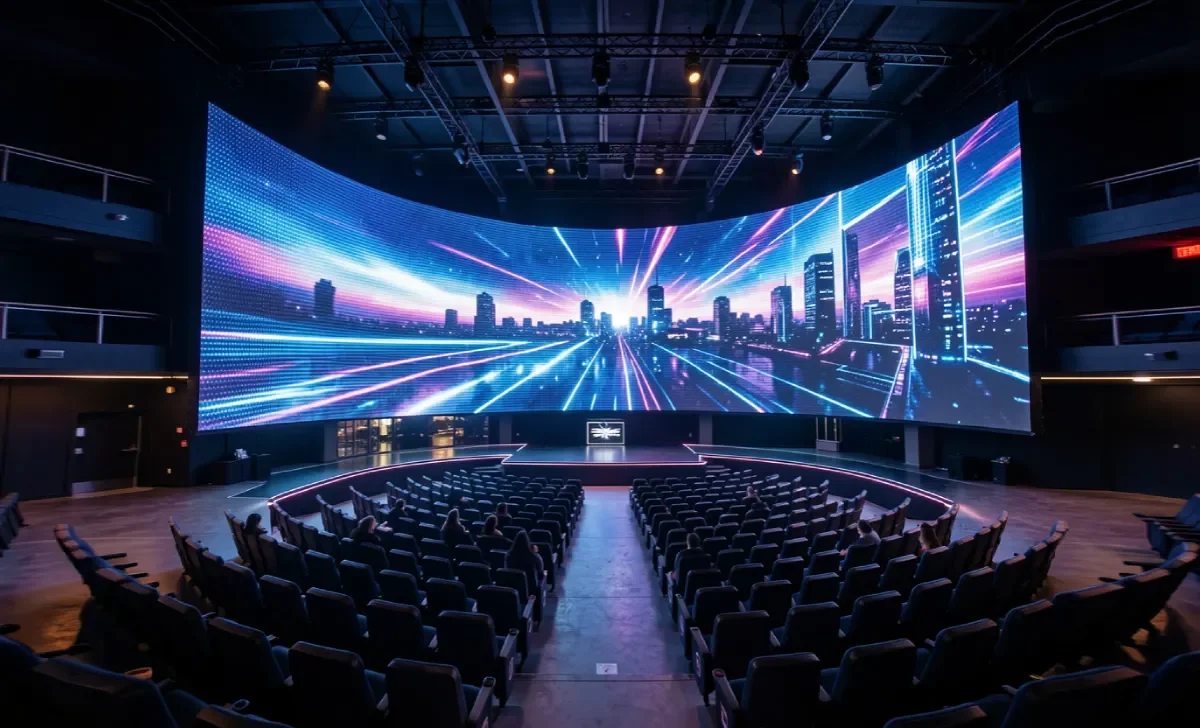
Sphere's setup relies on an enormous wraparound LED display that covers your entire field of vision, paired with directional audio that makes sound feel like it is coming from specific locations in space. Haptic seats add physical sensation, like vibration or pressure, that matches what is happening on screen. Together, these create the sensation of presence inside the experience rather than in front of it.
The AI component in ASTEROID works differently. The system responds to your choices in real time, branching the narrative based on decisions you make at specific moments. It is closer to a sophisticated branching story than a traditional film, and the AI handles the transitions between paths so they feel smooth rather than mechanical. For a broader look at how AI is reshaping production roles and creative work across the industry right now, this 2026 guide to AI in Hollywood covers the wider picture well.
Both formats require purpose-built venues or specialized hardware, which is part of why access is still limited for most people today.
Can Everyday People Actually Access These Experiences
This is the question the showcase raised but did not fully answer. And it is worth addressing directly.
Right now, the most immersive versions of these projects require either a trip to a venue like Sphere in Las Vegas or access to high-end VR hardware. Sphere tickets vary widely in price depending on the show and seat tier, but they are not a casual expense for most families. A basic VR headset, on the lower end, runs a few hundred dollars. More capable setups cost significantly more.
That said, some of these projects are designed to reach broader audiences over time. D-Day: The Camera Soldier and territory are formats that could translate to more accessible platforms as distribution expands. TARGO, the studio behind the D-Day piece, has a history of releasing work through apps and web-based players that work without high-end gear.
The inclusivity challenge is real. If experiential media stays locked inside expensive venues or behind premium hardware, it will remain a niche offering rather than a mainstream shift. The producers and studios involved are aware of this. Several conversations at the showcase circled back to the same tension: how do you keep pushing the format forward while making sure the audience can actually come along?
There are no easy answers yet. But the fact that the conversation is happening is a good sign.
What This Means for the Future of Entertainment
Here is the honest take: these projects are early experiments, not finished products.
The future of entertainment is not one format replacing another. It is a wider set of options. A great film on a couch still works. A quiet podcast on a walk still works. What these projects add is a new layer, one where presence and participation become part of the storytelling itself.
The most likely path forward is gradual. As the hardware gets cheaper and the content library grows, more people will have real access to experiential media. Location-based venues, streaming-adjacent releases, and lower-cost headsets will all play a role. The shift will not happen overnight, and it probably should not.
What the PGA Innovation Showcase made clear is that the people building these experiences are thinking carefully, not just about what the technology can do, but about what it should do and for whom.
Frequently Asked Questions
What projects were featured in the latest PGA Innovation Showcase?
The 2026 showcase featured five finalists: The Wizard of Oz at Sphere, ASTEROID, Big Wave: No Room for Error, D-Day: The Camera Soldier, and territory. Each project explored a different approach to immersive entertainment, from AI-driven narratives to large-scale venue experiences.
Who won the PGA Innovation Award and why?
The Wizard of Oz at Sphere won the 2026 PGA Innovation Award. It was recognized for combining technical scale with genuine emotional depth, using Sphere's wraparound display, spatial audio, and haptic seating to place audiences inside a story rather than in front of it.
How do immersive experiences like those at Sphere change how we watch stories?
They shift the audience from observer to participant. Instead of looking at a screen, you are surrounded by the story on all sides, with sound and physical sensation reinforcing what you see. The result is a stronger sense of presence, though it works best when the storytelling matches the scale of the technology.
Are these new entertainment technologies accessible to everyday people?
Currently, the most advanced experiences require either venue tickets or expensive hardware. However, some projects are being adapted for more accessible platforms over time. Studios like TARGO have released past work through apps and web players. Wider access depends on how quickly costs come down and how broadly distribution expands.