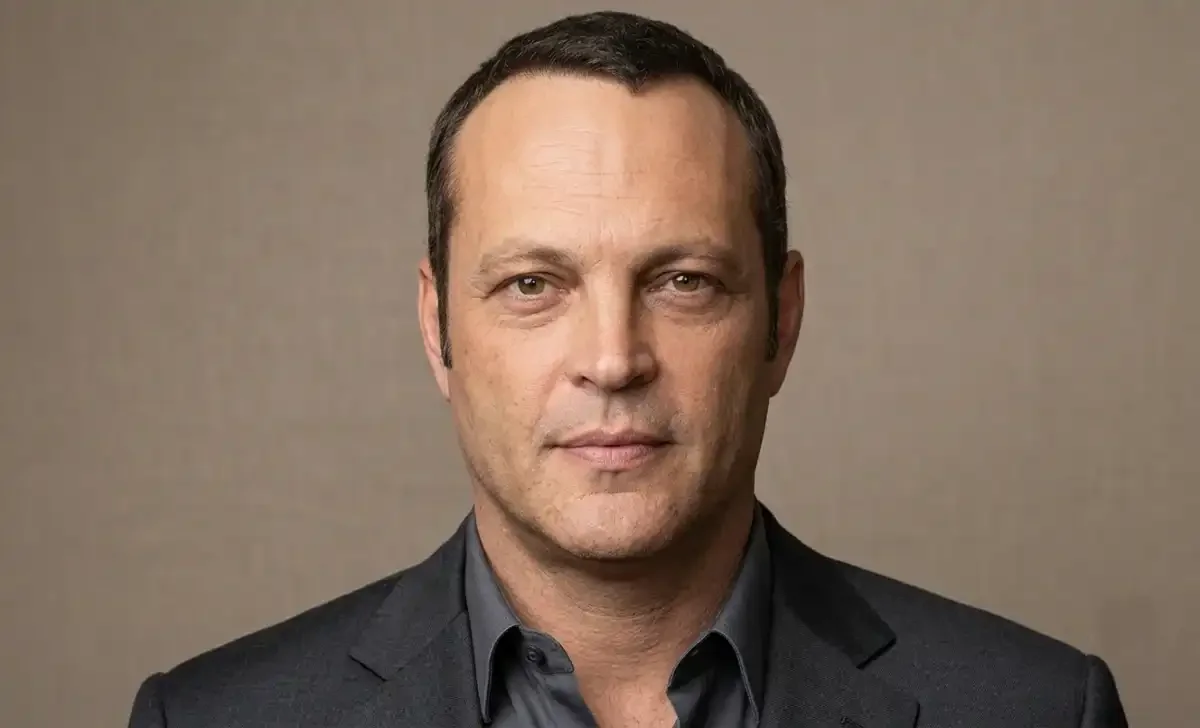
If you grew up watching movies in the 2000s, there's a good chance Vince Vaughn made you laugh at some point. That fast-talking, wisecracking energy he brought to the screen turned him into one of the biggest comedy stars of his generation. But here's the part that doesn't get talked about enough: Vince Vaughn's net worth isn't just a story about box office paychecks. It's a story about what he did with that money once it hit his bank account.
As of 2026, Vince Vaughn's net worth is estimated at $75 million. That number alone is impressive, but the real story is in how he got there. Let's understand this step by step, because his path is a lot more thoughtful than most celebrity money stories you'll come across.
Where It All Started
Vince Vaughn was born on March 28, 1970, in Minneapolis, Minnesota, though he grew up in Buffalo Grove, Illinois. His mom, Sharon, worked as a real estate agent and stockbroker, and she was reportedly good enough at it to get recognized by Bloomberg Wealth Manager as one of the top money managers in the country. His dad, Vernon, sold toys for a living. So this wasn't a family with Hollywood connections or old money. It was a hardworking Midwest household, and that background shaped Vaughn more than people realize.
He started acting as a teenager, doing some musical theater and a few commercials, then packed up for California after high school to give it a real shot. Like most actors starting, the early years weren't glamorous. Small TV roles, forgettable film gigs, the usual grind. Then he landed a part in Rudy in 1993, playing a third-string quarterback. It wasn't a big role, but it put him in the same orbit as Jon Favreau, and that connection ended up changing his life.
Three years later, Favreau wrote a low-budget indie film called Swingers, and Vaughn played Trent Walker, a fast-talking, effortlessly cool guy who audiences couldn't get enough of. The movie became a cult classic, and it put Vaughn on the map in a way that nothing before it had.
The Comedy Years That Made Him Rich
Once Swingers hit, things moved fast. Steven Spielberg took notice and cast him in The Lost World: Jurassic Park, and from there, Vaughn became one of the defining faces of the comedy boom in the late '90s and early 2000s, alongside guys like Will Ferrell, Ben Stiller, and Owen Wilson. People started calling them the "Frat Pack," and honestly, the nickname fit. Their movies didn't just do well; they became part of the cultural conversation.
Old School in 2003 was a real turning point for him. After that came Dodgeball, Wedding Crashers, The Break-Up, and a run of other hits that made him one of the most bankable names in comedy. At his peak, Vaughn was pulling in $15 to $20 million per film. He reportedly earned $20 million for Fred Claus and $17 million for The Dilemma. Those are the kinds of numbers most actors never see once, let alone repeatedly.
But here's the thing that actually sets Vaughn apart from a lot of his peers who made similar money: he didn't just spend it and move on to the next project.
The Investing Timeline Most People Miss
This is where the Vince Vaughn net worth story gets interesting, and it's the part most articles skip over entirely. Vaughn once said, in an interview with business coach JT Foxx, that he was fortunate to make money in his profession and simply didn't want to lose it. He noticed a lot of actors around him were intimidated by anything financial and just avoided dealing with it altogether. Vaughn went the opposite direction.
His first move, likely sometime during his rising comedy years in the early 2000s, was buying gold. It made sense as a way to hold onto value, but he quickly realized gold just sits there. It doesn't pay you anything while you wait. So he pivoted toward real estate, which is really where his financial strategy started taking shape.
"I just started to buy some small buildings that I could rent out," he explained. The logic was simple: the buildings would likely go up in value over time, and he'd have some money coming in passively along the way. That pivot appears to have picked up steam once his peak earning years from the comedy boom, roughly 2003 through 2011, gave him the capital to actually act on it.
From there, he kept expanding. He bought farms. He put money into Florida real estate, specifically in areas he believed were on the upswing. And he kept learning as he went rather than trying to be an expert from day one. "The more you spend time on it and get a feeling for what you think is doing well, you get better each year," he said.
His Real Estate Portfolio
Vaughn's property dealings have never really been passive. He's been an active buyer and seller of high-end real estate, particularly around California and Chicago.
One purchase worth mentioning is a 12,000-square-foot penthouse in Chicago's historic Palmolive Building, once used by Hugh Hefner as Playboy's headquarters. Vaughn bought it back in 2006 while he was still single. The place took up the top three floors of a 37-story building and came with five bedrooms, a billiard room, a full bar, and views stretching across Lake Michigan. He also owned a townhouse in Chicago's River North neighborhood for about a decade, from 2005 to 2015.
These weren't just lifestyle purchases to show off. They fit right into the same strategy he's talked about publicly, putting money into things that hold value and can generate income over time. It also helped that real estate ran in the family. His mother's background gave him a level of comfort most people don't start with, and his wife, Kyla Weber, whom he married in 2010, worked as a residential real estate agent in Canada before they met. Having that kind of knowledge around the house probably made those buying decisions a lot less intimidating.
Building Something New: Audiorama
More recently, Vaughn has branched into entrepreneurship outside acting altogether. He co-founded Audiorama, a podcast and production company, alongside former NFL players Greg Olsen and Ryan Kalil, with backing from Powerhouse Capital. The company has launched several shows, and Vaughn himself is working on a podcast about classic holiday films alongside Peter Billingsley, the kid from A Christmas Story.
It's a small piece of the overall picture, but it says something important: Vaughn isn't just coasting on old real estate wins. He's still actively building.
Why the Shift to Drama Matters
Somewhere along the way, Vaughn started taking on darker, more dramatic roles, things like True Detective, Hacksaw Ridge, and Brawl in Cell Block 99, and more recently, the Apple TV+ series Bad Monkey. These roles don't pay anywhere near what his old comedy blockbusters did, and on paper, that might look like a step backward financially.
But it's actually the opposite. The R-rated comedy market that made Vaughn famous has shrunk significantly over the past decade. Studios just aren't greenlighting those big ensemble comedies the way they used to. A lot of his Frat Pack peers saw their leading-man opportunities dry up as that genre faded. Vaughn's willingness to take smaller paychecks for meatier, more prestige-driven roles kept him working and relevant, which matters a lot more than any single paycheck when you're trying to build a career that lasts decades instead of one hot streak.
What His Money Might Actually Look Like
Nobody outside his accountant knows the exact breakdown, but based on everything Vaughn has said publicly, a rough picture starts to form. A meaningful chunk likely came from acting salaries during his comedy peak; those $15 to $20 million paydays add up fast. Then there's real estate, both the appreciation on properties he's held and the rental income coming in passively. Add to that whatever equity and revenue Audiorama generates, plus ongoing dramatic film and streaming work.
It's not one big pile of movie money sitting in an account. It's a portfolio, built the same way a financial advisor might tell any of us to build one, just with a lot more zeros.
How Does He Stack Up Against His Peers?
It's natural to wonder how Vaughn's $75 million compares to the other guys he came up with. Will Ferrell, Ben Stiller, and Owen Wilson have all built substantial fortunes of their own, and depending on the source, some estimates put certain Frat Pack members well ahead of Vaughn. But net worth comparisons among actors are always a bit fuzzy since so much depends on real estate holdings, production deals, and investments that don't show up in any public record.
What stands out about Vaughn isn't necessarily where he ranks against them. It's that he built his wealth through a genuinely different approach, leaning on real estate and business ventures rather than just chasing bigger and bigger paychecks. That's a distinction worth noticing, similar to how fans who follow actors like the cast of Once Upon a Time often find that Lana Parrilla's financial journey or Josh Dallas's career path took very different routes to build lasting wealth, even within the same industry.
A Quick Word on Risk
I think it's worth being honest here: real estate isn't a guaranteed win. Property values can drop, tenants can be a headache, and markets shift in ways nobody predicts. Vaughn's success wasn't just about picking the right buildings. It was also about timing and having a financial cushion from his acting income that gave him room to make mistakes along the way. Not everyone starts with that kind of safety net, and that's worth keeping in mind if his story inspires you to think differently about your own finances.
It's a reminder that even celebrities who seem to have it all figured out, similar to how Shannen Doherty's financial story showed just how much circumstances and timing can shape a career's financial outcome, don't always have a smooth or risk-free path to wealth.
What Regular People Can Actually Take From This
You and I aren't earning $20 million a movie, obviously. But the principles behind Vaughn's approach hold up regardless of the number of zeros involved:
- He didn't let fear keep him on the sidelines. A lot of people, actors included, feel overwhelmed by investing and just avoid it entirely. Vaughn chose to learn instead.
- He focused on assets that actually produce income. Gold was fine as a store of value, but real estate gave him both appreciation and cash flow.
- He treated learning as an ongoing process, not something he needed to master overnight.
- He leaned on people who actually knew the space. Between his mother's financial background and his wife's real estate experience, he had knowledgeable voices around him instead of going in blind.
In my experience, this is the part that actually applies to regular life. You don't need millions to start thinking this way. You just need to stop avoiding the conversation about money.
Final Thoughts
The real takeaway from Vince Vaughn's net worth isn't really the $75 million figure. It's the mindset behind it. He earned well during his comedy years, sure, but the bigger lesson is what he did afterward: he protected that money, put it to work, and kept learning as he went instead of assuming the paychecks would just keep coming forever. That approach holds up whether you're talking about millions of dollars or just trying to get your own finances for the first time.
Frequently Asked Questions
How much is Vince Vaughn worth right now?
As of 2026, Vince Vaughn's net worth is estimated at $75 million, built through a mix of acting income, real estate investments, and business ventures like Audiorama.
How did Vince Vaughn make his money outside of acting?
Real estate is the biggest piece of it. He started by buying small rental buildings, then expanded into farms and Florida properties over time, treating it as a long-term, income-generating strategy rather than quick flips.
What was Vince Vaughn's highest-paid movie role?
He reportedly earned $20 million for Fred Claus and $17 million for The Dilemma, two of his highest-known paydays.
Is Vince Vaughn still acting?
Yes. He's continued working steadily, including his role in the Apple TV+ series Bad Monkey, which was renewed for a second season, along with other dramatic film projects.
This article reflects publicly available information and estimates on Vince Vaughn's net worth, which can vary between sources and change over time.