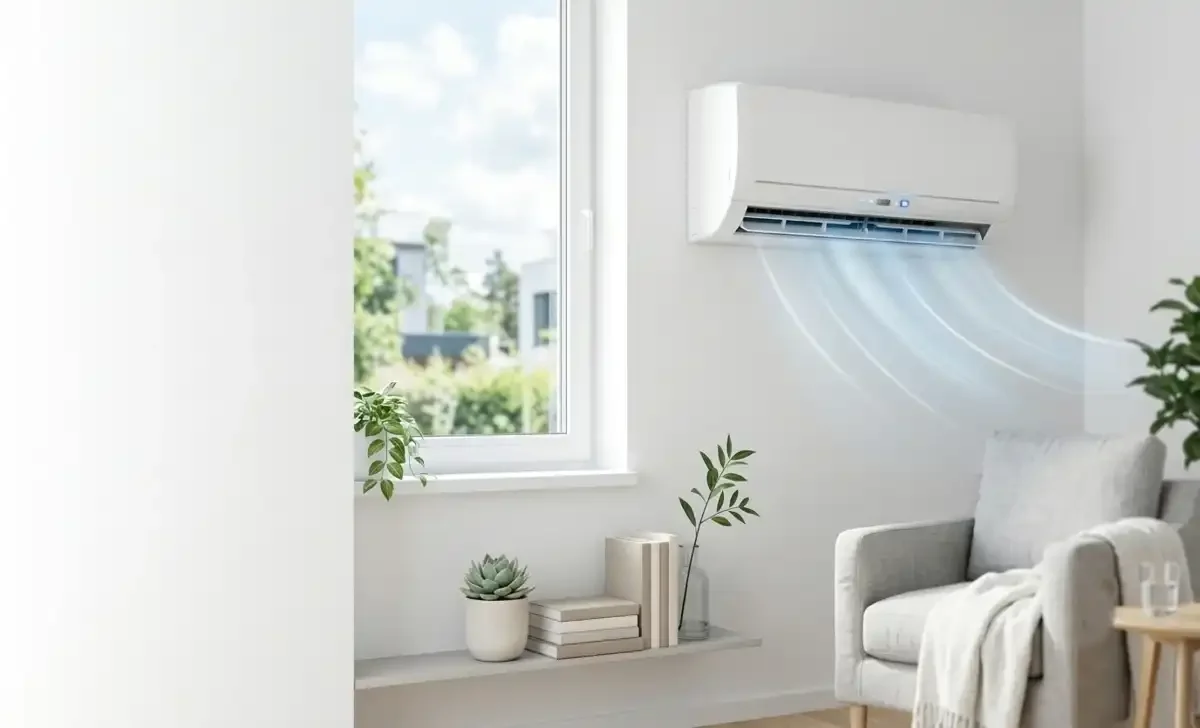
A few years ago, telling a neighbor you bought a Chinese air conditioner might have earned you a raised eyebrow. Today, chances are your neighbor already owns one and just doesn't know it.
Brands like Gree, Midea, and Haier now supply parts or entire units to companies you'd never associate with China, including some familiar American and European names. That's not an accident. Chinese manufacturers have spent two decades building factories, refining compressor technology, and scaling production to a level few other countries can match.
But "made in China" covers an enormous range of quality. Some Chinese air conditioners rival premium Japanese and Korean units. Others are cheaply built and won't survive a second summer. The difference usually comes down to which brand you pick, not the country of origin itself.
Gree
Gree is the world's largest air conditioner manufacturer by production volume, and it's not particularly close. The company makes tens of millions of units a year, both under its own name and as a supplier to other global brands.
What makes Gree stand out is its compressor technology. The company builds its own compressors rather than buying them from third parties, which gives it tighter control over quality and efficiency. Many Gree units also use inverter technology, which adjusts cooling output instead of simply switching on and off. This means steadier temperatures and lower electricity bills.
Pros:
- Strong warranty support in most markets
- Widely available replacement parts
- Good energy efficiency ratings
Cons:
- Entry-level models cut corners on insulation and noise reduction
- Customer service quality varies a lot by region
If you're buying Gree, stick to their mid-to-premium lines. The cheapest models tend to be noisier and less durable.
Midea
Midea is a household name in China and increasingly recognized abroad. It owns Toshiba's home appliance division and has partnerships with several Western retailers who sell Midea units under different labels.
Midea window units and portable air conditioners are especially popular in the US and UK for their price-to-performance ratio. They're not luxury products, but they do the job reliably for a few hundred dollars less than comparable Japanese or American units.
Practical tip: Midea's smart models pair with an app that lets you schedule cooling and monitor energy use. It's a genuinely useful feature if you want to cut your power bill without sacrificing comfort.
One thing worth knowing: Midea has faced criticism in the past over manufacturing overcapacity in adjacent industries like batteries, a pattern common across large Chinese manufacturers chasing scale. You can read more about how this overcapacity issue plays out across sectors in this breakdown of China's battery overcapacity problem.
Haier
Haier has a longer track record in Western markets than most Chinese appliance brands, partly because it acquired GE's appliance division in 2016. That acquisition gave Haier access to American engineering standards and distribution networks almost overnight.
Haier's air conditioners, especially their portable and window units, are known for being quiet. If you live in an apartment with thin walls, that matters more than most spec sheets let on.
Pros:
- Reasonably quiet operation
- Solid availability of spare parts in the US
- Decent build quality for the price
Cons:
- Higher-end smart features can feel clunky compared to competitors
- Some models struggle in extreme heat above 100°F
Hisense
Hisense is better known for TVs, but its air conditioning division has grown quickly. The company focuses heavily on portable and window units aimed at renters and people who can't install central air.
What I like about Hisense units is the straightforward design. No confusing buttons, no unnecessary bells and whistles. Just a unit that cools a room and doesn't require a manual to operate.
Real example: A friend who moved into a rental with no central air bought a Hisense 8,000 BTU portable unit for a 300-square-foot bedroom. Three summers later, it still runs fine, though she notes it's louder than she expected on the highest setting.
TCL
Like Hisense, TCL made its name in electronics before expanding into home appliances. Its air conditioners are budget-friendly and tend to show up heavily during big retail sales events.
TCL units are a reasonable choice if you need a temporary or secondary cooling solution, like a window unit for a guest room. I wouldn't recommend them as your only cooling source in a climate with brutal summers, since the compressors aren't built for constant heavy use.
Chigo
Chigo doesn't have the brand recognition of Gree or Midea outside of China, but it's actually one of the older names in the industry, dating back to the late 1980s. It specializes in commercial and industrial cooling systems as much as residential ones.
If you're outfitting a small office or a large open-plan space, Chigo's commercial split systems are worth comparing against bigger names. They're often 20-30% cheaper for similar cooling capacity.
AUX
AUX is a smaller player but has quietly become a reliable OEM supplier, meaning it manufactures units that get sold under other brand names in different countries. If you've bought a "budget" air conditioner from a retailer's in-house brand, there's a decent chance it was made by AUX.
Pros:
- Competitive pricing
- Functional, no-frills performance
Cons:
- Limited direct customer support since most sales go through third-party brands
- Warranty terms depend entirely on the reseller, not AUX itself
Changhong
Changhong makes a wide range of appliances, and its air conditioners are more common in Southeast Asian and African markets than in the US or Europe. Build quality is acceptable for the price point, though the company doesn't invest as heavily in R&D as Gree or Midea.
This is a fine option if budget is your main concern and you're not expecting the unit to last more than 5-7 years.
Whirlpool (China-manufactured models)
Here's something a lot of shoppers don't realize: some Whirlpool-branded air conditioners sold in Asia and parts of Europe are actually manufactured in Chinese facilities under licensing agreements. The engineering standards are set by Whirlpool, but production happens in China to keep costs down.
This is common practice across the appliance industry, and it's part of a broader story about how global manufacturing has shifted. Rising energy demand tied to air conditioning use, especially in hot, humid regions, has put pressure on both manufacturers and power grids. Singapore, for example, has faced real strain balancing cooling demand with energy capacity, a situation explored in detail in this piece on Singapore's air conditioning energy crisis.
Carrier (China-manufactured models)
Carrier invented modern air conditioning, and the brand still carries weight globally. But like Whirlpool, many Carrier units sold in Asia-Pacific markets are produced through joint ventures with Chinese manufacturers, including a long-running partnership with Midea in some regions.
If you're buying a Carrier unit, it's worth checking the manufacturing origin on the product listing. The engineering standards are usually consistent regardless of factory location, but warranty terms can differ.
Expert Tips
A few things I've learned from years of covering appliance manufacturing and talking to HVAC technicians:
- Check the SEER or SEER2 rating, not just the BTU number. A higher SEER rating means better energy efficiency over time, which matters more than the upfront price if you run the unit daily.
- Ask about compressor warranty length separately from the general product warranty. Compressors are the most expensive part to replace, and some brands offer 5-10 years on the compressor even with a shorter overall warranty.
- Don't ignore your electricity bill. Cooling costs have risen sharply in many regions, and choosing an inefficient unit can cost you more over three summers than you saved on the purchase price. This has become such a widespread issue that even places like California have seen utility bills climb partly due to cooling demand.
- Buy from authorized retailers. Gray-market imports often lack proper warranty coverage in your country.
Common Mistakes to Avoid
Shoppers make the same handful of errors over and over:
Choosing size based on room area alone. Ceiling height, sun exposure, and insulation quality all affect how much cooling power you actually need.
Ignoring noise ratings. A loud unit in a bedroom or home office becomes a daily annoyance fast.
Assuming all Chinese brands are equal. As you can see above, quality varies enormously between manufacturers.
Skipping the installation quote. Split systems need professional installation. Factor that costs in before comparing prices.
Overlooking smart features you'll never use. Paying extra for app connectivity only makes sense if you'll actually use the app.
Conclusion
Chinese air conditioners have come a long way from their reputation as cheap, short-lived appliances. Brands like Gree, Midea, and Haier now compete seriously with established Japanese, Korean, and American names, and in many cases, they're manufacturing units for those very brands.
The key takeaway is simple: don't judge an air conditioner by its country of origin. Judge it by the specific brand, the SEER rating, the compressor warranty, and real reviews from people who've owned the unit for more than one summer. Do that homework, and a Chinese air conditioner can be just as reliable, and considerably more affordable, than the alternatives.
If you're shopping this season, start by narrowing your choice to two or three brands from this list, compare their warranty terms side by side, and check your local retailer's return policy before you commit.
Frequently Asked Questions
Are Chinese air conditioners reliable?
Many are, particularly from established manufacturers like Gree, Midea, and Haier. Reliability depends much more on the specific brand and model than on the country of manufacture.
Why are Chinese air conditioners cheaper?
Chinese manufacturers benefit from massive production scale, vertically integrated supply chains, and lower labor costs. This allows them to sell units at lower margins while still turning a profit.
Do Chinese air conditioners use more electricity?
Not necessarily. Many modern Chinese units include inverter technology and decent SEER ratings. Always check the specific energy rating rather than assuming based on brand origin.
Is Gree better than Midea?
Both are solid, but they serve slightly different needs. Gree tends to lead in compressor technology and commercial-grade systems, while Midea offers stronger value in the budget-to-mid range with better smart home integration.
How long do Chinese air conditioners typically last?
A well-maintained unit from a reputable Chinese brand can last 10-15 years, similar to units from Japanese, Korean, or American manufacturers. Budget models from lesser-known brands often last closer to 5-8 years.