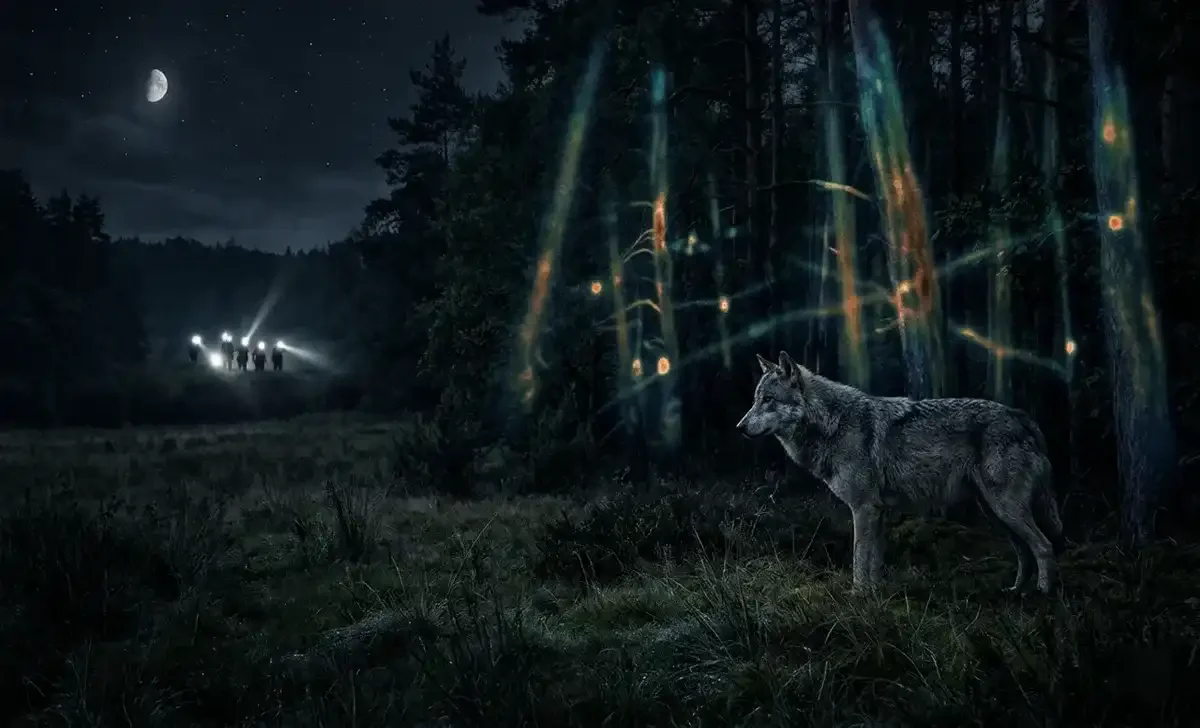
In April 2026, a two-year-old wolf named Neukgu dug under a fence at Daejeon's O-World zoo in South Korea and vanished. For nine days, more than 100 search personnel, drone teams, and a worried nation tracked an animal that had become a household name before it was ever caught. When it was finally tranquilized near a highway interchange about a kilometer from the zoo, the story had already answered most of the questions people ask whenever a zoo wolf gets loose: why it happened, how you find one, what condition it's in when you do, and what changes afterward.
This guide walks through all of that — grounded in what actually happened in Daejeon, plus the standard practices zoos and wildlife agencies use whenever an escape occurs anywhere in the world.
The Case That Defined This: Neukgu, Daejeon's O-World Zoo
Neukgu was born at the zoo in 2024, part of a long-running program to reintroduce wolves resembling the native Korean wolf population that went extinct in the wild in the 1960s. On April 8, 2026, he escaped his enclosure by burrowing beneath a fence inside the zoo's safari section.
What followed:
- A nearby elementary school closed as a precaution while the search got underway.
- Search teams used drones equipped with thermal imaging cameras, alongside more than 100 personnel on the ground, to scan the surrounding hills and waterways.
- The wolf stayed within roughly a 2-kilometer radius of the zoo for the entire nine days, surviving by scavenging fish and rodent carcasses and drinking from a nearby river.
- A citizen tip on day eight — a hiker who spotted the animal near a trail — gave searchers the lead that let a drone confirm his exact location that night.
- He was tranquilized just after midnight on April 17, by which point he was visibly thin and exhausted from ten days without a proper meal.
- A veterinary exam turned up a 2.6-centimeter fish hook lodged in his stomach, swallowed along with the carcasses he'd been eating to survive. It was removed by endoscopy at a partner hospital.
- Daejeon city officials publicly apologized, ordered an outside audit of the enclosure, and pledged to add secondary and tertiary containment barriers along with anti-digging measures to prevent a repeat.
The case is a useful template precisely because nothing about it was unusual — a fence failure, a multi-day search using standard tools, a successful non-lethal recapture, and a post-incident review. That's what most zoo wolf escapes actually look like, minus the national media attention.
Why Wolves Escape From Zoos in the First Place
Wolves are built to range widely — wild packs can cover dozens of miles in a single day — so even well-maintained captive wolves test the limits of their enclosures over time. The most common failure points are:
- Digging. This is exactly how Neukgu got out, and it's the single most common escape method for wolves. Without a buried anti-dig barrier extending well below the fence line, a determined wolf will eventually find a soft spot.
- Fence and gate failure. Rust, storm damage, or a latch that wasn't fully secured after maintenance.
- Human error. A gate left open during cleaning, feeding, or repair work — often during a routine window rather than a moment of obvious risk.
- Climbing or jumping. Younger, more athletic wolves can clear fences that have held older animals for years.
- Under-stimulation. Wolves that are isolated or lack enrichment are more motivated to test their boundaries than those in well-managed social groups.
Older zoo infrastructure is disproportionately vulnerable to all of the above — it isn't that the wolf did anything unusual, it's that one weak point in a perimeter is all it takes.
How Dangerous Is an Escaped Zoo Wolf, Really?
This is the question every news story leads with, and the honest answer sits between two extremes.
Wild wolves rarely attack people unprovoked — documented cases of healthy wild wolves attacking humans are genuinely rare worldwide. A zoo-raised wolf changes the calculation somewhat, but not in the direction most people assume:
- It may have less fear of humans than a wild-born wolf, which can mean it wanders closer to people, not that it's more aggressive.
- It's more likely to be confused and defensive if cornered than predatory.
- Pets and livestock face meaningfully more risk than people do.
- It will typically prioritize finding food and water over any kind of confrontation, which is exactly what Neukgu did for nine days without a single reported encounter with a person.
The realistic risk profile is closer to "stay alert and keep pets in" than "shelter in place."
How Search Teams Actually Find an Escaped Wolf
Modern wolf recovery operations layer several methods rather than relying on any single tool:
- Thermal-imaging drones. A wolf's body heat stands out clearly against cooler ground, day or night, and a drone can scan terrain that would take a ground team hours to cover. This was the tool that ultimately pinpointed Neukgu's location once a sighting narrowed the search area. The thermal-imaging hardware behind these consumer drones traces a long lineage back to aerospace-grade sensors, the same family of precision-imaging technology that supports NASA's ongoing moon missions.
- Ground teams responding to leads. Drones cover ground, but a confirmed lead — like the hiker's sighting near Ppuri Park — is usually what turns a wide search into a precise one.
- Camera traps are placed on likely travel corridors near water sources or known animal paths.
- Scent-tracking dogs, used in terrain where thermal imaging is less effective, such as dense cover during daylight.
- Public reporting. Community sightings reported through official channels, not social media speculation, are consistently the fastest way to narrow a search radius.
Time works against the search team in two ways: the wolf's range grows the longer it's free, and — as the fish hook in Neukgu's stomach demonstrated — the animal's physical condition deteriorates the longer it has to forage for itself.
What Happens to the Wolf Once It's Found
Outcomes vary by location, behavior, and how cornered the animal is when located:
- Tranquilizer dart and live capture — the standard and clearly preferred method, used in Neukgu's case once he was located and approached cautiously by a veterinary team.
- Cage or net traps baited near known travel routes — slower, but useful when the animal can't be safely approached directly.
- Voluntary return — occasionally a wolf wanders back toward its enclosure on its own, especially a younger animal still oriented toward familiar territory.
- Lethal action — an absolute last resort, authorized only when the animal poses an immediate, documented threat to human life with no other option available. Animal welfare groups and wildlife agencies scrutinize these decisions closely, and most documented escapes — Neukgu's included — end without it.
After recapture, expect a period of separation and monitoring before reintroduction to other animals, plus veterinary treatment for whatever the time outside actually costs the animal physically.
How Zoos Are Supposed to Prevent This
The standard playbook for wolf containment, and the one Daejeon officials pledged to reinforce after Neukgu's escape, includes:
- Double- or triple-barrier enclosures — a secondary (and sometimes tertiary) fence or wall so a single failure doesn't grant access to public areas.
- Anti-dig barriers — concrete footings or buried mesh extending well below the fence line, specifically to stop the digging behavior that caused this exact incident.
- Regular structural inspections on a defined schedule, not just after something looks wrong.
- Electronic monitoring — motion sensors and cameras covering the enclosure perimeter, not just the public-facing side.
- Two-person verification on gates — no access point opened or closed by a single staff member without a second check, since maintenance windows are when most escapes actually happen.
A formal post-incident audit — exactly the kind Daejeon ordered — is now standard practice at any accredited facility after an escape, regardless of how the animal is recovered.
None of this comes cheap. Round-the-clock electronic monitoring and reinforced containment add real, recurring cost to a zoo's operating budget, and that pressure compounds as energy prices climb generally — a dynamic playing out well beyond zoos, as seen in coverage of soaring California utility bills. For zoo operators, the lesson is the same one budget-strapped households are learning: containment and monitoring systems are the last place to cut corners, however tempting the line-item savings look on paper.
What the Public Should Do During an Escape Alert
If your area issues an escape alert:
- Keep pets indoors until officials give the all-clear — they're at far greater risk than people.
- Don't go looking for it. Civilian search efforts complicate official ones and put people at unnecessary risk.
- Report sightings to the official wildlife or police line, not social media. In Neukgu's case, a single direct report from a hiker was the turning point in a nine-day search.
- Don't feed it. It creates dependency on human contact and makes recapture harder, not easier.
- Follow official updates only. Rumor tends to outpace fact in these situations, and acting on bad information is the actual risk, not the wolf itself.
Animal Welfare: The Part That Gets Less Attention
An escape isn't just a public-safety story — it's a welfare emergency for the animal itself, and Neukgu's case shows exactly why. He survived nine days by eating carcasses and drinking river water, which kept him alive but came with a real cost: he was visibly emaciated and exhausted by the time he was caught, and a swallowed fish hook had lodged deep enough in his stomach to require surgical removal.
Captive-raised wolves generally lack the full survival skillset of wild-born ones — less practiced hunting ability, less road awareness, less territorial knowledge of where food and water actually are. The longer an escape lasts, the more these gaps show up as real physical damage, not just stress. That's the practical argument for fast, well-resourced search efforts: it's as much about the animal's condition on day nine as it is about public safety on day one.
Enclosure climate control plays a quieter role in this same welfare picture. Keeping habitats properly cooled is an ongoing operational strain in warm-climate cities, a pressure documented in reporting on Singapore's air conditioning energy crisis — and for zoos, underinvestment here can contribute to the restlessness and stress that sometimes precede an escape attempt in the first place.
What Officials Typically Learn Afterward
Every escape from a reputable facility triggers a formal review. In Neukgu's case, Daejeon Urban Corporation's leadership publicly apologized, committed to an audit involving outside experts, and specifically named the fixes they intended to make: stronger secondary and tertiary containment, and anti-digging reinforcement at the fence line. That's a fairly representative list of what these reviews tend to produce anywhere:
- Identification of the exact failure point (in this case, the fence base)
- A maintenance-log review to check whether warning signs were missed
- Staff retraining on access protocols
- A reassessment of whether the enclosure meets current containment standards
- Additional monitoring technology where gaps existed
The honest takeaway from cases like this: no enclosure is escape-proof, but the gap between a one-time incident and a recurring problem usually comes down to whether the audit actually changes anything.
Common Mistakes in Escape Response
Patterns that show up repeatedly in post-incident reviews, regardless of country or facility:
- Delayed public notification — waiting too long to alert nearby residents is consistently the most criticized decision after the fact.
- Underestimating range early on — search radii set too small in the first hours, when the animal can already be well outside them.
- Rushing capture attempts — large, aggressive teams moving in too fast can push the animal into harder terrain instead of cornering it.
- Unclear communication between agencies — confusion over who's in charge of what slows everything down at exactly the wrong moment.
- Treating the audit as a formality — some facilities focus on managing public perception rather than genuinely fixing the failure point.
The Bottom Line
Neukgu's nine days outside Daejeon's O-World zoo ended the way most well-handled wolf escapes do: no human injuries, a successful non-lethal recapture, and a public commitment to fix the specific failure that caused it. The pattern holds across most documented cases — the animal is usually found hiding, foraging, or resting rather than posing a threat, and the real risk runs in the other direction, toward the wolf's own safety, the longer it's out.
If there's a single lesson zoos keep relearning from cases like this, it's that containment is only as strong as its least-inspected point — in this case, a fence base nobody checked closely enough before a wolf found it first.
FAQs
How often do wolves actually escape from zoos?
True escapes are uncommon relative to the number of facilities housing wolves worldwide, but they're not unheard of — fence and gate failures happen at a low but steady rate, which is why containment audits are standard practice rather than a one-time setup.
Can a zoo-raised wolf survive outside on its own?
For a while, yes — Neukgu lasted nine days by scavenging carcasses and drinking from a river — but survival comes at a real cost. He was emaciated, exhausted, and had swallowed a fishhook by the time he recovered, which is typical of what extended time outside an enclosure does to an animal that didn't grow up needing to forage.
Is it legal to shoot an escaped zoo wolf?
In most jurisdictions, lethal force requires explicit authorization from wildlife authorities and is reserved for situations with an immediate, documented threat to human life. It is not a default option, and using it without authorization can carry serious legal consequences.
How long does it typically take to recapture an escaped wolf?
It varies widely with terrain and how quickly a credible sighting comes in. Neukgu's search ran nine days in a semi-rural area near a city; tighter urban escapes with good camera coverage can resolve faster, while dense rural terrain can take longer.
What should I do if I encounter an escaped wolf directly?
Stay calm and don't run — running can trigger a chase response. Back away slowly while facing the animal, avoid prolonged direct eye contact, and call wildlife authorities immediately rather than attempting to handle the situation yourself.
Did Neukgu recover after being caught?
Yes. Vets found a normal pulse and temperature on initial exam, treated the fishhook injury via endoscopy at a partner hospital, and the zoo planned a monitored recovery period before reintroducing him to other wolves.