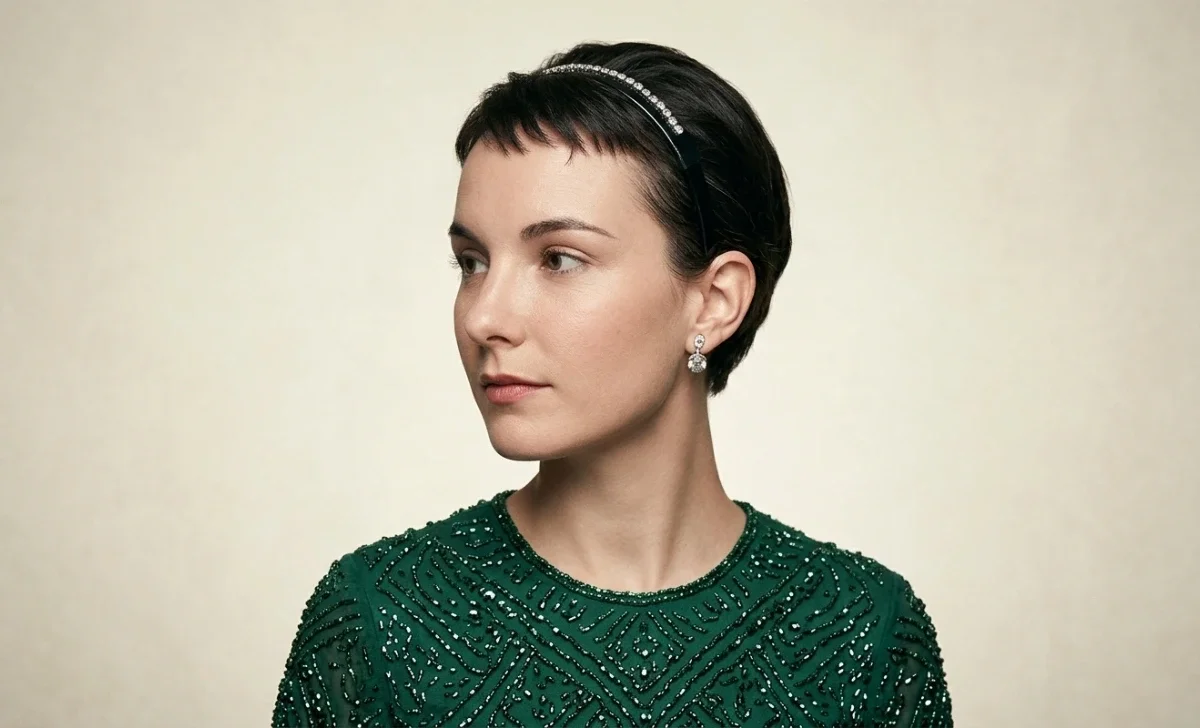
When people talk about Woody Allen's personal life, the conversation usually skips straight to Diane Keaton or Mia Farrow. But before either of them, there was Harlene Rosen — his first wife, and arguably the most overlooked person in his entire story.
I'll be upfront: I barely knew her name until I started looking into this properly. And once I did, it felt like a gap worth filling. Harlene Rosen's story isn't just a footnote in someone else's biography. It's a story worth understanding on its own terms — of a young woman who got swept into a spotlight she never asked for, fought back in a way few women of her era did, and then quietly walked away from it all.
So, what actually happened to Harlene Rosen? And who was she beyond being Woody Allen's first wife? Let's work through this properly.
Who Was Harlene Rosen?
Harlene Susan Rosen was born in 1940 in Brooklyn, New York, into a traditional Jewish family. Her father, Julius Rosen, raised her in a close-knit household — about as far removed from the entertainment world as you could get. She grew up in the post-war years, when most young women were expected to marry early and settle down. That was the normal path, and Harlene followed it.
Beyond the basics, not much has been publicly verified about her early childhood. Some accounts mention she had a genuine love of music and trained in classical piano from a young age. Most of her life before meeting Allen stayed private — and as you'll see, that's a pattern that defined her for the next several decades.
She met Woody Allen — then still going by his birth name, Allan Stewart Konigsberg — when she was 16, and he was 19. They connected quickly over shared interests: art, humour, and particularly music. She was a skilled pianist, and Allen was a serious jazz fan. She even joined his early jazz band, which gave their relationship a creative foundation that most teenage romances simply don't have. By 1955, they were engaged.
The Marriage: What It Actually Looked Like
On 15 March 1956, Harlene Rosen and Woody Allen got married in a small, private ceremony attended by family and close friends. She was 17. He was 20. They moved into a modest New York City apartment and started figuring out married life the way most young couples do — one day at a time.
Allen was working his way up from the ground floor of the comedy world, writing jokes for television shows and performing at small clubs around the city. By all accounts, Harlene supported him emotionally during those early years and continued her music, sometimes helping with his creative work. On paper, it might have looked like a partnership.
In reality, the pressures hit them fast. Allen later admitted — in both his writing and his comedy — that he went into the marriage emotionally unprepared. There was no real honeymoon period. The strain showed up almost immediately.
As his career picked up, the gap between what each of them wanted became harder to ignore. Harlene preferred a quieter life built around music and personal interests. Allen needed to be out in the world — performing, networking, pushing forward. Neither of them was wrong for wanting what they wanted. They were just wrong for each other. They separated in 1959, though the divorce wasn't officially finalised until 1962.
The Divorce, the Jokes, and the Lawsuit
Becoming the Subject of His Comedy
As Allen's profile grew, Harlene became part of his act. Not in a flattering way. He turned private details about her — about their marriage — into material for nightclub crowds and television audiences. He called her "the Dread Mrs Allen" on stage. He compared her to Quasimodo during performances. Thousands of people heard this live, and more caught it through national broadcasts.
Then things took a darker turn. After Harlene was sexually assaulted outside her apartment — and newspapers reported it — Allen publicly joked that it probably wasn't a "moving violation." Audiences laughed. He later referenced the assault in his 1965 comedy album, framing it as an absurdist punchline.
It's worth pausing on that. Plenty of comedians draw from their personal lives — that's always been part of the craft. But there's a real difference between self-deprecating humour and turning someone you once loved into a punchline after something as traumatic as a sexual assault. Allen crossed that line, repeatedly and publicly.
Think about what that would actually feel like: being a private person, trying to rebuild your life after a marriage ended, and then hearing your worst experience turned into a joke on national television. That's not edgy comedy. That's cruelty wearing a punchline as a disguise.
Stories like Harlene's are a reminder of how often women connected to famous men get reduced to footnotes. For more on how women navigate life in and out of the spotlight, see our profile on Ella Bright.
The Defamation Lawsuit
In 1967, Harlene did something that very few women in that era would have attempted. She filed a one-million-dollar defamation lawsuit against Woody Allen and NBC. This wasn't a casual complaint. Taking a rising public figure and a major television network to court in the 1960s, as a private woman with no celebrity of her own, required real nerve.
The legal arguments centred on the harm Allen's jokes caused to her reputation and emotional well-being. She wasn't a public figure who had signed up for scrutiny. She was a private citizen whose most painful experiences were being broadcast for laughs.
The court issued a temporary cease and desist order, barring Allen from making further jokes about her. The case settled out of court in 1970, and the financial terms were never disclosed. But the fact that she pursued it at all — and won that injunction — tells you something clear about who she was. She wasn't going to sit there and take it.
The Divorce Settlement
The divorce itself was finalised in November 1962. Allen was ordered to pay £75 per week in spousal support, with the possibility of it rising to £175 once he had steady work. By that point, he was earning around £1,500 a week. That gap says a lot. They had no children together, which at least kept the legal side relatively straightforward. The emotional side was another matter entirely.
Life After Woody Allen: What She Actually Did
Once the divorce was through, Harlene Rosen stepped completely out of public life — and from everything we can piece together, that was entirely intentional. No interviews. No television appearances. No attempts to stay connected to Allen's world or capitalise on his name.
Allen, of course, went on to become one of the most celebrated and controversial filmmakers in the world. Harlene went the opposite direction. She never remarried. She has no children. Music remained part of her private life, but only privately.
It takes a specific kind of strength to do that — to refuse the attention, to decline the obvious opportunities to tell your side, to simply decide that your life belongs to you. In my experience, that choice is harder than it sounds, especially when the person you're stepping away from keeps becoming more famous.
The 2015 Message: Choosing Grace After Everything
In 2015, nearly fifty years after the divorce, something unexpected happened. Harlene broke her public silence. As Allen's 80th birthday approached, she sent a message through his biographer, David Evanier, for inclusion in the book Woody: The Biography. It's worth reading in full — and it's a reminder of how complicated real human stories are, especially for women who've navigated life largely out of the public eye.
She wrote: "Wondrous Woody, you inspired me with your enormous energy, creativity and charisma. I loved going to movies with you. I loved making music with you… After our teenage summer of love, marriage was difficult. You established a career. I completed four years of college. We supported each other, learnt about life and became adults. There was sadness, tears, laughter and love."
There's no bitterness in those words. After everything — the public mockery, the cruel jokes about her assault, the lawsuit, the decades of silence — she chose grace. That message doesn't read like something written for an audience. It reads like something written for closure.
What does it tell us? That she processed those years on her own terms, took what was real from them, and made peace with the rest. The phrase "after our teenage summer of love" is particularly striking — she's acknowledging what was genuine between them, without excusing what came after. That's a level of emotional clarity that most people never reach.
Quick Bio: Harlene Rosen at a Glance
|
Full Name |
Harlene Susan Rosen |
|
Year of Birth |
1940 |
|
Place of Birth |
Brooklyn, New York, USA |
|
Nationality |
American |
|
Ethnicity |
Jewish |
|
Religion |
Judaism |
|
Father |
Julius Rosen |
|
Marital Status |
Divorced |
|
Ex-Spouse |
Woody Allen |
Where Is Harlene Rosen Now?
As of 2025, Harlene Rosen is believed to be alive at approximately 85 years old. There are no reports of her passing. Her exact whereabouts and daily life remain unknown — which is entirely consistent with how she has lived for the past six-plus decades.
Some sources suggest she passed away in late 2021, but this has not been independently confirmed and conflicts with other accounts. Until there is a verified public record, it's more accurate to say her status remains unknown. What is clear is that she has maintained her privacy with remarkable consistency, regardless of how often her name resurfaces in connection with Allen's.
She has no public social media presence, has given no interviews, and has made no public statements beyond the 2015 message. For someone whose ex-husband remains one of the most discussed figures in American cinema, that level of sustained privacy is genuinely extraordinary.
The Bigger Picture: Why Her Story Matters
Looking back at Harlene's story makes you think carefully about how we treat the people attached to famous figures — especially when one person becomes a household name and the other doesn't. There's a tendency to view the less famous partner as a supporting character in someone else's narrative. Harlene was never that.
She was a young woman who made choices — some that worked out, some that didn't — and navigated the consequences with more dignity than most people manage. She endured public humiliation that would have broken many, took legal action in an era when few women did, and then rebuilt her life entirely in private.
The age gap and the power dynamics are also worth sitting with honestly. She was 16 when they met, 17 when they married, and 22 when the divorce came through. Allen was already pursuing a career in entertainment, building connections, developing a public persona. She was still figuring out who she was. None of that excuses what followed, but it does give context to how these situations unfold — particularly for young women attached to ambitious men in the early stages of fame.
What happened to Harlene Rosen, at its core, is actually a fairly simple story: she got married young, she got divorced, she fought back when she had to, and then she moved on and lived her life. But the way she did it — with quiet consistency and zero desire for the spotlight — is the part that deserves real attention.
Final Thoughts
Harlene Rosen's story doesn't fit neatly into a simple narrative. She wasn't just a victim, and she wasn't just a forgotten first wife. She was a capable, private person who endured genuine harm — both from what happened to her personally and from having that trauma turned into public entertainment — and chose to respond by building a life entirely on her own terms.
The fact that she sued Allen matters. The fact that she forgave him, decades later, without being asked, also matters. Both things can be true at once. That's what real, complicated human stories look like.
The next time Woody Allen's name comes up in conversation, I hope you'll remember that his first wife had a name, a story, and a life that had nothing to do with his. She was Harlene Rosen. And she deserves to be remembered as exactly that — not a footnote, not a punchline, but a person who decided, quietly and firmly, that her story was her own.
Common Questions About Harlene Rosen
How old was Harlene Rosen when she married Woody Allen?
She was 17 when they married on 15 March 1956. Allen was 20. They had met the year before when she was 16. Marrying that young sounds startling today, but it was more common in the 1950s — though it's hard not to see how that youth shaped everything that followed.
Why did Woody Allen mock Harlene Rosen in his comedy?
Allen turned details from their marriage into stand-up material as his career grew. He called her "the Dread Mrs Allen" on stage, compared her unfavourably during performances, and even made jokes about her sexual assault. He has never given a clear public explanation for why he chose to do this. His comedy style leaned into personal material and dark humour, but this crossed well beyond those boundaries.
Did Harlene Rosen sue Woody Allen?
Yes. In 1967, she filed a one-million-dollar defamation lawsuit against Allen and NBC. The court issued a temporary cease-and-desist order preventing him from continuing to use her as material. The case settled out of court in 1970, with terms that were never made public.
Did Harlene Rosen and Woody Allen have children together?
No. They had no children during their six-year marriage. Harlene also has no children from later in her life.
Is Harlene Rosen still alive in 2025?
Her current status is unconfirmed. She is believed to be approximately 85 years old as of 2025. Some sources suggest she may have passed away in late 2021, but this has not been verified publicly. Her whereabouts and daily life have remained completely private for over sixty years.
Disclaimer: This article is written for informational purposes only. Details about Harlene Rosen's private life are limited by her own choice to remain out of the public eye. Where information is unverified or disputed, this has been noted. We do not intend to cause harm or distress to any individual mentioned.