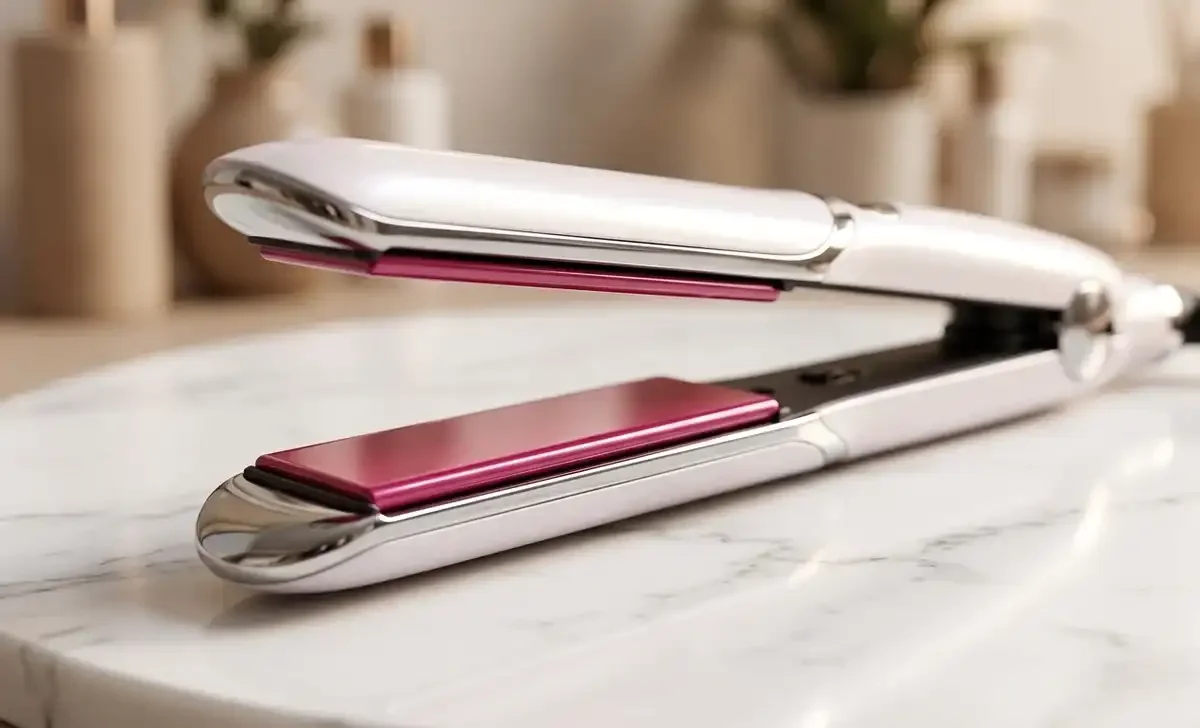
Search "Hotspan hair tool," and you'll run into a wall of vague blog posts that all say roughly the same thing: it's a heated styler, it's fast, it's good for your hair. None of them tell you what's actually going on inside the tool, whether the claims hold up, or how to avoid wrecking your hair with it.
This guide fixes that. "Hotspan" isn't a single regulated product — it's used both as a specific product line and, more loosely, as shorthand for a category of heated stylers built around tourmaline-ceramic plates and even heat distribution. That distinction matters, because it changes how you should shop: you're not just buying a name, you're buying a heating technology, and understanding that technology is what actually protects your hair.
Below, we cover how these tools work at a technical level, how to match settings to your hair type, the technique that separates a good result from a damaged one, and how to keep a tool performing well for years instead of months.
How Heated Ceramic/Tourmaline Stylers Actually Work
Hair holds its shape through hydrogen bonds. Heat temporarily breaks those bonds, the tool holds the hair in a new position, and the bonds reform as the hair cools — that's the basic physics behind every flat iron, crimper, or multi-styler on the market.
What separates a well-engineered tool from a cheap one is heat consistency, not peak temperature. Inexpensive plates often run hotter in the centre and cooler at the edges, which forces you to pass the same section of hair repeatedly to get an even result. Each extra pass is another dose of thermal stress on the hair shaft.
Tourmaline-infused ceramic plates address this in two ways:
- Even heat transfer across the full plate surface, so one pass does the job instead of three or four.
- Negative ion output, which counteracts the positive ions in dry or frizzy hair, closing the cuticle and reducing frizz and static.
The practical result isn't just shinier hair — it's less total heat exposure per style, which is the single biggest factor in long-term hair health when you style regularly.
Key Features That Actually Matter When Buying
Ignore the marketing copy and check these specs directly:
| Feature | What to look for | Why it matters |
|---|---|---|
| Temperature range | 150°C–230°C, adjustable in small increments | Fine or coloured hair needs 150–170°C; coarse or curly hair may need 190–220°C |
| Plate material | Tourmaline ceramic (not just "ceramic-coated") | Genuine tourmaline produces ions; coated plates often just look similar |
| Heat-up time | Under 30 seconds to working temperature | Slow heat-up means more time hair spends being handled and re-passed |
| Auto shut-off | 30–60 minutes | Basic fire-safety feature — don't buy a tool without it |
| Cord | 2.5–3m, swivel base | Prevents tangling and awkward angles that lead to uneven passes |
| Plate width | 25mm for short/precision styling; 38mm+ for long or thick hair | Wrong width means more passes, which means more damage |
Practical example: if you have shoulder-length, medium-thickness hair and you're choosing between a 25mm and a 38mm plate, the 38mm plate will typically cut your styling time by close to half — worth it if you style daily, unnecessary if you style once a week and want more control for face-framing pieces.
Matching Heat Settings to Hair Type
| Hair type | Recommended temperature | Technique notes |
|---|---|---|
| Straight (Type 1) | 150–170°C | Focus on root volume or flyaway control, not major reshaping |
| Wavy (Type 2) | 170–190°C | Most forgiving type for these tools; works for smoothing or defining curls |
| Curly (Type 3) | 190–210°C | Always use heat protectant; work in small sections |
| Coily/Kinky (Type 4) | Up to 220°C max | Section carefully; protectant is mandatory; consider a professional consult if new to heat styling this texture. |
Higher heat is not a shortcut. Hair that resists styling at a moderate temperature usually needs better prep (a heat protectant, fully dry hair, smaller sections) — not more heat.
Step-by-Step: Safe Technique
Start with fully dry hair. Heat applied to damp hair causes steam to form inside the shaft — this is called "bubble hair," and it's a form of internal structural damage that can't be reversed.
Apply heat protectant to every section before the tool touches it. This isn't optional; it's the single cheapest form of damage prevention available.
Section hair in strips no wider than 2.5cm. Wider sections mean the inner layers don't heat evenly, which forces repeat passes.
Set temperature to match your hair type (see table above).
Clamp near the root and glide in one continuous motion to the tip. Pausing mid-shaft creates hot spots.
Limit each section to two passes maximum. If the result isn't right after two passes, the problem is technique or temperature — not repetition.
Let each section cool before touching or brushing it. The hydrogen bonds need to fully reset to hold the style.
Example routine: for shoulder-length wavy hair styled twice a week, a realistic full routine — protectant application, sectioning, styling — takes about 12–15 minutes once you've built the muscle memory for section size and pass speed.
Heated Stylers vs. Traditional Flat Irons
| Feature | Tourmaline-Ceramic Stylers | Basic Traditional Flat Irons |
|---|---|---|
| Heat distribution | Even across the plate | Often uneven, hot centre/cool edges |
| Ionic technology | Common | Rare |
| Heat-up speed | Under 30 seconds | Varies, often 1–2 minutes |
| Frizz control | Strong | Moderate |
| Price range | Mid to premium | Budget to premium |
| Passes needed per section | Typically 1 | Often 2–4 |
Budget flat irons aren't useless — plenty do a reasonable job. But the pass-count difference is the real story: fewer passes per session compounds into meaningfully less cumulative damage over months and years of regular styling.
Maintenance and Lifespan
- Clean plates after every few uses. Let the tool cool fully, then wipe with a damp cloth; use a little isopropyl alcohol on a cotton pad for stubborn product buildup.
- Store it in a heat-resistant pouch, never with the cord wrapped tightly around the barrel — this stresses the internal wiring over time.
- Inspect the cord regularly. Stop using the tool immediately if you see fraying or exposed wire.
- Avoid drops. Ceramic plates can crack internally without visible external damage, and a cracked plate will snag and damage hair from that point on.
A well-maintained tool in this category should last three to five years. If heating becomes uneven, plates look chipped, or the tool won't hold temperature, it's time to replace it.
Expert Tips for Better Results
- Blow-dry in the direction you want the final style. The heated tool then seals and refines instead of fighting your hair's natural fall.
- Use light, even tension as you glide the tool through — too little and you get no smoothness, too much and you risk breakage.
- Hit the cool-shot button on your dryer before switching to the heated tool; it pre-seals the cuticle and reduces the work the styler has to do.
- Deep-condition between sessions. Hair that's well-hydrated going into a heat-styling session tolerates heat noticeably better than dry, under-conditioned hair.
- Cap heat styling at two to three sessions a week where possible. This is the biggest single lever for long-term hair health, more than any tool spec.
Cutting salon visits down by mastering a reliable at-home routine has become a bigger priority for a lot of people as day-to-day costs have climbed — a trend covered in more depth in this breakdown of how UK inflation has reshaped everyday spending.
Common Mistakes to Avoid
- Maxing out the temperature "just to be safe." More heat doesn't mean a better hold — it means more damage for the same result.
- Skipping heat protectant. There's no scenario where this trade-off makes sense.
- Working with sections that are too thick. The most common mistake by far, and the main cause of "why do I need three passes to get this right?"
- Styling unwashed or product-heavy hair. Buildup and oils can scorch under heat.
- Rushing the pass. A slow, steady glide reshapes hair properly; a fast pass just adds heat without doing the styling work.
- Neglecting the ends. Ends are the oldest, most damage-prone part of the hair — don't let them be an afterthought.
Conclusion
The tool matters less than most marketing suggests — the plate technology, your technique, and how well you match settings to your actual hair type matter far more. A tourmaline-ceramic styler used correctly (dry hair, protectant, small sections, one clean pass) will consistently outperform a premium tool used carelessly. Get the fundamentals right first, and the rest is just picking a design you like within your budget.
FAQs
How often can I use a heated styler without damaging my hair?
Two to three times a week is sustainable for most hair types, provided you're using a heat protectant and a temperature matched to your hair. Daily use is workable only for exceptionally robust, well-conditioned hair, and even then it carries more risk.
What temperature should I use on fine or colour-treated hair?
Stay in the 150–170°C range. Fine and chemically treated hair reaches its styling point at lower temperatures and is more vulnerable to heat damage than thicker, virgin hair.
Can I use one of these tools on wet hair?
No. Heat applied to wet hair causes internal steam damage ("bubble hair"), which weakens the shaft and leads to breakage. Always style on fully dry hair.
Is a tourmaline-ceramic styler safe for coloured hair?
Yes, with extra care. Coloured and chemically treated hair is more porous, so it absorbs heat faster. Use the lowest effective temperature, always apply protectant, and prioritise deep conditioning between sessions.
How do I know it's time to replace my styler?
Watch for visibly scratched or chipped plates, uneven heating (some sections style faster than others), a stiff or damaged cord, or a tool that no longer reaches or holds its set temperature. Most quality tools last three to five years with proper care.
Is "Hotspan" a specific brand or a general term?
Both, depending on where you encounter it — some retailers use it as a product line name, while it's also used informally to describe the broader category of tourmaline-ceramic heated stylers. When shopping, verify the actual plate material and specs rather than relying on the name alone.