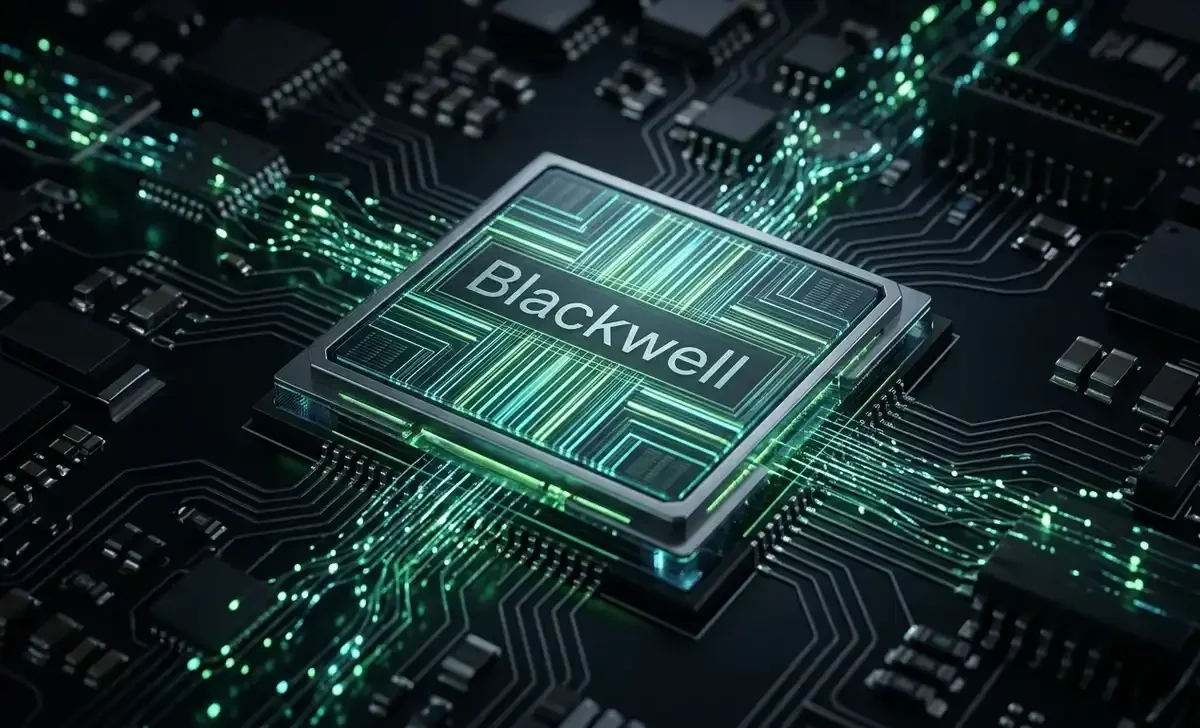
If you've been following the AI arms race, you've probably heard the name Blackwell come up a lot lately. NVIDIA's latest chip architecture has been called everything from "a breakthrough" to "the foundation of modern AI." But what exactly are Nvidia Blackwell chips, and why does everyone from cloud giants to defence departments seem to want them?
The short answer: Blackwell represents the biggest leap in GPU architecture in years. The longer answer involves petaflops of compute, trillion-parameter AI models, and a supply chain the entire tech industry is fighting over.
In this guide, you'll get a clear, jargon-free breakdown of what Blackwell chips are, how they work, what makes them special, and — critically — what their rise means for the broader world of AI and technology.
1. What Are Nvidia Blackwell Chips?
NVIDIA Blackwell chips are the company's sixth-generation GPU architecture, officially unveiled in March 2024. They're named after David Harold Blackwell, a pioneering statistician and mathematician — NVIDIA has a tradition of naming GPU architectures after scientists and mathematicians.
At their core, Blackwell chips are designed to handle the enormous computational workloads required by modern AI models — particularly large language models (LLMs), generative AI, and scientific simulations.
The flagship chip in this family is the B200 GPU, and the most powerful system built around it is the GB200 NVL72, a rack-scale system that packs 72 GPUs together. These aren't consumer graphics cards. They're purpose-built computing engines for some of the most demanding tasks humans have ever thrown at a machine.
Think of Blackwell not as a faster GPU, but as a fundamentally different class of hardware — one designed from the ground up for the AI era.
2. The Architecture Behind the Power
The Blackwell chip is built on TSMC's custom 4NP process node and contains a staggering 208 billion transistors — making it one of the most complex chips ever manufactured. To put that in perspective, the previous generation (Hopper) had 80 billion transistors.
One of the most important innovations is Blackwell's second-generation Transformer Engine, which supports FP4 precision. This allows AI models to run calculations faster and more efficiently without meaningful accuracy loss. Combined with new NVLink 5 connectivity (which allows chips to communicate at 1.8 terabytes per second), Blackwell GPUs can work together in massive clusters almost as if they were a single processor.
There's also a dedicated RAS Engine (Reliability, Availability, and Serviceability) built in — a sign that Nvidia is thinking seriously about enterprise uptime and operational resilience, not just raw performance.
3. Key Products in the Blackwell Lineup
NVIDIA hasn't released a single Blackwell chip. It's a whole ecosystem of products targeting different use cases:
- B100 — The more affordable enterprise option, positioned as an upgrade for data centres already running Hopper GPUs
- B200 — The flagship, designed for frontier AI training and inference
- GB200 NVL2 — A two-GPU server node that pairs a Grace CPU with two B200 GPUs
- GB200 NVL72 — The flagship rack system: 36 Grace CPUs, 72 B200 GPUs, interconnected with NVLink. This is the system hyperscalers are queuing up for
- RTX 5000 (Blackwell-based workstation GPUs) — Announced for professional creative and enterprise use, bringing some Blackwell innovations to a wider audience
Each product targets a different buyer, from individual AI researchers to the world's largest cloud providers.
4. Performance Numbers That Matter
Numbers in the chip world can get overwhelming fast, so here's what actually matters about Blackwell's performance claims:
- Inference speed: The GB200 NVL72 delivers up to 30x faster inference than the H100 (the previous flagship) for large language model tasks
- Training efficiency: Up to 4x faster training on AI models compared to the H100 system
- Memory: Each B200 GPU packs 192GB of HBM3e memory — critical for running very large AI models without memory bottlenecks
- FP8 throughput: 5 petaflops of dense FP8 performance per GPU (with sparse compute reaching 10 petaflops)
These numbers aren't just marketing. The practical effect is that tasks which previously required a cluster of hundreds of Hopper GPUs can now be done with far fewer Blackwell chips — meaning lower costs, less physical space, and lower energy use per unit of work.
When evaluating these claims against real-world AI workflows, independent benchmarks such as MLPerf Inference v5.1 provide a neutral, third-party lens. Specific models like Meta's Llama 3.1-405B, DeepSeek R1, and GPT-OSS 120B are frequently used in these tests to measure token-generation throughput, offering a more granular view of how Blackwell performs on the exact architectures powering today's generative AI boom.
5. Who Is Buying Blackwell Chips — and Why
The demand for Blackwell chips is extraordinary. Amazon Web Services, Google Cloud, Microsoft Azure, Meta, and Oracle have all confirmed they're deploying Blackwell at scale. Nvidia CEO Jensen Huang described demand as "insane" — and based on the order backlog, that's not hyperbole.
Why the rush? The AI industry is in a compute arms race. Companies like OpenAI need ever-larger clusters to train frontier models. Cloud providers need the chips to offer competitive AI inference services. And enterprises want to run their own AI workloads without sending data to third parties.
Understanding the level of AI demand trends driving this helps explain why Blackwell isn't just a product launch — it's a supply-and-demand event reshaping entire industries.
Sovereign nations are even buying Blackwell clusters to build national AI infrastructure, viewing compute capacity as a strategic resource on par with energy.
6. Data Centres: The Real Battleground
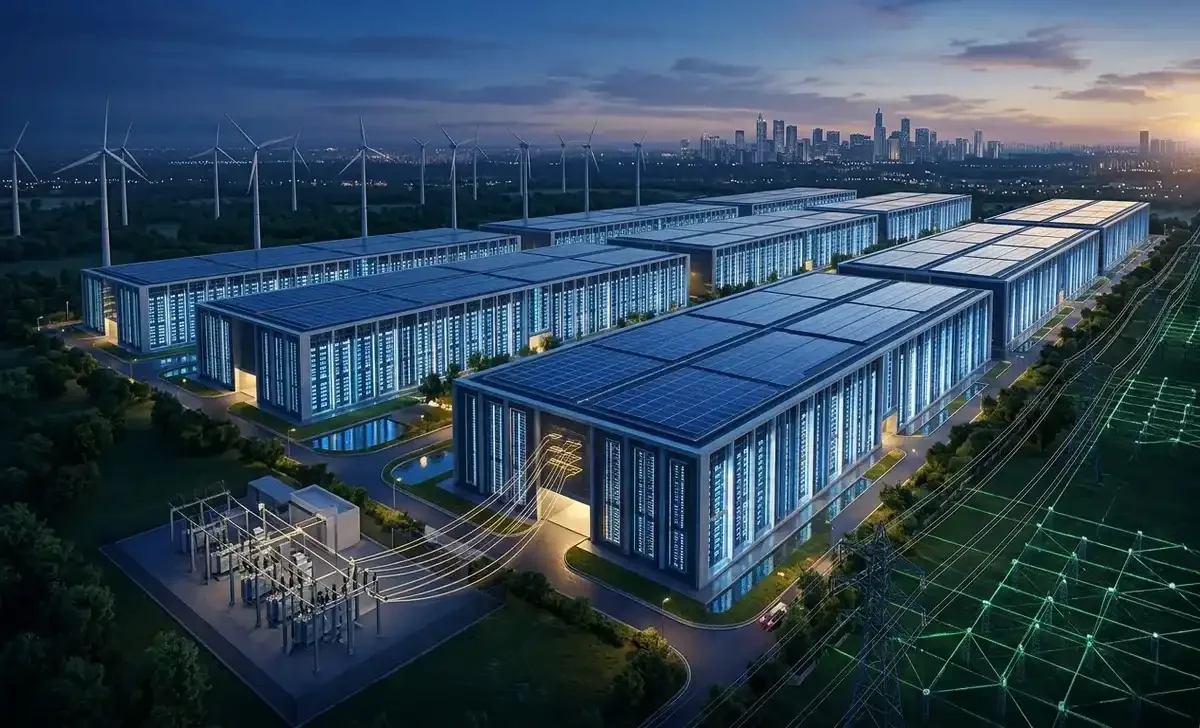
Blackwell chips don't just need servers — they need entirely redesigned data centres. The GB200 NVL72 racks generate enormous heat and require liquid cooling, higher power density, and stronger floors. This is why Microsoft and others are investing massively in new data centre infrastructure.
Traditional data centres weren't designed for 100+ kilowatt racks. Retrofitting or building new facilities to handle Blackwell clusters is now a multi-billion-dollar construction wave happening globally. India, for example, is seeing significant investment in this space, with companies like Adani pushing into digital infrastructure to support the AI boom.
The infrastructure story around Blackwell is just as big as the chip story itself. Without the right power and cooling, even the most advanced GPU is useless.
Key data centre requirements for Blackwell deployments:
- Liquid cooling (direct-to-chip or rear-door heat exchangers)
- 200-400W per rack unit power capacity
- High-bandwidth networking (InfiniBand or Ethernet at 400Gb/s+)
- Reinforced flooring for dense rack weights
7. Energy Consumption and Sustainability Concerns
Blackwell is more efficient than its predecessor on a per-computation basis. But efficiency gains don't automatically mean lower energy use — when you deploy more powerful chips and run them harder, total consumption can still go up.
A single GB200 NVL72 rack can draw 120 kilowatts of power at peak. Data centres deploying hundreds of these racks are adding meaningful load to regional power grids.
This is already triggering debates about renewable energy sourcing, grid capacity, and whether the AI industry's carbon footprint is being properly accounted for. NVIDIA is aware of this tension and has emphasised efficiency metrics (performance per watt) rather than absolute power figures in its marketing.
The honest reality: Blackwell is more efficient than Hopper per token generated, but the scale of deployment means the aggregate energy footprint of AI is still growing rapidly.
8. The Competitive Landscape
NVIDIA doesn't have this market entirely to itself — though it comes close. The competitive field has become notably more crowded and technically formidable over the past year.
AMD remains the most direct challenger. Its MI350 series, built on the CDNA 4 architecture and a 3nm process, matches Blackwell's 288GB HBM3E memory capacity in its top variants. Additionally, AMD's ROCm 7.0 software stack has reached functional parity with CUDA for many PyTorch and JAX workloads, significantly lowering the historical barrier for developers to migrate away from NVIDIA.
Google continues to double down on its internal silicon with the TPU v7 "Ironwood", designed specifically to power its own Gemini model family. Meanwhile, Amazon's Trainium 3 chip represents AWS's commitment to reducing reliance on external vendors for its internal AI training.
Perhaps the most strategically significant new entrant is OpenAI. The organisation is developing its own in-house inference chip, internally referred to as "Jalapeño" in some industry discussions, in partnership with Broadcom. While not yet a direct market competitor to Blackwell's general availability, it signals a profound shift: frontier model developers are actively seeking to control their own silicon destiny to optimise costs and performance for their specific architectures.
Outside the hyperscaler space, a wave of specialised AI chip startups — including Cerebras, SambaNova, and Etched — continue to carve out niches in specific inference and training segments, though none currently pose a systemic threat to NVIDIA's volume.
Yet Nvidia's moat remains deep. It's not just the hardware — it's CUDA, the software ecosystem that millions of AI developers have built on for over a decade. Switching away from Nvidia means retraining workflows, rewriting code, and accepting a less mature software stack. Despite AMD's ROCm advances, the inertia of the CUDA ecosystem remains a formidable advantage.
This is why, despite serious investment from competitors, Nvidia holds an estimated 70-90% share of the AI accelerator market. Blackwell widens that lead rather than closing it.
Looking ahead, NVIDIA is not resting on its laurels. The company's next-generation architecture, codenamed "Vera Rubin", is already being sampled to select partners, ensuring the pace of silicon innovation remains aggressive even as competitors catch up to Blackwell's capabilities.
9. Supply Chain Challenges and Demand Surge
Getting Blackwell chips into customers' hands has been a genuine challenge. TSMC's cutting-edge fab capacity is limited, packaging the multi-die Blackwell architecture is complex, and the HBM3e memory used in the B200 is itself in short supply (produced mainly by SK Hynix, Samsung, and Micron).
NVIDIA has reportedly faced yield challenges with some Blackwell configurations, pushing back timelines for certain customers. Despite this, the company reported that Blackwell revenue was already in the billions within quarters of launch — a sign of how fierce demand is.
For investors and analysts watching the sector, understanding these supply dynamics is essential context — it explains why tech stock valuations can swing dramatically on any news about chip availability or production yields.
10. What Blackwell Means for AI Developers
If you're building AI products or researching AI, Blackwell matters to you even if you'll never directly handle one. Here's why:
- Inference costs will drop — More efficient hardware means cheaper API calls for LLMs
- Larger models become practical — Models that previously couldn't run in real-time will become deployable
- New capabilities unlock — Multimodal AI, real-time video understanding, and agentic AI systems all benefit from Blackwell's performance envelope.
- Edge cases become achievable — Tasks requiring extremely low latency (medical imaging, autonomous driving) become more feasible.
For developers currently building on cloud AI APIs, the shift to Blackwell backends is largely invisible. But the performance improvements will trickle down in the form of faster response times, lower costs, and the availability of newer, larger models. With independent benchmarks now using models like Llama 3.1 and DeepSeek R1 to validate performance claims, developers have more transparent data than ever to choose their inference providers.
Expert Tips
- Don't conflate "more chips" with "better AI." The quality of training data and model architecture still matters more than raw compute in many cases.
- Watch the inference market, not just training. Training is a one-time cost; inference runs continuously. Blackwell's inference efficiency improvements may matter more long-term than its training speed.
- Follow the software story alongside the hardware. NVIDIA's NIM (NVIDIA Inference Microservices) and related software tools are what actually make Blackwell useful at scale. Hardware without the software layer is just hot metal.
- Understand energy as a constraint. In the next 2-3 years, power availability will be as limiting as chip supply for AI infrastructure growth.
- Don't overlook sovereign AI trends. Governments buying compute clusters is a meaningful new demand vector that most chip coverage underestimates.
- Keep an eye on the software ecosystem alternatives. With ROCm 7.0 maturing, the "CUDA lock-in" is less absolute than it was a year ago. It's worth tracking which workloads actually migrate.
Common Mistakes to Avoid
Treating benchmark numbers as the absolute truth. NVIDIA's performance figures are real, but they're measured under ideal conditions. Real-world performance depends heavily on the specific workload, software optimisation, and system configuration.
Ignoring the total cost of ownership. The GPU price is just the beginning. Liquid cooling infrastructure, power, networking, and specialised staff add substantial cost.
Assuming Blackwell is only for the largest companies. Cloud providers are making Blackwell available as a service — meaning startups and researchers can access this hardware without buying it outright.
Confusing Blackwell with consumer GPUs. The RTX 5000 series uses some Blackwell innovations, but is primarily a workstation product. When someone says "Blackwell chip," they typically mean the data centre variants.
Overlooking the competitive response. AMD, Intel, Google, and Amazon are all investing heavily in alternatives. With AMD's MI350 series and OpenAI's custom silicon on the horizon, the gap may narrow over the next generation cycle.
Assuming NVIDIA's roadmap stops here. With "Vera Rubin" already in early sampling, the hardware race is accelerating rather than reaching a resting point.
Conclusion
NVIDIA Blackwell chips represent the current peak of AI hardware — and arguably one of the most consequential product launches in computing history. From the raw silicon innovations to the infrastructure wave they're creating, Blackwell is reshaping how AI is built, deployed, and paid for.
Whether you're a developer, investor, policymaker, or simply someone trying to understand why AI feels like it's accelerating so fast right now, the Blackwell story is central to that answer. The chips are shipping, the data centres are being built, and the demand shows no signs of slowing.
Stay informed, track the supply dynamics, and pay attention to how this hardware translates into real AI capabilities over the next 12-24 months. That's where the truly interesting story unfolds.
FAQs
What is the Nvidia Blackwell chip used for?
Blackwell chips are primarily designed for AI workloads — training and running large AI models, scientific computing, and high-performance computing tasks in data centres. Some Blackwell innovations also appear in workstation GPUs.
How does Blackwell compare to the previous Hopper architecture?
Blackwell delivers up to 30x faster AI inference and up to 4x faster training compared to Hopper (H100), along with significantly more memory and improved energy efficiency per computation.
When did Nvidia release Blackwell chips?
NVIDIA unveiled the Blackwell architecture in March 2024, with commercial availability and volume shipments ramping through late 2024 and into 2025.
Why is there a shortage of Blackwell chips?
Demand from hyperscalers, cloud providers, and governments far exceeds production capacity. The chips require advanced TSMC packaging technology and scarce HBM3e memory, creating supply constraints.
Can small companies or startups access Blackwell GPUs?
Yes — through cloud providers like AWS, Google Cloud, and Azure, businesses can rent access to Blackwell-based instances without purchasing the hardware directly.
Who are the main competitors challenging Blackwell?
Key competitors include AMD with its MI350 series (CDNA 4), Google's TPU v7 "Ironwood", Amazon's Trainium 3, and OpenAI's in-house "Jalapeño" inference chip developed with Broadcom. While none currently match NVIDIA's overall ecosystem, the competitive landscape is more active than ever.