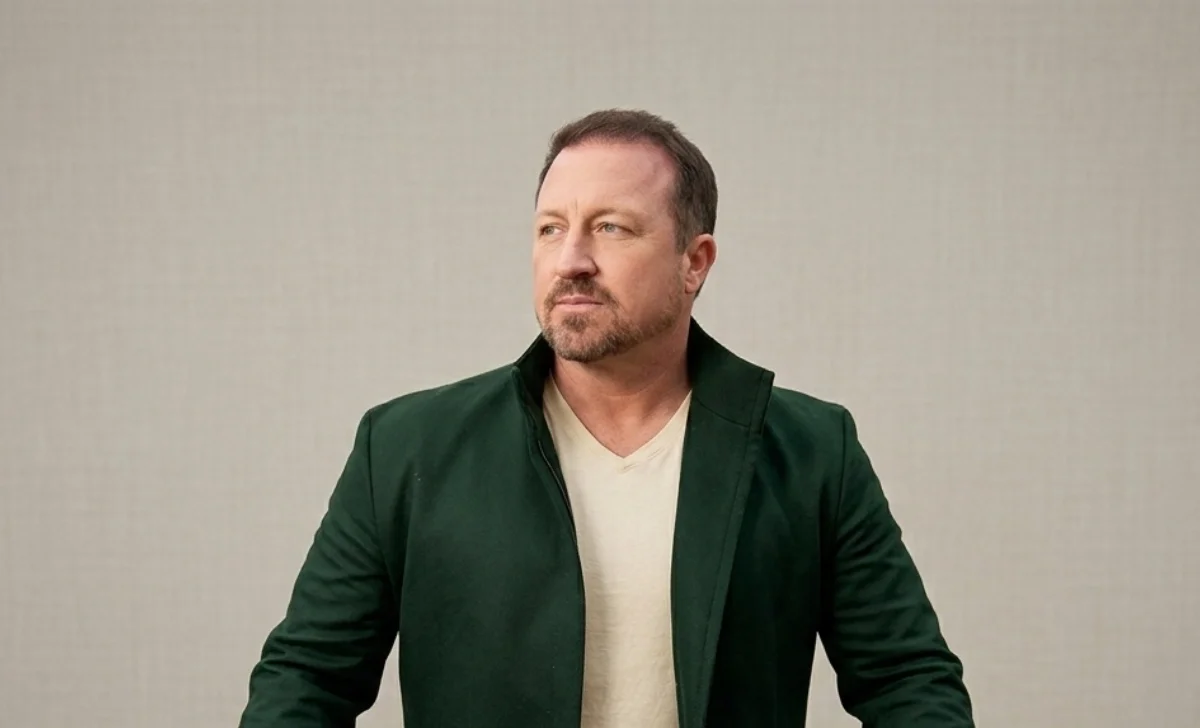
Vinny Lobdell isn't a household name — and he'd probably be fine with that. He's from Pulaski, New York, a small town in Central New York that most people couldn't find on a map. But within business circles, especially in the manufacturing and air purification world, his name carries real weight.
His estimated net worth in 2026 sits somewhere between $15 million and $30 million — built largely from the 2021 majority sale of HealthWay Family of Brands to private equity firm AE Industrial Partners. That single deal changed his financial life. But the story behind it is what makes it actually interesting.
Who Is Vinny Lobdell?
Born around 1980, Lobdell grew up in Pulaski dreaming of being a sportscaster or an NHL player — not a business mogul. He studied marketing and entrepreneurship, then joined the family business, working alongside his father, Vincent Lobdell Sr.
Together, they took HealthWay from a niche industrial manufacturer into a global supplier with systems in schools, hospitals, offices, and large institutions across the country. That kind of growth doesn't happen overnight, and it didn't here either. It took nearly two decades of grinding through the kinds of challenges most business owners know all too well — cash flow stress, scaling pains, the whole thing.
What set Lobdell apart wasn't just the business decisions. It was the personal foundation behind them. He's a family man — married to his wife Suzie, with four children and a fifth on the way as of 2024. He's close friends with Dick Vitale. And he's carried real personal loss with him throughout his journey. His older brother Rusty died by suicide in 1995 at just 19 years old, after being diagnosed with schizophrenia. That loss has clearly shaped the family's values and their approach to giving back. More recently, his mother Nancy passed away in April 2026 at age 68 — by all accounts the emotional heart of the family.
When you understand that backstory, his definition of success starts to make more sense. In his own words: "Success comes down to being able to spend more time as one wishes." That's not what you expect to hear from someone who just exited a company for eight figures.
Vinny Lobdell Net Worth in 2026
Let's get to the number people are actually searching for.
Vinny Lobdell's net worth is estimated between $15 million and $30 million. The honest answer is that no one outside his inner circle knows the exact figure — and that's by design. His wealth is tied up in private assets that don't come with a public price tag.
Here's a rough breakdown based on what's been reported and reasonably estimated:
| Field | Estimated Value |
|---|---|
| HealthWay Equity & Sale Proceeds | $10M–$20M |
| Investment Holdings | $5M–$15M |
| Real Estate Assets | $1M–$3M |
| Cash & Liquidity | $500K–$2M |
| Liabilities & Debt | $2M–$5M |
| Estimated Net Worth | $15M–$30M |
The HealthWay sale is clearly the biggest piece. After taxes and depending on how his equity stake was structured, most analysts estimate he personally walked away with somewhere in the low-to-mid eight-figure range from that transaction alone.
The Business Behind the Money: HealthWay Family of Brands
To understand Vinny Lobdell's net worth, you really have to understand what HealthWay actually built — because it's more layered than most people realize.
The company was founded in 2003 with a focus on high-performance air purification technology. For years, it operated mostly in industrial and institutional markets — not exactly glamorous, but steady and credible. Over time, HealthWay developed into three distinct global brands, each serving a different market:
- HealthWay — the B2B platform brand for dealers and distributors
- Pure Wellness — a hospitality-focused brand licensed to hotels and office spaces
- Intellipure — the consumer-facing brand, launched in 2017
That third lane — Intellipure — turned out to be the move that changed everything. Lobdell pushed the company into the consumer market at exactly the right moment. As wildfires worsened and then COVID-19 hit, air quality became something everyday people suddenly cared deeply about. Intellipure was already on shelves.
The client list tells you how seriously the institutional side was taken too. HealthWay placed systems in New York City public schools, Chicago Public Schools, LA Unified, Cornell University, and major hospitals including Upstate Medical, Crouse, and Oswego Hospital. That's not a local operation. That's a company with national reach.
By early 2021, HealthWay reportedly had around $30 million in backlog orders and more than $100 million in pending business opportunities. Numbers like that get private equity firms on the phone very quickly.
The 2021 HealthWay Sale to AE Industrial Partners
In 2021, HealthWay sold a majority stake to AE Industrial Partners. The exact purchase price was never disclosed publicly — which is completely standard for private equity deals of this kind.
What we do know is that the Lobdell family had already sold a minority stake in 2020, so by the time the larger deal closed, the process had been underway for about a year. It wasn't a sudden exit. It was a deliberate one.
After the acquisition, Lobdell stepped back from day-to-day operations — but it's worth noting he's still a shareholder. In his own words: "I kind of stepped back and knew that it was time for me to focus on other endeavours and my family." That's a different picture than simply walking away.
Private equity firms typically value businesses using revenue multiples, and given HealthWay's pipeline and brand footprint at the time, analysts estimate the company's valuation reached well into the tens of millions. Lobdell's personal share of that, after taxes, likely landed in the low-to-mid eight-figure range — making it the single biggest contributor to his overall net worth.
Vinny Lobdell's Investments After HealthWay
After stepping away from HealthWay, Lobdell didn't park his money and go quiet. He moved into investor mode — and he's been active about it.
By his own account, he now holds around 30 different investments spread across multiple industries. His known areas include:
- Commercial real estate
- Technology startups
- Wellness companies
- Hospitality businesses
- Education technology ventures
- Entertainment and local businesses
One concrete example: his stake in Hidden Fish restaurant, which he co-invested in alongside Adam Weitsman. That's the kind of specific, locally rooted bet that fits his overall profile.
What's interesting is how he evaluates deals. In a direct interview, Lobdell laid out three clear questions he asks before putting money into anything:
- Do I trust and like the people?
- Do I like the idea?
- Can I add value?
And he was blunt about it: "If you don't know the people, it doesn't matter how good a balance sheet looks."
That's a people-first investment philosophy — and honestly, it's one shared by a lot of successful private investors. For anyone curious about how entrepreneurs like Dan Cogdell approach wealth-building outside the spotlight, Lobdell's framework is worth studying.
Vinny Lobdell Age and Personal Life
Lobdell was born around 1980, which puts him at roughly 45 years old in 2026. He built and sold a significant company before most people hit their peak earning years — and in manufacturing, where deals move slower than in tech, that's genuinely uncommon.
He's married to Suzie, and the couple have four children with a fifth on the way as of 2024. Family is clearly central to how he thinks about his time and his money. His friendship with Dick Vitale — the ESPN college basketball analyst — reflects a personal side that doesn't usually come up in business profiles but says something about who he actually is outside the boardroom.
He also carries real grief with him. The loss of his brother Rusty at 19 left a lasting mark on the family. And his mother Nancy's passing in April 2026 — she was described by those close to her as the family's emotional centre — is still very recent. For anyone searching for Vinny Lobdell right now, that context matters.
Not every wealthy person at this level has this kind of personal depth behind their story. It's a reminder that behind most net worth profiles — whether you're reading about Drew Starkey or a regional entrepreneur from upstate New York — there's a real human story that the numbers alone don't tell.
Philanthropy: Where His Money Goes
One of the more underreported parts of Lobdell's story is what he's done with his wealth beyond investing.
In 2022, the Lobdell family donated $1 million to support mental health initiatives through Oswego Health. Given the family's personal history with Rusty's death, that donation wasn't just a check — it was personal.
But the giving goes further than the headline number. When COVID wiped out the Pulaski Academy Class of 2020's prom and graduation, Lobdell gave $250 to every senior in the class. It's a small gesture in dollar terms but a big one in spirit — and it's the kind of thing that sticks with a community.
He also supports the V Foundation, the Jim & Julie Boeheim Foundation, Carrier Park's Field of Dreams (a handicap-accessible sports complex), and JDRF. These aren't random causes. They connect back to real relationships and real experiences.
Lobdell has stayed involved in Central New York's entrepreneurial community too — mentoring, investing locally, and staying visible in a region that doesn't always get this kind of attention from its homegrown success stories.
How Vinny Lobdell Compares to Other Entrepreneurs
To be straightforward about it: compared to Silicon Valley billionaires or celebrity founders, Lobdell's wealth is modest. He's not making headlines for buying sports teams or launching satellites.
But that comparison is a bit unfair and a bit beside the point. In the world of privately held manufacturing and niche technology, building a company to a multi-million-dollar private equity exit is a genuine achievement. Most founders never get there. The ones who do — especially in industrial sectors, not consumer apps — tend to land in that low eight-figure range.
It's also worth putting this in a broader context. Public figures who built their names in entertainment or media — someone like Cole Escola, for instance — often follow a very different path to financial stability than a manufacturing founder from rural New York. Neither path is better, but they highlight just how many different roads actually lead to the same destination.
Within Central New York, an estimated $15–$30 million net worth puts Lobdell in rare company. His path follows a pattern that has created real, lasting wealth for founders across industries:
- Build a solid private company in a niche with real institutional demand
- Expand the brand footprint strategically (in his case, three distinct brands)
- Time an exit to private equity during peak demand
- Spread the proceeds across a diversified portfolio
It's not a flashy playbook. It doesn't trend on social media. But it works — and it holds up over time better than most viral business stories do.
Why Vinny Lobdell's Net Worth Is Hard to Pin Down
If you've searched for this figure and found different numbers depending on where you looked, there's a simple reason: there's no public record.
Unlike a publicly traded CEO, Lobdell has never had to disclose his compensation, equity structure, or investment returns. The HealthWay deal terms were never released. His portfolio is private. Private assets — startup equity, real estate, fund positions — don't have a ticker symbol.
Everything you'll find online, including this article, is informed estimation. The figures are built from what's been reported about the HealthWay sale, known investments, public philanthropy, and reasonable assumptions about how wealth at this level is typically structured. It's analysis, not an accounting ledger — and that distinction matters.
Vinny Lobdell's Advice for Entrepreneurs
One piece of his story that tends to get skipped over in financial summaries is what he'd actually tell other founders.
Lobdell has said he wishes he'd brought in stronger people earlier — even at the cost of giving up equity — because "it's really hard to do anything great without a great team." That's not a revolutionary idea, but it lands differently coming from someone who actually built a company from small-town upstate New York into a private equity acquisition.
He also spent years trying to do too much himself before accepting that scaling a business requires letting go. That's a pattern plenty of founders recognise, and it's worth saying out loud.
Conclusion
Vinny Lobdell's story is one of those quiet ones that doesn't travel far beyond its own region — but probably should.
He grew up in a small town, joined a family business, made a strategic push into consumer markets at exactly the right time, and sold at the peak of demand. Then instead of moving somewhere larger or louder, he stayed, invested locally, gave back in specific and personal ways, and kept building.
The 2021 HealthWay sale was the financial high point so far, but the foundation under it is what actually holds. A diversified portfolio, a clear investment philosophy, a community still connected to, and a definition of success that has nothing to do with his bank balance — that's a more durable position than most people manage.
Whether his net worth lands closer to $15 million or $30 million over the next few years will come down to how those 30 investments perform. But the thinking behind all of it is already solid.
Disclaimer: The net worth figures and financial estimates in this article are based on publicly available information, regional reporting, and reasonable industry assumptions. Vinny Lobdell has not publicly confirmed any specific figures, and all estimates should be understood as informed approximations rather than verified financial data.