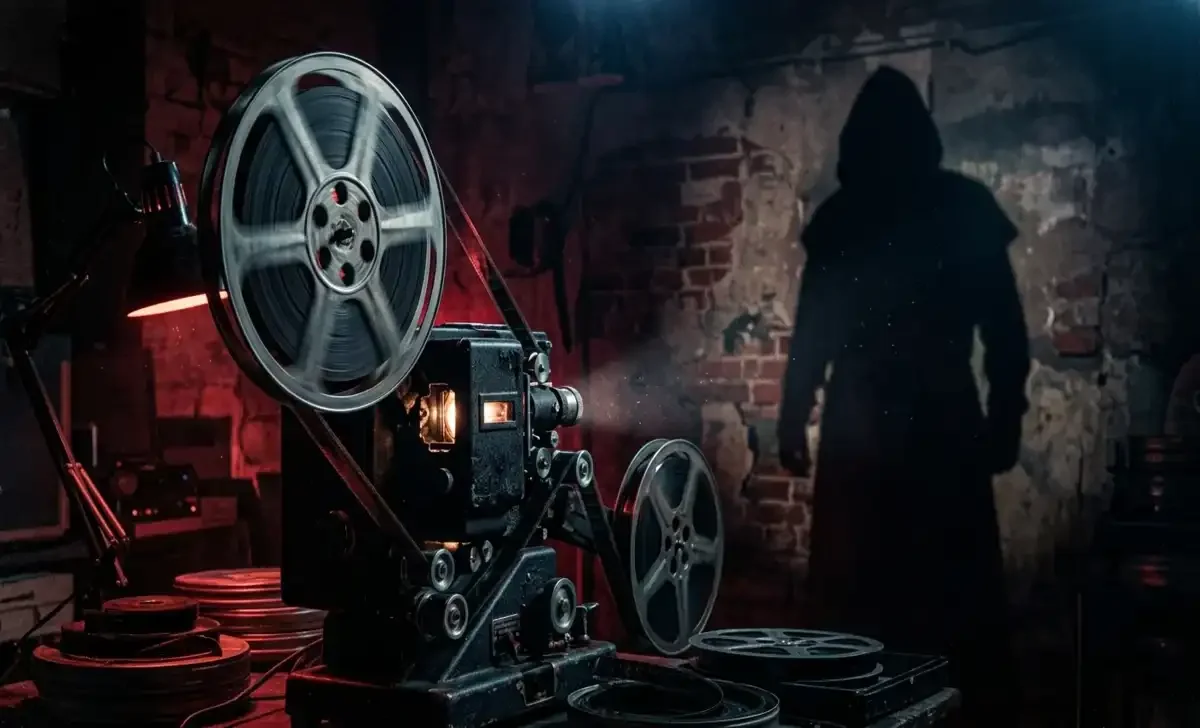
If you've ever sat through a scary movie with your heart pounding, the lights off, and your hands halfway over your eyes — you know there's nothing quite like that feeling. Horror is one of the most powerful genres in all of cinema. It makes us feel alive in a very specific, very uncomfortable way.
But not all horror movies are created equal. Some are cheap jump-scare factories. Others genuinely burrow into your brain and stay there for weeks. This guide is for people who want the real thing — films that terrify, disturb, and occasionally make you question whether that sound in the hallway is just the house settling.
We've put together a list of the best scary movies ever made, spanning decades and subgenres, along with expert tips on how to get the most out of your horror-watching experience. Whether you're building a movie night lineup or diving into the genre for the first time, this one's for you.
The Shining (1980)
Stanley Kubrick's adaptation of Stephen King's novel isn't just a great horror film — it's arguably one of the greatest films ever made, full stop. Jack Nicholson plays Jack Torrance, a writer who takes a job as the winter caretaker of the isolated Overlook Hotel, bringing along his wife Wendy and young son Danny. What follows is a slow, creeping descent into madness that never fully explains itself — and that's exactly what makes it so terrifying.
The cinematography alone is worth studying. Kubrick uses wide, symmetrical hallways and long tracking shots to build a suffocating sense of dread. Danny's tricycle rides through the hotel corridors rank among the most unsettling sequences in cinema history. The film rewards repeat viewings, too — you'll keep noticing things you missed.
Why it works: The ambiguity. You're never entirely sure what's real and what's Jack's unraveling psyche. That uncertainty lingers long after the credits roll.
Best for: Fans of psychological horror and slow-burn tension.
Get Out (2017)
Jordan Peele's debut feature is a masterclass in social horror. When Chris Washington visits his white girlfriend's family estate for the weekend, something feels off from the moment they arrive. The film works brilliantly on two levels — as a tense thriller and as sharp cultural commentary on race in America.
What's remarkable is how Peele builds unease from perfectly ordinary situations. A cookout. A polite conversation. A glass of iced tea. None of it should feel threatening, and yet every scene crackles with tension. Daniel Kaluuya's performance is extraordinary — his eyes do half the work.
Why it works: The horror feels rooted in something real. It doesn't rely on monsters or ghosts. The scariest thing here is people.
Best for: Horror fans who want substance alongside scares. Also a great entry point for people who don't usually watch scary movies.
Hereditary (2018)
If you thought you knew what grief felt like on screen, Ari Aster's debut will rearrange your understanding. Hereditary begins with a family death and spirals into something genuinely shocking. Toni Collette gives one of the most overlooked performances in recent memory — raw, unhinged, and heartbreaking all at once.
The film isn't afraid to hurt you. It takes its time, builds a complete family portrait, and then systematically dismantles it. The horror here isn't telegraphed. It arrives sideways, from directions you weren't watching.
Why it works: It earns every scare by first making you care deeply about the characters. By the time things go wrong, you're already invested.
Best for: Viewers who want a horror film that actually has something to say about family dynamics and inherited trauma.
Interested in how modern storytelling is evolving behind the scenes? This deep dive into your favorite shows explores how filmmakers craft emotional narratives that stick with audiences long after viewing.
The Exorcist (1973)
Still the gold standard. William Friedkin's adaptation of William Peter Blatty's novel shocked audiences so severely in 1973 that people reportedly fainted in theaters. Fifty-plus years later, it remains deeply uncomfortable to watch — not because of the special effects, which have aged somewhat, but because of what it taps into.
The film is really about a mother's desperation to save her child when science and reason have failed. The supernatural horror is the backdrop. The human horror — watching a parent feel utterly helpless — is what drives the emotional weight. Ellen Burstyn as Chris MacNeil is magnificent and criminally underrated in discussions of this film.
Why it works: It grounds the supernatural in genuine emotional stakes. The scariest scene isn't the famous head-spinning one. It's Chris breaking down in the hospital, begging someone to help her daughter.
Best for: Classic horror enthusiasts and anyone who wants to understand why the genre looks the way it does today.
A Quiet Place (2018)
John Krasinski's post-apocalyptic thriller uses silence as its primary weapon, and it's devastatingly effective. The world has been overrun by creatures that hunt entirely by sound. A family must navigate survival without making a noise, which is genuinely one of the most stressful premises in modern horror.
What makes this film stand out is its heart. At its core, it's a story about parents protecting their children, about a marriage under impossible pressure, about a father who can't fix what's broken. Emily Blunt and Krasinski are compelling throughout, and the film never lets its concept overshadow its characters.
Why it works: The tension never lets up. Watching characters do ordinary things — step on a nail, drop a battery — becomes almost unbearable because the stakes are so clearly established.
Best for: People who prefer tension and atmosphere over gore.
Midsommar (2019)
Ari Aster's follow-up to Hereditary is a horror film set almost entirely in broad daylight — and it's somehow more disturbing for it. A group of American friends travel to a Swedish midsummer festival, only to discover the community's traditions are far darker than they expected.
What's fascinating is how Midsommar uses folk horror and cultural isolation to get under your skin. There's very little darkness to hide in. Everything is visible, everything is ritualized, and the film forces you to watch. Florence Pugh is extraordinary as Dani, a woman processing grief in a place that offers its own twisted form of community.
Why it works: It makes the unfamiliar feel ceremonial and almost beautiful, which makes it all the more unsettling when things turn dark.
Best for: Fans of atmospheric, arthouse horror who don't mind a slow build.
It Follows (2014)
David Robert Mitchell's indie horror operates on a deceptively simple premise: after a sexual encounter, a young woman is followed by a supernatural force that only she can see. It walks. Always walks. It doesn't run. But it never stops.
The film uses that premise to explore anxiety, vulnerability, and the way trauma can feel inescapable. The retro aesthetic — set in an ambiguous era, shot with dream-like stillness — gives It Follows a quality that's hard to place. It doesn't feel like anything else.
Why it works: The monster is simple, and that simplicity is terrifying. Knowing it's out there somewhere, always moving in your direction, is unbearable.
Best for: Horror fans who appreciate originality and subtext alongside genuine dread.
Halloween (1978)
John Carpenter's slasher masterpiece essentially invented the rules that every horror movie since has either followed or deliberately broken. Michael Myers — blank mask, kitchen knife, zero motivation — stalks babysitter Laurie Strode through suburban Illinois on October 31st. That's it. That's the whole plot.
And it works because Carpenter is a genius with atmosphere. The Haddonfield streets feel genuinely peaceful and ordinary, which makes Myers's presence all the more intrusive. Jamie Lee Curtis is excellent as Laurie, a final girl who actually feels like a real teenager rather than a horror movie archetype.
Why it works: Michael Myers is frightening precisely because there's no reason for what he does. You can't reason with emptiness.
Best for: Horror newcomers who want to start at the beginning of the genre's modern era.
As streaming platforms compete for horror fans' attention, AI is reshaping how content gets made and recommended — including how studios decide which scary movies get greenlit in the first place.
The Babadook (2014)
Australian director Jennifer Kent's debut feature is one of the most emotionally devastating horror films ever made. A widowed mother struggling with grief and exhaustion finds a mysterious pop-up book in her home — and things deteriorate rapidly from there.
The Babadook is horror as metaphor, though it works on both levels. The creature is genuinely menacing. But the film's real power comes from its unflinching portrayal of depression, trauma, and the weight of single parenthood. It's not comfortable viewing, but it's unforgettable.
Why it works: Essie Davis gives a performance that strips away every layer of composure. You feel her exhaustion in your bones.
Best for: Viewers who want horror that doubles as genuine emotional drama.
Sinister (2012)
Sinister doesn't get enough credit. Ethan Hawke plays a true-crime writer who discovers a box of home movies in his new house that reveal a series of horrific murders — including one that connects directly to his own family. The found-footage sequences within the film are among the most disturbing things committed to celluloid in the past twenty years.
The film is tightly constructed, and the horror escalates methodically. Hawke is compelling as a man whose ambition keeps him in a house where he clearly shouldn't stay.
Why it works: The home movie sequences feel genuinely wrong in a way that's hard to explain. They tap into something primal about violence captured on film.
Best for: True crime fans who want their genre interest weaponized against them.
If you enjoy well-crafted crime storytelling, it's worth checking out what to know before Crime 101 drops on Prime Video — a series that blends thriller mechanics with deep character work.
Expert Tips for Watching Scary Movies {#expert-tips}
Getting the most out of a horror film isn't just about picking the right movie. How you watch matters just as much.
- Watch in the dark. This sounds obvious, but it makes a real difference. Horror cinematographers light their films with shadows and darkness in mind. Ambient light kills the atmosphere.
- Use headphones or good speakers. Sound design is everything in horror. You'd be amazed what you miss through laptop speakers.
- Avoid looking things up mid-film. Don't spoil the experience by reading plot summaries halfway through. Trust the film.
- Watch alone (at least once). Group viewings are fun, but communal laughter can diffuse tension. Some horror films deserve to be experienced solo.
- Give slow-burn films time to breathe. A lot of great horror takes 40 minutes to properly establish before paying off. Resist the urge to bail.
- Watch with context. Knowing when and where a film was made often deepens the experience. Halloween and Midsommar hit differently when you understand what they're responding to culturally.
Common Mistakes to Avoid
Even dedicated horror fans fall into these traps:
Starting with something too extreme. If you're new to horror or introducing someone else to it, don't open with Hereditary or Midsommar. Build up gradually. Get Out or A Quiet Place are better entry points.
Dismissing older films. The Exorcist and Halloween feel dated to some viewers, but that's often a failure of imagination. Context helps enormously — try to put yourself in the shoes of a 1973 audience who had never seen anything like it.
Confusing gore with horror. Genuine horror builds dread. Gore can be effective, but it's a shortcut. The films on this list are almost universally restrained in how much they show, which is part of why they work.
Watching on your phone. Horror deserves a proper screen. The visual and audio design is too important to compress onto a 6-inch display.
Expecting every scary movie to be scary in the same way. Sinister is scary differently from The Babadook, which is scary differently from It Follows. Each film has its own logic. Meet it on its own terms.
Conclusion
Scary movies are more than just entertainment — they're a legitimate art form that explores death, identity, grief, and the human capacity for cruelty in ways that other genres simply can't. The films on this list are the best the genre has to offer: carefully crafted, emotionally intelligent, and genuinely terrifying.
Whether you work through this list chronologically, jump around by mood, or pick one tonight for a solo viewing with the lights off — you're in good hands. Horror doesn't get better than this.
Start somewhere. Stay curious. And maybe leave the lights on just this once.
FAQs
What is the scariest movie ever made according to science?
Several studies have attempted to measure fear responses in horror films. Sinister frequently tops these lists — a 2020 study by Broadband Choices measured heart rate increases across 50+ horror films, with Sinister producing the most sustained elevated heart rate among participants.
What scary movie should I watch if I don't usually like horror?
Get Out (2017) is widely considered the best entry point. It's more of a psychological thriller than a traditional horror film, the scares are grounded in real-world tension, and it has genuine substance to it. A Quiet Place is another excellent starting point.
Are scary movies bad for you?
Not for most people. Research suggests horror films can actually be a healthy way to process fear in a controlled environment. They can build emotional resilience and, for many people, trigger a satisfying adrenaline response. The key is knowing your own tolerance.
What's the difference between horror and a thriller?
Thrillers create suspense and tension — you're worried about what might happen. Horror films go further, aiming to genuinely frighten and disturb. There's a lot of overlap, but horror typically involves more extreme emotional stakes, supernatural elements (sometimes), and a deliberate attempt to unsettle rather than merely excite.
What's the best scary movie streaming right now?
Availability changes frequently depending on your region and platform. Your best bet is to check a service like JustWatch, which aggregates current streaming options across platforms. Most of the films on this list cycle through major streamers regularly.