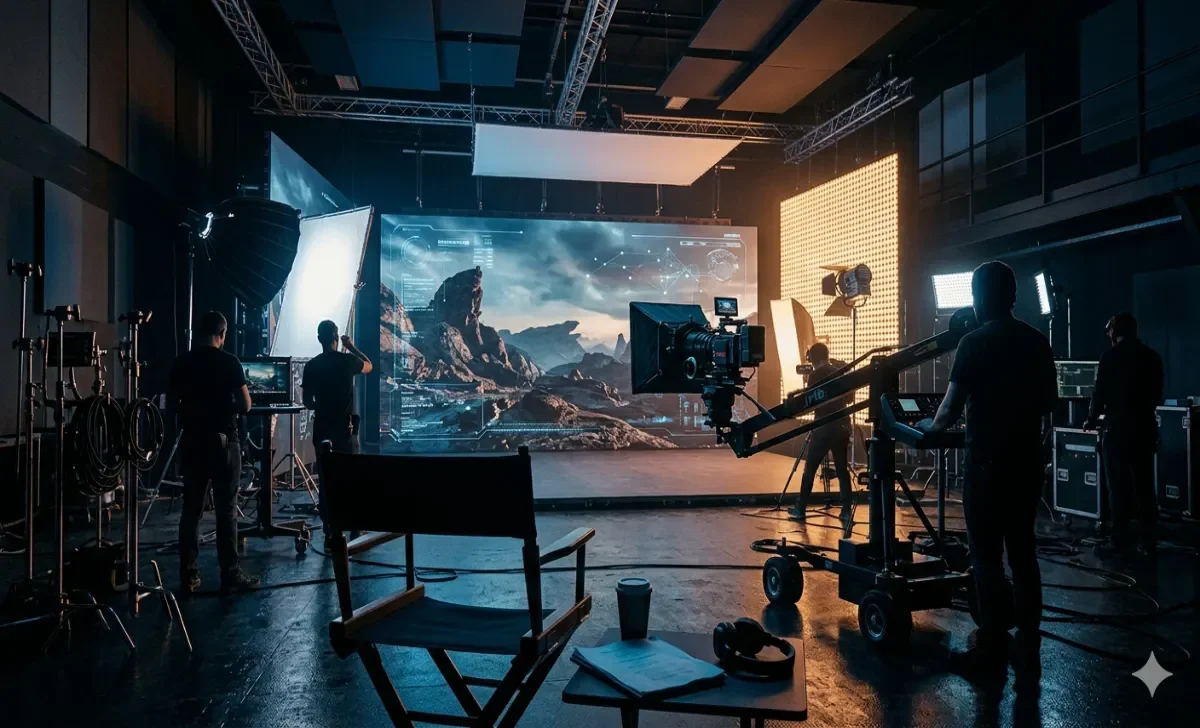
AI in Hollywood is not the industry killer most people fear. Yes, it will change how movies and TV get made, but every major technology shift in entertainment history has done the same. The real question is not whether AI disrupts the business; it is whether you will be prepared when it does.
The people who come out ahead will be the ones who understand the tools well enough to direct them, not the ones who resist longest. That means learning what AI can and cannot do, protecting what remains human, and staying current on the legal ground rules that unions have already fought hard to establish.
Why This Debate Keeps Getting It Wrong
Here is a question that keeps coming up: Will AI replace human creativity in Hollywood? It is the wrong thing to ask.
The more useful question is: what changes, what stays the same, and where do you fit in? Those three things will define careers and companies over the next decade.
Jeffrey Katzenberg has been in entertainment long enough to see almost every disruption come and go. He co-founded DreamWorks and ran Disney animation during its highest point. When someone with that kind of track record talks about AI in Hollywood, it is worth listening. His position is clear: stop asking whether the shift is coming and start figuring out how to work with it.
That is not a naive take. It is a practical one.
AI in Hollywood Will Not Kill the Industry
The fear is simple. AI tools can generate scripts, concept art, and even rough performances faster than humans. If machines can do it cheaper and faster, why pay people?
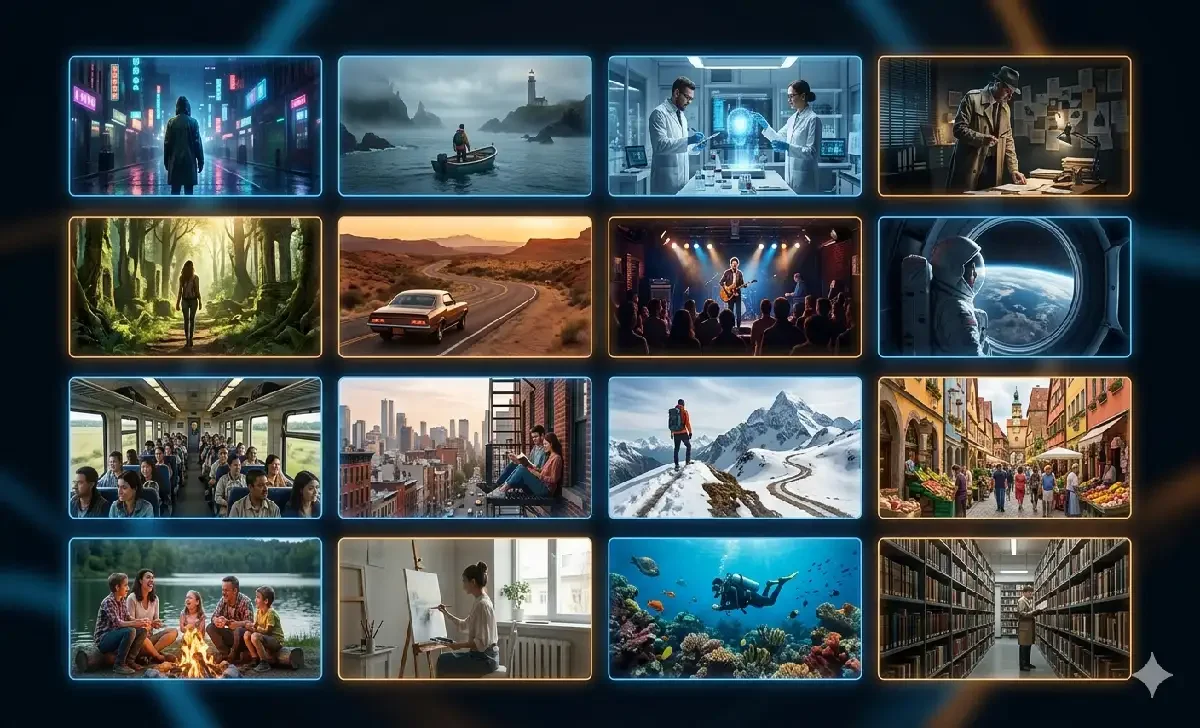
Katzenberg's answer cuts through the noise. AI will not write a film that makes you cry in a way you cannot explain. It does not have lived experience. It does not understand what loss feels like from the inside, or why a specific joke lands in a specific moment for a specific audience. What it can do is generate a thousand background variations of a sci-fi city in three seconds, or rough-cut a scene edit in minutes instead of hours.
That distinction matters. AI handles volume and speed. Humans handle meaning.
Every major tech shift in Hollywood came with the same fear. Sound killed silent film acting styles, until actors learned to use their voices differently. Digital cameras made film stock feel obsolete, until cinematographers realized they could shoot all night without reloading. Each time, roles changed, some disappeared, and new ones appeared that nobody had imagined five years earlier.
AI in filmmaking follows the same pattern. The industry is not dying. It is changing shape. The same is true across entertainment broadly. The Super Bowl LX viewership numbers for 2026 show that audiences are still showing up in enormous numbers when the content is worth their time. Technology changes how things get made. It does not kill demand for stories people care about.
What AI Still Cannot Replicate
This is worth saying clearly because it gets lost in the panic.
AI generates. It remixes and recombines what already exists in its training data. It can produce something that looks or reads like a human made it. But it cannot bring perspective, contradiction, or surprise from lived experience.
The specific detail that makes a character feel real, the timing that makes a joke land, the quiet moment in a scene that hits harder than the loud one before it; those come from a human who has felt something similar. A model has no equivalent of that.
This is also where the "garbage in, garbage out" reality bites. A mediocre prompt produces generic output. A prompt built on years of understanding cinematic language, character psychology, and audience behavior produces something worth looking at. The human skill of directing the AI, knowing what to ask for and how to evaluate the result, is where the real value sits.
Your creative voice is not threatened by the tool. It is made more important by it.
The Union and Legal Reality
The legal and ethical situation around AI in Hollywood is not abstract. It has already produced real, concrete protections.
The 2023 WGA contract established that AI cannot write or rewrite literary material and that a writer's work cannot be used to train AI without permission. The SAG-AFTRA deal required studios to get consent and pay performers before using digital replicas of their faces or voices. These were hard-fought wins, and they matter.
That said, the situation keeps moving. Courts are still sorting out questions around copyright and training data. The rules vary by guild, by project type, and by country. If you work in the industry, staying current on your guild agreements is not optional right now.
Katzenberg's "lean in" message does not mean ignore the fights. It means engage with the technology while the fights happen. Know the tool well enough to negotiate around it intelligently. You cannot protect what you do not understand.
What AI Anxiety Looks Like Up Close
The fear is real, and it is not wrong.
If you spent years developing a craft in concept art, storyboarding, or background painting, watching a machine replicate part of your output in seconds feels like a direct hit. It is personal. And the economic pressure on those specific roles is real, not hypothetical.
There is no point pretending otherwise.
But here is what the data from past disruptions shows. The roles that shrink tend to be the most repetitive ones. The roles that grow are the ones that require taste, judgment, and the ability to communicate vision. Someone still has to tell the AI what "more emotional" means. Someone still has to decide when the output is good enough and when it is missing the point entirely.
Technology adapts faster than most people expect. Other industries are seeing the same shift. The way sports and live events use new tools is a clear example. The PGA Innovation Showcase shows how even traditional sports are using technology to change production, broadcasting, and audience experience without replacing the human element at the center of it. Hollywood is on the same curve.
That human in the middle becomes more valuable, not less. The skill shifts from execution to direction. That is a meaningful difference, and it takes time to develop. Which is why starting now matters.
Practical Steps to Start Without Getting Overwhelmed
You do not need to become an expert in a weekend. You need to start somewhere.
Here is a realistic four-week approach:
Week 1: Observe. Follow three to five accounts on social media that share AI and creativity work. Do not touch any tools yet. Just watch what people are doing and how they are talking about it.
Week 2: Try one low-stakes task. Use a free tool for something personal and non-critical. Generate concept art for a project you are not currently working on. Brainstorm alternate titles for a script. Run a scene through a writing assistant and see what comes back.
Week 3: Analyze the output honestly. Where did the tool get it right? Where did it miss completely? What did you have to correct? The gap between what the machine produced and what you would have done is important. That gap is where your value lives.
Week 4: Apply one small thing to real work. Pick one low-stakes professional task where AI might save you time or generate a useful starting point. Use it as a research assist, a rough draft, or a quick visual reference. See how it fits into your actual process.
If you are a writer, spend an afternoon with an AI assistant and ask it to brainstorm loglines or rewrite a scene in a different tone. You will probably hate most of it. But you might find one idea that sparks something real.
If you are an artist, generate some concept art and study how it interprets your prompts. If you are a producer, ask where these tools could shorten pre-production or help you prototype ideas you cannot yet fully afford to execute.
Content is also reaching audiences in new ways that change how productions need to think. In-car streaming is one example of a new consumption format that creators and studios will need to factor into how they structure and deliver content. AI tools that help adapt and reformat content for different screens and environments will matter more as these platforms grow.
The goal is familiarity, not dependence.
FAQs
Will AI replace screenwriters?
Not fully, and not without a fight. The WGA contract already prevents AI from writing or rewriting literary material for credit. Writers who use AI as a brainstorming assistant may actually get more time for the actual creative work. The tools are not for writing your best screenplay. You are.
What about actors?
Voice actors and background performers face the most direct pressure right now. That is why SAG-AFTRA's 2023 deal required consent and payment for digital replicas. Lead actors are still the product. Audiences want specific performances from specific people. AI can adjust an accent or de-age a face, but it cannot replace the draw of the performer themselves.
Will movies get cheaper to make?
Some parts of production will cost less, particularly visual effects, animation, and post-production tasks. That could open doors for independent filmmakers who previously could not afford the pipeline. Big studios will likely spend the same money on a bigger spectacle. The savings benefit smaller productions more than large ones.
How do I keep up without feeling buried?
Pick one tool. Spend one weekend. Watch a few tutorials. The learning curve is not as steep as it looks from the outside. You do not need to master everything. You need to stop being a stranger to the space.
What is the one thing to hold onto?
AI generates from what already exists. You create from what you have lived, felt, and noticed. That source material is yours alone. It is not going anywhere.