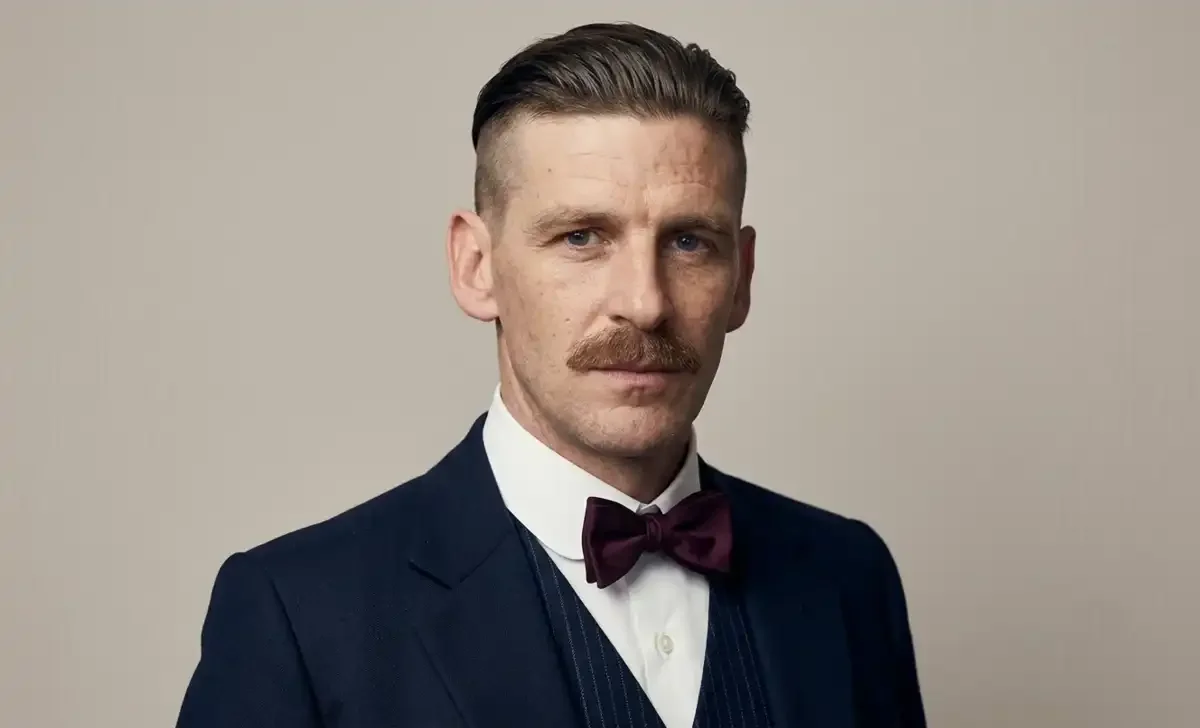
Fans went into Peaky Blinders: The Immortal Man expecting the whole Shelby family. Instead, the film opens with one of them already gone — and Paul Anderson, who played Arthur Shelby across all six seasons, never appears on screen. Here's exactly what happened, why it was a creative choice rather than a casting fallout, and how the decision has landed with fans.
What Happens to Arthur in The Immortal Man
Peaky Blinders: The Immortal Man picks up several years after Season 6. Early in the film, dialogue and brief flashbacks establish that Arthur has died in the time between the show and the movie. Those flashbacks use a stand-in actor rather than Paul Anderson — Arthur's face is either obscured or kept off-camera throughout.
This solves the story question (Arthur is dead) but sidesteps the production question that fans immediately started asking: why not bring Anderson back, even for a single scene?
Example of how it plays out on screen: In one flashback, Tommy recalls a conversation with Arthur shot from behind, cutting away before revealing his face — a deliberate choice, not a technical limitation, since digital face-replacement and de-aging tools are now standard in productions of this budget (a trend covered in our guide to AI in Hollywood in 2026).
Why Steven Knight Wrote Arthur Out
Series creator Steven Knight has framed Arthur's death as the emotional spine of the film, not a workaround for an unavailable actor. According to Knight, Arthur's death — rooted in the addiction and instability that defined his final seasons — is the one loss Tommy cannot rationalize, contain, or fix. It's what pushes Tommy into isolation as the film opens.
This isn't a new tragedy invented for the movie. It follows directly from where Season 6 left him:
- Grieving Polly's death
- Deep in addiction and increasingly erratic
- Cut loose from the discipline that had held him together for six seasons
Structurally, removing Arthur does more than remove a character. Arthur was the Shelby family's emotional volatility — the one who felt everything out loud, in contrast to Tommy's control. Taking him out removes Tommy's counterweight, which is the imbalance the entire film is built around.
What Paul Anderson Has Actually Said
In an interview with LADbible, Anderson confirmed he isn't in the film and described the finished product as "amazing." Asked about being written out, he responded with characteristic understatement, saying he'd rather leave audiences wanting more than force his way back into the story. He also suggested fans would see Arthur remembered "in a very different light," without elaborating.
Nothing in Anderson's or Knight's public comments points to a falling-out. Knight has separately called Anderson "a fantastic actor" — language that doesn't fit a bitter split.
Did Paul Anderson's 2024 Legal Issues Play a Role?
When a longtime cast member disappears from a franchise, speculation fills the gap — and Anderson's 2024 drug possession charges gave fans an obvious theory.
Knight has directly addressed this: the decision to write Arthur out was made during the story's development, before those headlines broke. The timeline doesn't support a causal link between the charges and the writing decision, even though the two became public around the same period.
It's a reasonable question to ask. But treating it as confirmed fact — rather than the coincidence Knight describes — misrepresents what's actually on record. For more on how productions navigate a cast member's off-screen headlines without letting it dictate the story, see our breakdown of how other shows have handled similar behind-the-scenes decisions.
How Fans Have Reacted: Two Different Debates
Reaction to Arthur's absence splits cleanly into two separate conversations, and conflating them is why online discussion feels more negative than the film's overall reception:
The story choice — Arthur dying, and Tommy carrying the guilt — has largely been accepted as a natural continuation of where the character was headed.
The execution — using a stand-in with an obscured face instead of bringing Anderson back for even one filmed scene — has drawn real criticism across fan forums and social threads. Many viewers have called it a jarring way to close out a six-season performance, especially given how normalized digital doubles and de-aging have become in film production (a shift also reshaping creative jobs across the industry).
Separately, Cillian Murphy's performance as a more fractured, isolated Tommy has drawn strong praise, and the film's new cast additions have added fresh tension to the Shelby family dynamic — reviews that tend to get buried under the Arthur discourse.
What This Means for the Franchise Going Forward
The section below is analysis and informed speculation, not confirmed reporting.
Knight has discussed the possibility of further Peaky Blinders projects, including a younger-generation spin-off. Arthur's death changes what any future story can do with the character. Three realistic paths stand out:
- Anderson returns for a properly filmed flashback in a future project or spin-off, retroactively resolving the stand-in criticism.
- Arthur stays in shadow permanently — referenced but never shown again, treating his death as final in every sense, including visually.
- A spin-off inherits his absence as backstory — a Shelby family already missing its most volatile member before the next generation's story even begins.
Given that his face was already withheld in The Immortal Man, the second option currently looks most likely — but nothing has been confirmed by Knight, Anderson, or the production.
Final Thoughts
Arthur Shelby was never an easy character to root for — volatile, self-destructive, often his own worst enemy. That's exactly why six seasons of watching him try to hold himself together landed as hard as it did. His absence from The Immortal Man isn't a production shortcut; it's a deliberate ending to an arc the show had been building since Polly's death.
The stand-in flashbacks are fair to criticize. But the underlying decision — that Tommy's story now had to be about carrying a weight he can't put down — is consistent with everything Knight built across the series. Whether Anderson gets a proper send-off in a future flashback or Arthur stays permanently in shadow, the character's ending in The Immortal Man is already doing exactly what Knight intended: making Tommy's isolation feel earned.
Looking for what to watch next in the same vein of family, crime, and legacy? See our full breakdown of Crime 101 on Prime Video before it drops.
FAQs
What actually happened to Arthur Shelby in Peaky Blinders: The Immortal Man?
Arthur dies before the events of the film. His death is tied to the addiction and instability that defined his final seasons on the show, and it becomes the source of Tommy's guilt and withdrawal at the start of the movie.
Did Paul Anderson refuse to return, or was this a creative decision?
It was a creative decision. Steven Knight has said Arthur's death was built into the story, and Anderson has spoken publicly about the film without any indication of a dispute.
Why did the flashbacks use a stand-in instead of showing Paul Anderson's face?
No official production reason has been given. The choice has drawn criticism from fans who felt it undercut Anderson's six-season performance, though it hasn't affected how the underlying story of Arthur's death has been received.
Did Paul Anderson's 2024 legal issues cause his removal from the film?
No confirmed link exists. Knight has stated the writing decision predates those headlines, meaning the timing was coincidental rather than causal.
Will Arthur or Paul Anderson appear in future Peaky Blinders projects?
Nothing has been ruled out. Knight has discussed further stories in the franchise, including a possible younger-generation spin-off, but whether Anderson returns for a properly filmed flashback remains unconfirmed.
Is Arthur's death shown on screen in the film?
No. His death occurs before the film's timeline begins and is conveyed through references and brief, obscured flashbacks rather than a depicted scene.
Where can I watch Peaky Blinders: The Immortal Man?
Availability varies by region and platform. If you're outside the UK, check our streaming guide for Canada covering Netflix and Disney+ for how regional releases typically roll out.