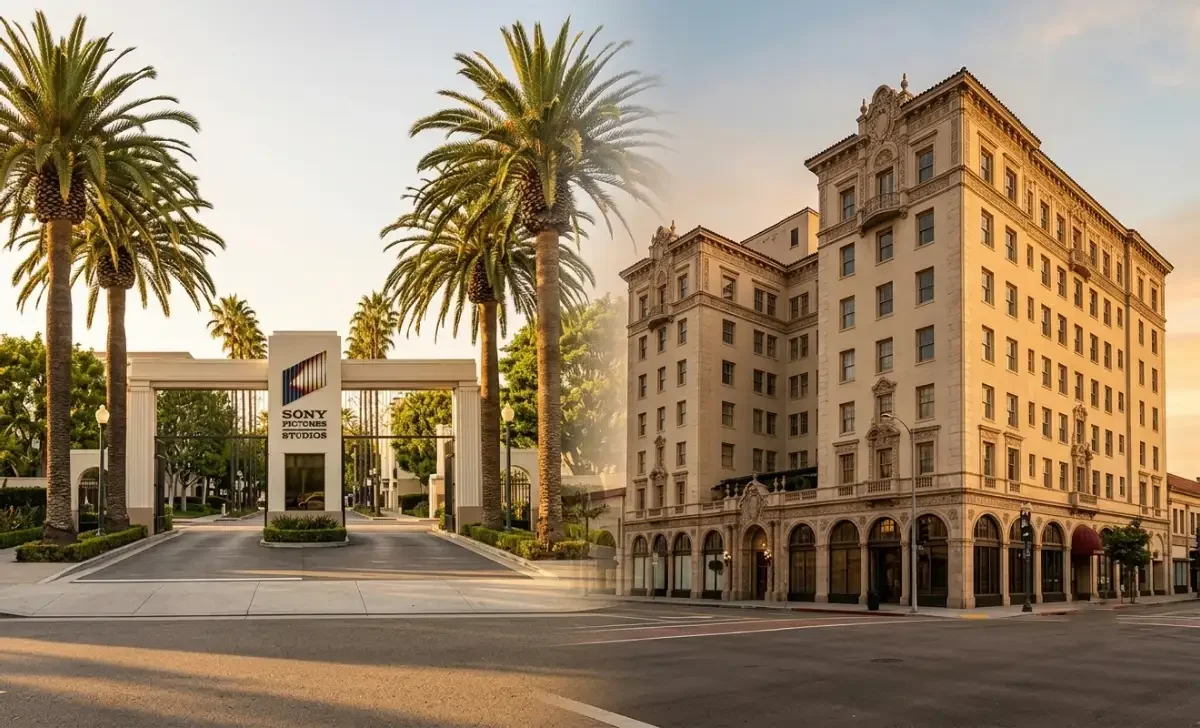
You drive through Culver City without thinking twice—just another neighbourhood between Los Angeles proper and the beach communities. But here's what most people miss: this small 5-square-mile city has produced and attracted more Hollywood talent than many cities twice its size. The title "Heart of Screenland" isn't nostalgic branding. It's earned through over a century of film history, studio power, and the creative ecosystem that still pulls major talent there today.
By the end of this article, you'll know exactly which famous names are tied to Culver City, understand why this specific city became a magnet for creative talent, and discover where you can actually experience this legacy.
Why Is Culver City CA Called the Heart of Screenland?
The MGM Studios Connection That Started It All
Culver City's rise to fame starts in 1924 when Metro-Goldwyn-Mayer (MGM) established its studio lot on what's now the home of Sony Pictures Studios. Before Hollywood itself had a defined centre, MGM built something unprecedented—a complete production empire in Culver City. The studio wasn't just a place to film movies. It was a creative community where writers, directors, actors, and technicians lived, worked, and collaborated every single day.
During Hollywood's Golden Age, this single studio lot produced some of cinema's most iconic films. Stars like Clark Gable, Vivien Leigh, Judy Garland, and countless others filmed their breakthrough roles on Culver City's soundstages. The studio lot became so powerful that the entire city's identity fused with the entertainment industry. You couldn't separate Culver City from Hollywood; the two became synonymous with filmmaking excellence.
How a Small City Became Hollywood's Quiet Powerhouse
What made Culver City different from Hollywood itself? Geography and intention. While Hollywood Boulevard turned into a tourist destination, Culver City remained a working city. The studios weren't just attractions; they were active production facilities. When you walked the streets, you might pass actors between takes, producers discussing scripts at restaurants, or crew members grabbing lunch after overnight shoots.
The city developed a genuine entertainment infrastructure. Theatres, galleries, restaurants, and production facilities clustered around the studio lot. By the 1940s and 1950s, Culver City had become where industry professionals actually lived and worked—not where tourists came to see stars.
Which Famous Hollywood Legends Have Roots in Culver City, CA?
Golden Age Stars Who Called Culver City Home
Lucille Ball, the comedic force behind "I Love Lucy," had deep ties to Culver City. Her career took off when she worked as an MGM contract player during the late 1930s and 1940s. She lived in the city while filming, made connections that would shape her entire career, and later returned to Culver City as an established star.
Kirk Douglas worked extensively on the MGM lot during the 1950s, appearing in major productions while based in the area. Joan Crawford, another MGM heavyweight, became synonymous with Culver City glamour. These weren't one-off appearances; these were working relationships that lasted years.
The Culver Hotel, built in 1927, became the unofficial headquarters for arriving starlets and actors between jobs. Studio producers would house contract players there, making the hotel a direct pipeline between studio ambition and actual fame. If you were working at MGM, there's a solid chance you slept at the Culver Hotel at some point during your career.
Directors and Producers Behind the Camera
Beyond the actors, Culver City attracted world-class directors and producers. George Cukor, known for his work with female stars, directed multiple films on the MGM lot. Producer Irving Thalberg, considered one of Hollywood's greatest creative minds, operated from Culver City during his career with MGM. These industry leaders didn't just work in the city; they shaped its cultural identity.
What Modern Celebrities and Industry Leaders Call Culver City Home?
Today's Stars Living and Working in Culver City
The entertainment industry has evolved, but Culver City hasn't lost its magnetism. Contemporary actors and producers have chosen to base themselves in the area, even as the studio system has changed. The proximity to multiple active studios—Sony Pictures, Apple TV+, Amazon Studios, and HBO all operate or produce content connected to the area—keeps the city relevant to modern careers.
Culver City's residential neighbourhoods near the studio lot offer a different lifestyle than Hollywood Hills or Beverly Hills. You get serious proximity to work without the tourist bubble. Many working professionals in television and streaming content choose to live there because it's practical. Your commute to set might be five minutes instead of forty-five.
Tech and Entertainment Moguls in the Neighbourhood
Modern wealth has reshaped parts of Culver City. Tech industry leaders and entertainment moguls have moved into the area as it's become more accessible from Silicon Beach (the startup hub along the Westside). The blend of entertainment infrastructure and tech proximity has created a new generation of creative professionals living there.
How Did Culver City's Studios Shape Its Celebrity Culture?
Sony Pictures Studios: The Legacy Continues
The MGM lot still exists—now operated by Sony Pictures Studios. Walking onto the Sony lot today feels like stepping into preserved history. The same soundstages where classic films were made still operate. Modern television shows, streaming originals, and films are produced on the same ground where "Singin' in the Rain" and "The Wizard of Oz" were filmed.
Sony offers behind-the-scenes studio tours that take visitors through working soundstages, costume departments, and production facilities. You're not seeing a museum recreation; you're seeing an active studio where content is being made right now. That continuity matters. The infrastructure that attracted talent in 1950 still attracts talent in 2026.
New Studios and Production Houses Moving In
Beyond Sony, Culver City has attracted new production facilities and creative spaces. The city's arts district has expanded, bringing galleries, smaller production studios, and creative offices. This diversification means the city isn't just riding MGM nostalgia. It's actually growing as a production centre.
| Famous Person | Connection to Culver City | Notable Work | Era |
|---|---|---|---|
| Lucille Ball | MGM contract player, resident | "I Love Lucy," MGM films | 1940s–1950s |
| Kirk Douglas | MGM-based actor | "Paths of Glory," MGM productions | 1950s–1960s |
| Joan Crawford | MGM star, Culver resident | Classic Hollywood dramas | 1940s–1950s |
| George Cukor | Director at MGM | "My Fair Lady," "The Philadelphia Story" | 1930s–1960s |
| Judy Garland | MGM contract player | "Wizard of Oz" filmed on lot | 1930s–1940s |
| Clark Gable | MGM leading man | "Gone with the Wind" | 1930s–1940s |
Where Can You Experience Culver City's Famous Legacy Today?
Must-Visit Landmarks for Celebrity History Buffs
Sony Pictures Studios: The primary destination. The studio offers guided tours where you walk actual soundstages still used for production. You're seeing real movie history—not a theme park version. Tours typically last about two hours and include access to the backlot and working facilities.
The Culver Hotel: Built in 1927, this historic hotel remains the centrepiece of downtown Culver City. The lobby retains its original Mediterranean Revival architecture. While you don't need to stay there, visiting for a drink or meal gives you a genuine sense of what the Golden Age experience felt like. The building has housed generations of working actors.
The Culver City Arts District: Concentrated around Washington Boulevard and Main Street, this area features galleries, independent film theatres, and creative workspaces. It's not a tourist trap—it's where local artists and independent producers actually work and exhibit. You get authentic creative energy without manufactured nostalgia.
Hayden Tract: This neighborhood, just east of the studio lot, developed as housing for studio employees and remains a charming residential area with that older California character intact. The tree-lined streets and vintage homes reflect the era when people genuinely built their lives around the studios.
The Arts District and Culver Hotel Experience
The downtown core—centred on Main Street and Washington Boulevard—offers restaurants, wine bars, and theatres where you might actually spot industry professionals. This isn't guaranteed celebrity hunting, but it's a genuine place where people in the entertainment industry eat, drink, and socialise. Unlike Hollywood Boulevard's manufactured tourism, Culver City's downtown feels lived-in and real.
The Culver Playhouse and other performance venues host regular productions. Attending a show connects you directly to the city's cultural mission—it's still producing content and hosting creative work.
Why Does Culver City Continue to Attract Famous Faces?
The answer isn't nostalgia. Culver City works as a creative hub because the fundamentals haven't changed since 1924. Studios need soundstages and production facilities—the city has them. Creative professionals need to be near where work actually happens—they can be near multiple facilities without the traffic nightmare of Hollywood proper. The community understands production schedules, understands creative work, and doesn't treat the industry like a curiosity.
Modern streaming content requires the same infrastructure as classic films. Producers still need soundstages. Actors still need housing near set. The specific skills and services that make a city valuable to entertainment professionals are still concentrated in Culver City. That's why you see investment continuing there.
The city has also become more accessible. The Expo Line light rail connects Culver City to downtown Los Angeles, Santa Monica, and Long Beach. This infrastructure makes it more practical for people to live there. You're getting serious entertainment industry credentials without geographic isolation.
Final Takeaway
Culver City isn't just another Los Angeles neighbourhood with historical footnotes. It's a working entertainment capital where real production happens every single day on the same ground where cinema history was made. The famous people connected to Culver City—from Golden Age legends to modern producers and actors—chose to be there because the city actually works as a creative base.
If you're visiting the Los Angeles area and want to experience authentic Hollywood history without tourist-trap crowds, Culver City delivers. You can stand on the same soundstages where iconic films were made, eat at restaurants where industry professionals gather, and walk neighbourhoods that have housed creative talent for over a century.
Have you visited Culver City or spotted a celebrity there? Share your experience in the comments—and explore our related content on famous people from other California cities or a deeper visitor's guide to the Westside entertainment hub.