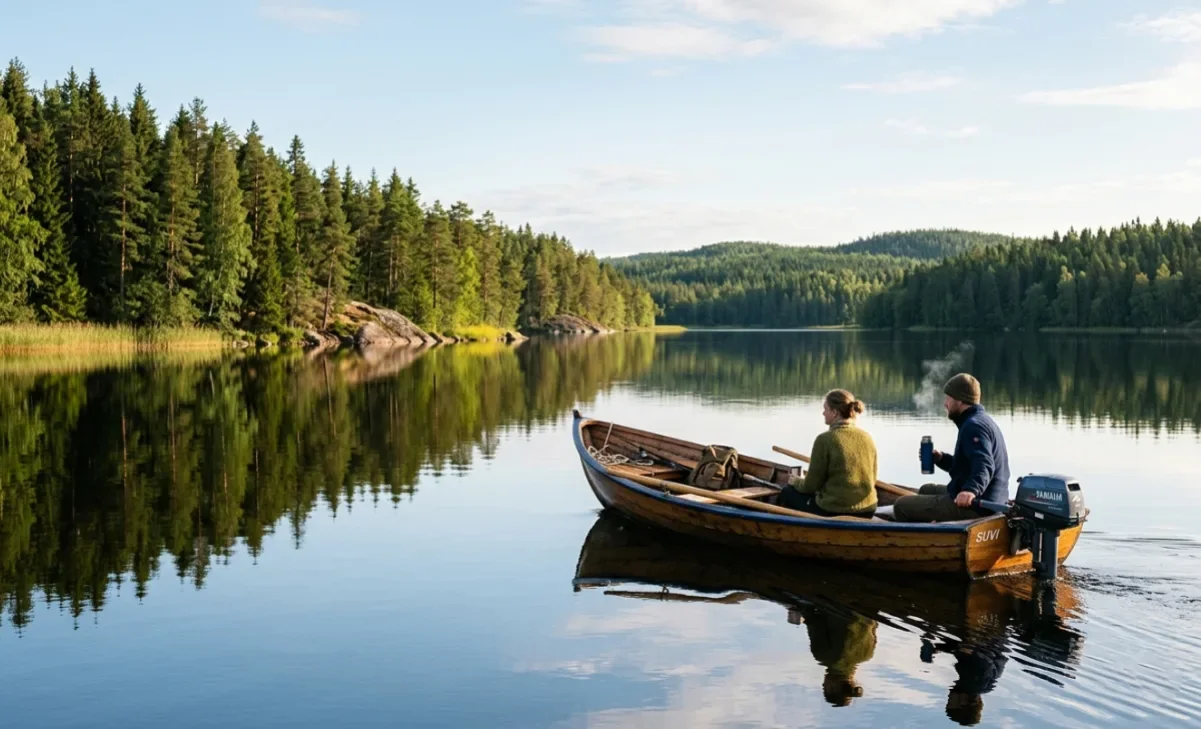
I didn't plan my first veneajelu. A friend borrowed a small motorboat, stuffed a thermos and some cinnamon buns into a bag, and said, "We're just going to drive slowly and see where the water takes us." That was it. No itinerary. No destination. Just the quiet hum of a motor and Finland's lakes stretching out in every direction.
That afternoon taught me more about Finnish summer culture than any travel article ever could. Veneajelu — which roughly translates to "casual boat ride" or "leisurely boating" — is less about getting somewhere and more about being on the water. It's how Finns unwind when the ice finally melts and the long summer days arrive.
Finland has over 188,000 lakes and a sprawling coastal archipelago. Water is woven into daily life here. Veneajelu (pronounced roughly "veh-neh-ah-yeh-loo") is the most relaxed way to experience all of it.
This guide covers what veneajelu actually is, where to do it, how to stay safe, what to bring, and how to plan your first trip — even if you've never driven a boat in your life.
What Is Veneajelu? (And Why It Feels Different)
At its core, veneajelu is slow, relaxed boating. You're not water skiing. You're not racing across a lake. You're floating through scenic waterways, stopping at small islands, and probably making coffee on a rocky shore with no one else around.
Think of it like a Sunday drive, but on water. The point isn't speed or distance — it's the feeling of being out there with no deadline pulling you back.
One thing that makes Finnish boating genuinely different is the right to anchor temporarily on most uninhabited islands. You can pull up somewhere random, eat lunch on a flat granite rock, and leave whenever you want — no permission needed. That freedom turns every veneajelu into something that feels a little like an adventure.
It's also different from high-energy water sports. Veneajelu is calm. People do it after sauna, with their kids, or solo at sunset. It has that quiet, unhurried quality that shows up a lot in Finnish outdoor culture.
Different Ways to Experience Veneajelu
You don't need to own a boat or have any experience to do veneajelu. There are options for every skill level.
- Rowboats or kayaks — Peaceful and close to the water. Great for beginners and calm lake trips.
- Small motorboats — The most popular choice. Let you cover more ground and hop between islands easily.
- Sailing — A bit more involved, but great if you enjoy working with the wind.
- Guided tours or cruises — Perfect for first-timers. Someone else handles navigation while you enjoy the scenery and hear local stories.
- Electric or sauna boats — Quieter and more eco-friendly. Sauna boats are exactly what they sound like, and they're wonderful.
In my experience, starting small helps. Rent something simple near shore for two or three hours before you commit to a full-day trip. You'll figure out what you enjoy and what you actually need.
Best Places for Veneajelu in Finland
You can do casual boating Finland-style almost anywhere with water, but some areas are better suited than others. Here's where I've had the best experiences, and what makes each one worth the trip.
The Archipelago Sea (Turku Archipelago)
This is the standout option. Over 20,000 islands scattered between Turku and Åland, with well-marked routes and affordable guest harbours throughout. You'll see everything from small fishing boats to families on week-long cruises.
One thing I learned the hard way: weather changes fast out here. A calm morning can turn choppy by the afternoon. Always check the forecast before you cast off, especially if you're new to the area.
Saimaa Lake District
If you prefer lakes over saltwater, head east. Saimaa is Finland's largest lake system, and the scenery is completely different — smoother water, forested shores, and almost no waves. It's also quieter than the coast in July, which is saying something.
For families or first-timers, Saimaa is one of the best places to try Finnish archipelago boating tips in a low-stress setting. Keep your eyes open, too — the rare Saimaa ringed seal lives here, and if you're lucky, one might surface near your boat.
Helsinki Coastal Waters
You don't need to leave the capital. From Helsinki, you can launch and be among islands in under thirty minutes. Pihlajasaari and Vallisaari are popular stops, and Suomenlinna — a UNESCO sea fortress — has a guest harbour worth visiting.
Helsinki is also expanding its recreational boating setup over the coming years. More docks, better waste disposal, and improved water monitoring. If you plan to rent regularly, the city keeps getting easier to work with.
Other Spots Worth Mentioning
Lake Inari in Lapland offers a completely different mood — wide open, Arctic, and remote. Kolovesi is quieter and known for ancient rock paintings along the shoreline. Both reward the extra effort to get there.
When to Go: Month-by-Month Snapshot
Veneajelu season runs from ice-free water to the point guest harbours close — roughly late May through mid-September. Here's how the season actually plays out:
- Late May — Ice melts. Water is cold but days are long. Quiet, uncrowded. Good for confident boaters.
- June — Long daylight hours, sometimes midnight sun in the north. Water still cool. Good overall conditions.
- July — Warmest month, most crowded. Book rentals early. Midsummer (Juhannus) is magical but very busy.
- August — Fewer people, still warm. Personally, this is my favourite month. Great balance of weather and space.
- September — Early autumn colours, cooler air. Guest harbours start closing mid-month. Go early in the month.
Mornings and evenings are almost always the calmest and most peaceful times to be on the water, whatever month you go.
Your First Veneajelu: A Simple 5-Step Plan
If you've never done casual boating in Finland before, don't overthink it. Here's a straightforward way to start.
- Find a rental — Look for marinas in Helsinki, Turku, Savonlinna, or Lappeenranta. Platforms like Skipperi and Nettivene list available boats with pricing and basic specs. Most include a safety briefing.
- Pick a calm day — Check wind and weather the morning of your trip, not just the night before. Conditions shift fast on open water.
- Choose a short route — Pick a specific island to aim for. Having a mini destination helps, especially with kids. Don't try to cover too much your first time.
- Use a packing checklist — See the gear section below. Keep it simple for your first trip.
- Tell someone your plan — Where you're going, which boat you're on, and when you expect to be back. It takes thirty seconds and it matters.
Book your rental no more than one or two weeks ahead. Start with a three-hour trip. Adjust from there.
What to Bring on a Veneajelu Trip
You don't need a fancy boat or expensive gear. What you bring matters more than what you're riding in. Here's what actually makes a difference:
- Life vests — Wear them. Not stowed, not "within reach." On. This is not negotiable.
- Navigation app or paper chart — Mobile signal isn't reliable everywhere. I use both. Try VeneteK or Merijäppä, which both work offline.
- Weather app — Check three times: when you're packing, at the dock, and right before you leave.
- Thermos with something hot — Coffee or tea. It's almost a ritual out here.
- Snacks — Something that won't get soggy. Pulla (Finnish cardamom bread) holds up well.
- Sunscreen and a hat — Water reflects UV hard. You'll burn faster than you expect.
- Dry bag with spare clothes — Even in July, a splash can leave you cold within minutes.
- Small trash bag — Leave nothing behind. Finnish water stays clean because people treat it that way.
- Mosquito spray — On calm evenings near shore, they can be brutal. Bring it.
Practical tip: Before you rent or buy a boat, do one short trip with someone who's done it before. You'll learn more in two hours than from any guide.
Legal and Safety Rules for Veneajelu
Finland's boating rules are straightforward, but a few are strict enough to take seriously.
Blood Alcohol Limit
The limit is 0.05% — lower than the driving limit in many countries. A single beer can put you over. Enforcement near popular summer spots is real. Just don't drink while operating the boat.
Speed Limits
In most archipelago areas, the limit near islands is 5 to 10 knots. This isn't just a safety rule — high wakes damage shorelines and disturb nesting birds. Locals notice and they care.
Right to Anchor
On uninhabited islands, you can anchor temporarily and go ashore unless a sign says otherwise. Private islands are marked — usually with a sign, a dock, or a house visible from the water. Simple rule: if you can see a structure, it's private. If you can't, you're likely fine.
Boating Without a License in Finland
You do not need a license for boats under 15 knots (roughly 28 km/h) or shorter than 5.5 meters. But you're still legally responsible for knowing basic navigation rules and safety practices. Rental operators will walk you through the essentials.
Worth knowing: Finland treats water safety like road safety. Expect stricter enforcement over the coming years, including more monitoring near popular routes. Fines aren't small.
Renting vs. Owning a Boat for Veneajelu
If You're Visiting
Renting makes sense. No winter storage, no maintenance, no surprise engine costs. Availability in July can be tight, so book ahead. Platforms like Skipperi and Nettivene make it easy to compare options.
A realistic cost example: renting a four-person motorboat for six hours typically costs around 120 euros plus about 15 euros in fuel. Split between two people, that's less than a nice dinner out.
Short public or guided tours run around 25 to 60 euros per person. Private rentals for a half or full day fall between 80 and 250 euros depending on boat size and season. Shoulder seasons (May and September) usually offer better rates and fewer crowds.
If You Live in Finland
Ownership has appeal — you can go whenever you want, leave gear on board, and build a real connection to your favourite spots. But winter storage alone can run several hundred euros a year, and engines break at the worst possible times (personal experience).
Here's what I've noticed: a lot of first-time owners sell within three years. The romance of owning fades when you're scrubbing moss off the hull in April rain. Rent for two full seasons before buying. You'll know if you actually want it.
Common Mistakes to Avoid
I've made most of these, so you don't have to.
- Not checking for underwater rocks — The Finnish archipelago has rocks just below the surface that won't show on basic charts. Get a detailed depth map before heading out.
- Overpacking — A small boat gets crowded fast. Bring what fits in one dry bag plus food. Leave the rest at the dock.
- Forgetting mosquito spray — Especially on calm evenings near shore. Not a joke.
- Assuming you'll find firewood — By July, many islands have no fallen wood left because others took it. Bring your own if you plan to grill.
- Leaving the map below deck — Keep it next to the helm. Glancing down for five seconds in a narrow passage is risky.
Veneajelu for Families and Beginners
If you have kids or you're new to boating, start small and give yourself room to adjust.
Pick a calm morning. Choose a short route with clear landmarks. Bring more snacks than you think you need. And pick one specific island to stop at for lunch — having a destination keeps kids engaged.
One thing that surprised me: my nephew enjoyed the boat ride less than the thirty minutes we spent throwing flat rocks into the water on a tiny island. Veneajelu isn't about covering distance. It's about the stops.
Before going with children, ask yourself one honest question: what's the worst that happens if the engine won't start? If the answer is "we'd be stuck," bring paddles or a small backup motor.
For non-swimmers or anyone nervous about the water, guided tours are the easiest starting point. You're on a larger, more stable boat, and someone else handles everything.
Is Veneajelu Safe for Beginners?
Yes — when you prepare sensibly. Accidents are rare when people take basic precautions. Life jackets on everyone, a quick weather check, navigation lights if you're out after dark, and a phone in a waterproof case are the basics.
Start in calm, familiar areas and build confidence from there. Most rental operators give a safety briefing before you leave the dock. Take it seriously even if it feels routine.
Frequently Asked Questions
Do I need a boating license for veneajelu in Finland?
No, not for boats under 15 knots or shorter than 5.5 meters. That covers most rentals. You're still responsible for knowing basic navigation rules, but your rental operator will walk you through them.
Can I do veneajelu if I've never driven a boat before?
Yes. Many rental options are designed exactly for beginners. Start with a short trip on calm water, take the safety briefing seriously, and keep your route simple. You'll get comfortable quickly.
What's the cheapest way to try veneajelu for one day?
Rent a small motorboat and split the cost with friends. A four-person boat for six hours runs around 120 to 135 euros all in (including fuel). That works out to about 30 to 35 euros per person — very reasonable for a full day on the water.
Is veneajelu safe for children or non-swimmers?
Yes, with the right setup. Life jackets that fit properly, a stable boat, a calm route, and enough snacks go a long way. For non-swimmers or very young children, a guided tour on a larger vessel is the safest starting point.
Can I do veneajelu in winter?
No — the water is frozen. Veneajelu is strictly a warm-season activity, running from late May through mid-September when the water is ice-free and guest harbors are open. Ice boating is a completely different activity.
Can I sleep on my boat during veneajelu?
Yes, if your boat has cabin space or you pitch a tent on an uninhabited island. Open camping on private or protected islands is not allowed. Read local signs carefully before setting up anywhere overnight.
Final Thoughts
Veneajelu isn't about mastering the water. It's about slowing down enough to actually notice it — the way light hits granite at 8 pm, a seal surfacing a hundred meters from your boat, the quiet that settles in when you cut the engine.
If you're new to Finland or new to boating, don't overthink it. Find a rental, pick a calm day, and bring coffee. Tell someone where you're going. Then leave your schedule on shore.
That's veneajelu. And once you've tried it, you'll probably start planning your next trip before you've even tied the boat back at the dock.
Disclaimer: Boating regulations, rental prices, and seasonal conditions in Finland may change. Always verify rules with local authorities or your rental provider before heading out.