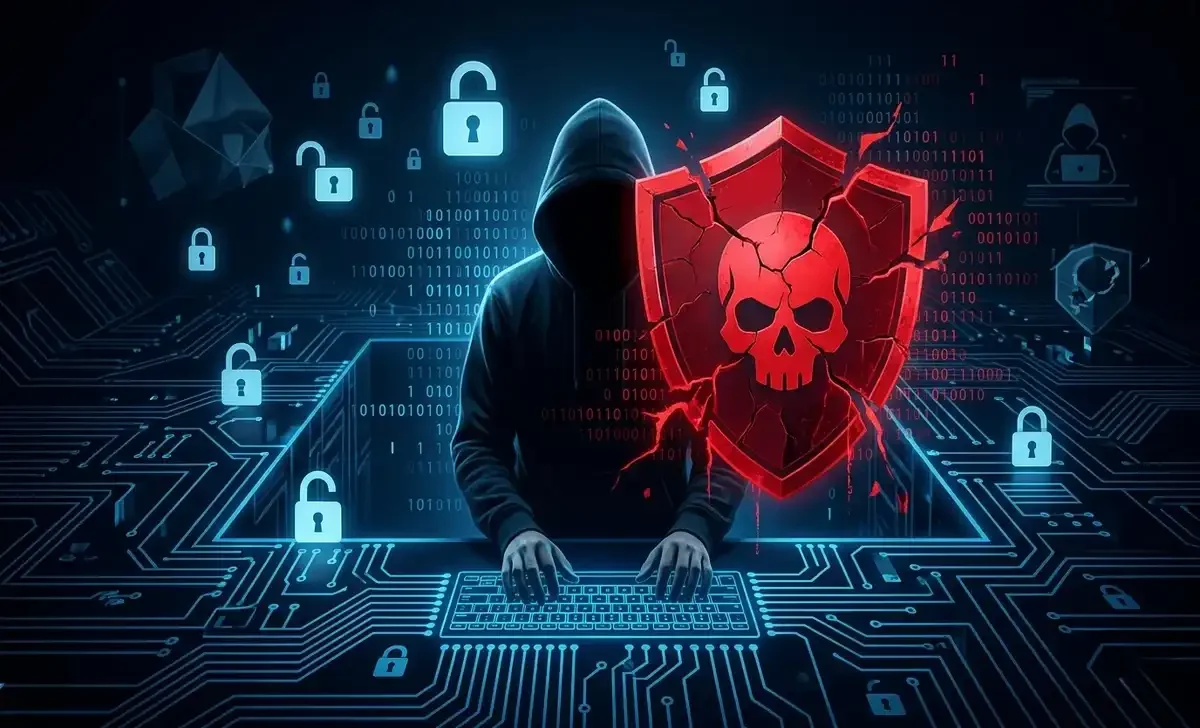
Cybercrime is no longer just a problem for large corporations or government agencies. Today, it can hit anyone — a small business owner, a remote worker, a retiree managing their savings online. The numbers alone are sobering: global cybercrime costs are projected to reach $10.5 trillion annually by 2025, up from $3 trillion just a decade ago.
The most dangerous part? Many cybercrime threats are designed to be invisible. You might not even know you've been targeted until the damage is done.
In this guide, we're breaking down the 12 most significant cybercrime threats active right now. You'll learn what each one is, how it works, real-world examples of how it plays out, and — most importantly — what you can actually do to protect yourself.
Whether you're an individual, a small business owner, or someone responsible for a team's digital security, this article will give you a clear picture of the threat landscape.
1. Phishing Attacks
Phishing is the bread and butter of cybercriminals. The concept is simple: an attacker sends a fake message — usually an email — that looks like it came from a trusted source, hoping to trick you into clicking a malicious link or handing over your credentials.
What makes modern phishing dangerous is how convincing it's become. Gone are the days of badly written emails asking you to "claim your prize." Today's phishing attempts mimic your bank, your employer, even your cloud storage provider with startling accuracy.
Spear phishing takes it further — attackers research their targets, using your name, your company's name, or details pulled from your LinkedIn profile to craft a message that feels completely legitimate.
What you can do:
- Always hover over links before clicking to see the actual URL
- Enable multi-factor authentication (MFA) on all accounts
- Use email security tools that flag suspicious senders
- Train your team regularly — most breaches start with a single click
2. Ransomware
Ransomware is exactly what it sounds like: malware that locks you out of your files or systems and demands a ransom payment — usually in cryptocurrency — for the decryption key.
The 2021 Colonial Pipeline attack brought ransomware to mainstream attention. Fuel supplies across the U.S. East Coast were disrupted, and the company paid $4.4 million in Bitcoin to regain access. That was not an isolated case — ransomware attacks happen thousands of times a day across industries.
Small and mid-sized businesses are increasingly targeted because they often lack enterprise-grade security. And the average ransom demand has been climbing year over year.
What you can do:
- Maintain regular offline backups of critical data
- Keep all systems and software patched and updated
- Never open email attachments from unknown senders
- Have an incident response plan in place before an attack happens
3. Business Email Compromise (BEC)
BEC is one of the most financially devastating cybercrime threats in operation today. The FBI consistently ranks it as the costliest form of cybercrime, with losses exceeding $2.7 billion in reported cases annually in the U.S. alone.
Here's how it works: a criminal either hacks or impersonates a senior executive's email account. They then contact finance teams or vendors requesting wire transfers, payroll changes, or sensitive data — and because the request appears to come from the CEO or CFO, employees comply.
It's devastatingly effective because it relies on authority and trust, not technical exploits.
What you can do:
- Implement a verbal confirmation policy for any financial transfer request over a set threshold
- Use email authentication protocols (SPF, DKIM, DMARC)
- Educate staff on the warning signs of impersonation attempts
- Restrict who has the authority to initiate wire transfers
4. Social Engineering
Social engineering is the umbrella term for manipulation tactics that trick people into giving up sensitive information or access. Phishing and BEC are forms of social engineering, but the category goes much further.
Vishing (voice phishing) involves criminals calling employees and impersonating IT support, government officials, or vendors to extract passwords or system access. Smishing uses SMS messages. Pretexting involves creating elaborate fake scenarios to build enough trust to extract information.
In one famous case, a hacker called a company's help desk, pretended to be a new employee locked out of their account, and had their password reset within minutes — no technical hacking required.
What you can do:
- Establish strict identity verification procedures before resetting credentials
- Never share passwords over the phone, even with "IT support."
- Create a culture where employees feel safe questioning unusual requests
5. Data Breaches
A data breach occurs when unauthorized individuals gain access to sensitive, protected, or confidential data. This includes customer records, payment information, medical data, and login credentials.
Data breaches can devastate businesses financially and reputationally. For publicly traded companies, they can also trigger significant legal exposure — it's worth noting that data breaches frequently lead to securities litigation, as shareholders sue companies for failing to disclose material cybersecurity risks or for inadequate data protection practices.
Breaches often go undetected for months. The average time to identify and contain a breach in 2024 was over 200 days.
What you can do:
- Encrypt sensitive data both in transit and at rest
- Apply the principle of least privilege (employees only access what they need)
- Use intrusion detection systems to spot unusual activity early
- Have a breach response and notification plan ready
6. Malware and Spyware
Malware is a broad category covering any software designed to cause harm — viruses, trojans, worms, keyloggers, spyware, and more. Spyware sits quietly in the background, recording everything from keystrokes to screenshots, sending your private data back to the attacker.
Malware typically enters systems through phishing emails, compromised websites, infected USB drives, or software downloads from unofficial sources. Some strains are engineered to spread across an entire network once a single machine is infected.
The threat isn't always immediate. Some malware lies dormant for weeks, activating only when attackers are ready to strike.
What you can do:
- Install reputable antivirus and endpoint protection software
- Keep all applications and operating systems updated
- Avoid downloading software from unofficial or unverified sources
- Disable autorun on USB ports in high-risk environments
7. Man-in-the-Middle Attacks
In a man-in-the-middle (MitM) attack, a cybercriminal secretly intercepts communications between two parties — say, you and your bank — without either side realizing it. The attacker can read, alter, or inject data into the conversation.
Public Wi-Fi networks are the most common hunting ground. When you connect to a coffee shop's unsecured Wi-Fi, a nearby attacker using relatively simple tools can position themselves between your device and the router, capturing everything you send or receive.
MitM attacks can also target businesses — for example, intercepting transactions between a company and its suppliers.
What you can do:
- Avoid using public Wi-Fi for sensitive transactions; use a VPN if you must
- Look for HTTPS in URLs and don't ignore certificate warnings
- Use end-to-end encrypted communication tools for business messaging
8. Cryptojacking
Cryptojacking is one of the more unusual cybercrime threats on this list. Instead of stealing your data, attackers hijack your device's processing power to mine cryptocurrency — leaving you footing the electricity bill and suffering sluggish performance.
The attack can happen through malicious browser scripts, infected downloads, or compromised cloud environments. Since there's no obvious "ransom demand," many victims don't notice for a long time.
For businesses running large cloud infrastructure, cryptojacking can result in enormous unexpected computing costs. The financial sector and data-heavy industries are particularly vulnerable, similar to how energy-intensive data center operations are increasingly being scrutinized for unexpected overhead costs.
What you can do:
- Use browser extensions that block cryptocurrency mining scripts
- Monitor CPU and GPU usage for unexplained spikes
- Audit cloud billing for unexpected resource consumption
- Keep software and browser plugins updated
9. Identity Theft
Identity theft happens when criminals steal your personal information — Social Security numbers, date of birth, banking credentials — and use it to impersonate you. They open credit accounts, take out loans, file fraudulent tax returns, and more — all in your name.
This isn't just a consumer problem. Business identity theft is a growing concern, where criminals impersonate companies to reroute payments, fraudulently apply for credit, or manipulate business records. Small business owners — including the growing number of women-owned businesses that are increasingly active in the digital economy — should pay particular attention to protecting their business identity and banking credentials online.
What you can do:
- Monitor your credit reports regularly (all three bureaus)
- Place a credit freeze if you're not actively applying for credit
- Use strong, unique passwords and a reputable password manager
- Be cautious about what personal information you share on social media
10. Insider Threats
Not every cyber-crime threat comes from the outside. Insider threats — whether intentional or accidental — account for a significant portion of data incidents each year.
A disgruntled employee with access to sensitive systems can leak customer data, sabotage operations, or sell proprietary information to competitors. But insider threats don't always involve malicious intent: a well-meaning employee clicking the wrong link or misconfiguring a database can cause just as much damage.
Remote work has expanded the attack surface considerably. Employees working from personal devices on home networks introduce vulnerabilities that are hard to monitor and control.
What you can do:
- Apply role-based access controls — employees should only access what they need
- Monitor user activity logs for unusual behavior patterns
- Off-board departing employees immediately (revoke access on day one)
- Foster a security-first culture, so staff report mistakes rather than hide them
11. AI-Powered Cyberattacks
Artificial intelligence is a double-edged sword in cybersecurity. While defenders use AI to detect threats faster, attackers are using it to launch more sophisticated, scalable assaults than ever before.
AI-generated phishing emails are now nearly indistinguishable from genuine communications. Deepfake technology is being used to impersonate executives in video calls, convincing employees to authorize fraudulent transactions. Automated attack tools powered by machine learning can probe systems for vulnerabilities at speeds no human team can match.
In 2024, multiple financial firms reported cases where voice deepfakes of senior leaders were used in fraud attempts — a stark indicator of where this threat is headed.
What you can do:
- Stay updated on AI-enabled fraud tactics as the landscape evolves
- Implement behavioral analytics tools that can spot anomalies even from trusted accounts
- Establish code words or secondary verification steps for high-stakes decisions made via call or video
- Assume that any request involving money or sensitive data warrants extra verification
12. Supply Chain Attacks
A supply chain attack targets a vendor, contractor, or software provider that has access to your systems — and uses that relationship as a backdoor into your organization.
The SolarWinds attack of 2020 is the defining example. Hackers compromised a software update from SolarWinds, which was then distributed to thousands of the company's clients — including multiple U.S. government agencies. The attackers didn't breach the targets directly; they went through the trusted middleman.
No company operates in isolation. Every third-party tool you use is a potential entry point.
What you can do:
- Vet your vendors' security postures before onboarding them
- Limit what access third parties have to your systems
- Monitor third-party connections continuously
- Have contractual security requirements in your vendor agreements
Expert Tips for Staying Protected
Dealing with cybercrime threats is not a one-time fix — it's an ongoing discipline. Here's what security professionals consistently recommend:
- Layer your defenses. No single tool stops every attack. Combine endpoint protection, firewalls, MFA, and email filtering.
- Treat security as a business risk, not just an IT problem. Leadership buy-in leads to adequate budgets and company-wide accountability.
- Run tabletop exercises. Simulating an attack response helps your team act fast when a real incident happens.
- Back up — and test your backups. A backup you've never tried to restore is not a real backup.
- Stay informed. Subscribe to threat intelligence feeds from sources like CISA, SANS Internet Stormcenter, or your industry's ISAC.
- Patch fast. The majority of successful cyberattacks exploit known vulnerabilities that had patches available but weren't applied.
Common Mistakes to Avoid
Even security-aware individuals and businesses make these errors:
- Reusing passwords. One breached site can unlock dozens of accounts if you use the same password everywhere.
- Ignoring software update prompts. These almost always include critical security patches.
- Assuming your industry isn't targeted. Criminals follow opportunity, not sector preferences.
- Skipping employee training. Your most expensive firewall is useless if an employee hands over their credentials willingly.
- Not having cyber insurance. As financial exposure from breaches rises, cyber insurance is becoming a business necessity, not a luxury — especially given the growing financial sector risks outlined in discussions around private credit and systemic economic risk.
- Believing "we're too small to be targeted." Automated attack tools don't discriminate by company size.
FAQs
Q1: What is the most common type of cybercrime?
Phishing remains the most prevalent form of cybercrime globally. It serves as the entry point for many other attacks, including ransomware and BEC fraud. Its effectiveness lies in exploiting human trust rather than technical vulnerabilities.
Q2: How do cyber-crime threats affect small businesses?
Small businesses are disproportionately targeted because they often lack the security infrastructure of larger companies. The financial and reputational damage from a single incident can be existential — many small businesses that experience a major breach never fully recover.
Q3: Can individuals protect themselves against advanced threats?
Yes, significantly. Strong, unique passwords, multi-factor authentication, regular software updates, and healthy skepticism toward unsolicited messages eliminate the vast majority of risks that individuals face. Most attacks exploit poor hygiene, not sophisticated vulnerabilities.
Q4: What should I do immediately after a cyberattack?
Disconnect affected systems from the network to prevent spread. Document what happened. Notify relevant stakeholders, including your IT team, legal counsel, and potentially law enforcement. If customer data was involved, determine your breach notification obligations based on applicable regulations.
Q5: Is paying a ransomware demand a good idea?
Law enforcement generally advises against paying ransoms, as it encourages further attacks and doesn't guarantee data recovery. That said, every situation differs. Having offline backups eliminates the need to make this decision under pressure. Always consult a cybersecurity professional before acting.