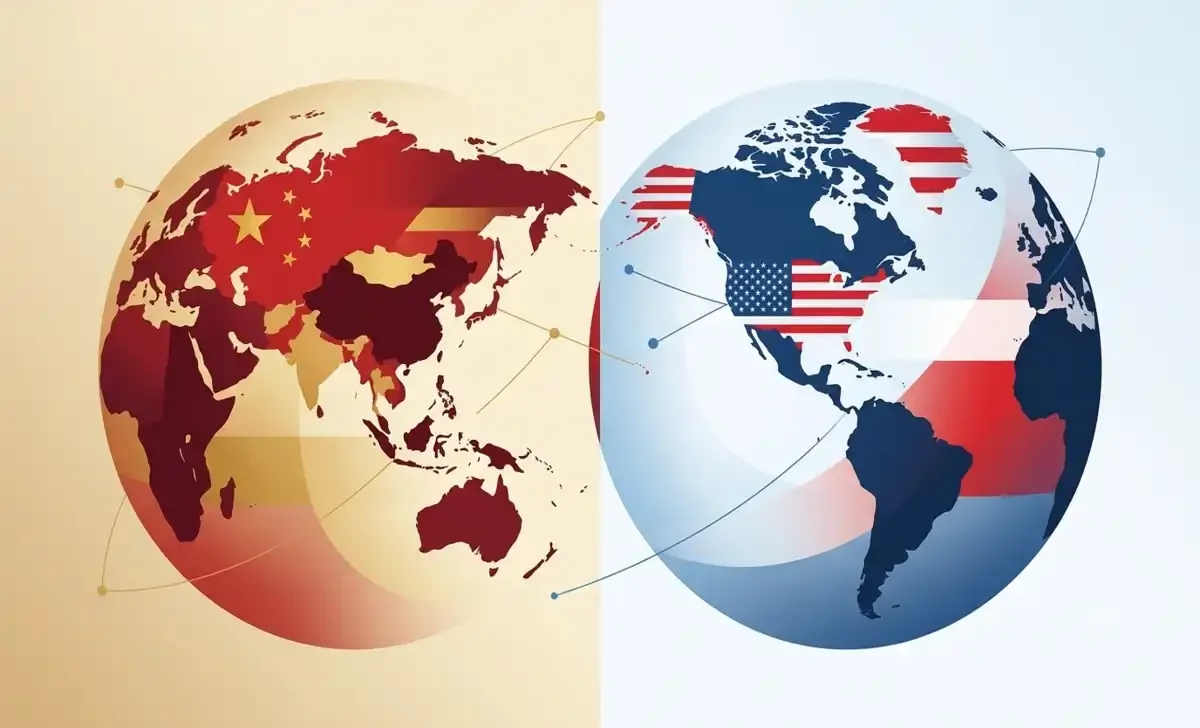
Ask someone in 2015 which country the world trusted more, the US or China, and the answer was obvious. That's no longer true.
New data from the Pew Research Center, based on interviews with more than 42,000 people across 36 countries between February and May 2026, found something that would have sounded far-fetched a few years back. In 25 of those 36 countries, more people now hold a favorable view of China than of the United States. That's the first time Pew has recorded a gap this wide in Beijing's favor.
If you follow international news, business trends, or geopolitics even casually, this shift matters. It affects trade decisions, tourism, foreign investment, and how younger generations around the world think about American versus Chinese influence.
In this article, you'll learn:
- The 10 biggest and most surprising trends behind the global opinion of China vs. the US
- Which countries have flipped, and why
- Common misunderstandings people have about these polls
- Practical ways to make sense of the numbers if you work in trade, media, or international business
Let's break it down piece by piece.
The Big Reversal: China Now Leads in 25 of 36 Countries
This is the headline finding, so it's worth sitting with for a moment.
Pew's 2026 survey found that a median of 46% of respondents view China favorably, compared to 36% for the US. Just two years earlier, in 2023, the US held a commanding lead, with 58% favorability in some surveys.
That's not a small dip. That's a collapse.
The shift isn't really about China becoming dramatically more loved. It's more that global opinion of China vs. the US has become a story of two moving lines crossing paths. China's numbers rose steadily. America's numbers fell off a cliff in the same window.
Researchers at Pew point to a mix of factors: aggressive US tariff policy, foreign policy seen as more confrontational, and a general sense among survey respondents that the US "interferes" in other countries' affairs more than China does. Whether or not that perception matches reality, perception is what moves these numbers.
For businesses watching global sentiment, this is the trend to track first. Everything else on this list flows from it.
Canada and Mexico Have Quietly Flipped Toward China
If you'd told most people five years ago that Canada would end up favoring China over the US, they'd have laughed. It happened anyway.
In 2023, only 14% of Canadians viewed China favorably, while 57% liked the US. By 2026, those numbers had essentially swapped: 44% favorable toward China, just 33% favorable toward the US.
Mexico shows a similar pattern. Both countries are the US's closest neighbors and, historically, its closest allies. Their souring views seem tied directly to tariff disputes and tougher immigration rhetoric coming out of Washington.
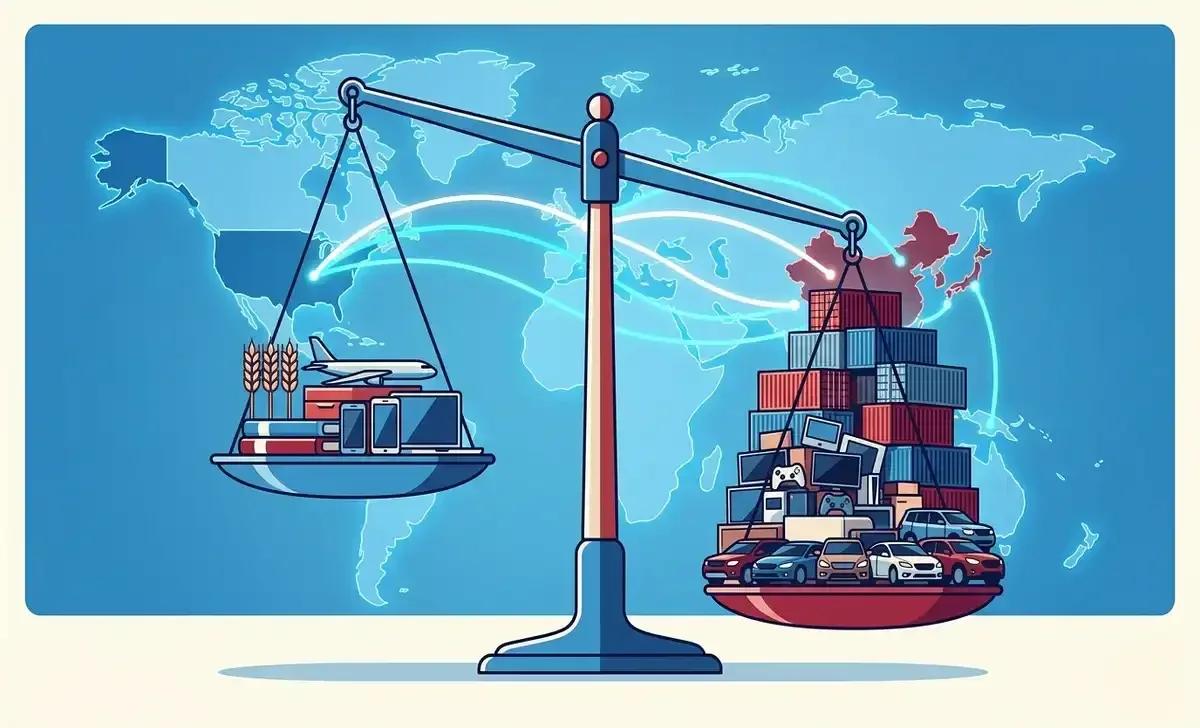
This matters beyond politics. Canada and Mexico are two of the largest US trading partners. Public opinion shapes political will, and political will shapes trade policy. If you want to understand how these dynamics play out in dollars and cents, it's worth reading about the ongoing US trade gap and what's driving it, since favorability and trade friction tend to move together.
Trust in Leaders: Xi Jinping vs Donald Trump
Neither Xi Jinping nor Donald Trump inspires much confidence globally. That said, the gap has narrowed, and in many countries, it's flipped.
In seven European countries, including Germany, Italy, Spain, and the UK, Xi now leads Trump by double digits in "confidence to do the right thing on world affairs." That's a notable shift for leaders who both still poll under 30% confidence in most places.
Trump still leads comfortably in a handful of countries. Israel is the standout example, where confidence in Trump outpaces confidence in Xi by roughly eight to one. Poland and Hungary also lean toward Trump.
Mexico shows the opposite extreme. Confidence in Xi sits at 36%, compared to just 8% for Trump.
The lesson here: leader popularity and country favorability move together, but not identically. A country can dislike a leader's style while still viewing the nation he represents somewhat favorably, or vice versa.
The Trade War Effect on the US Image
Tariffs have consequences beyond store shelves.
Trump's sweeping tariff announcements, especially the wave introduced in early April, coincided with a sharp drop in US favorability across nearly every region Pew surveys. Countries that were hit hardest by new tariffs tended to show the steepest declines in favorable opinion.
This tracks with a broader pattern that's been building for years. Trade tension breeds resentment, and resentment shows up in polling long before it shows up in GDP numbers.
It's not just about tariffs on finished goods either. Industrial overcapacity issues, like the ongoing conversation about China's battery overcapacity and its ripple effects on global manufacturing, show how economic competition between the two superpowers extends into practically every major industry, from EVs to solar panels to consumer electronics.
For everyday consumers, none of this feels abstract. Higher import costs and slower supply chains translate into frustration, and that frustration often gets pinned on whichever government seems to be causing the disruption.
China's Soft Power Push in the Global South
While the US was busy renegotiating trade deals, China was busy building relationships.
Through infrastructure financing, trade partnerships, and diplomatic outreach, China has spent the better part of a decade cultivating goodwill across Africa, Southeast Asia, and Latin America. It's paying off.
Nigeria (83%) and Kenya (73%) report some of the highest favorability toward China anywhere in the world. Indonesia sits at 69%. These aren't small numbers, and they represent a huge share of the world's population and future consumer markets.
In middle-income countries specifically, Pew found that around half or more of adults see Chinese investment as good for their nation, in nearly every country surveyed except Argentina and India.
This is a long game China has been playing patiently, and it's starting to show results in the polling data.
Where the US Still Wins: Six Holdout Countries
It's not a total wipeout for American favorability. Six countries still rate the US notably higher than China: Poland, the Philippines, South Korea, India, Japan, and Israel.
Look closely at that list, and a pattern jumps out. Four of the six are Asian nations with active territorial or diplomatic disputes with Beijing. Japan and the Philippines, in particular, have ongoing maritime tensions with China that shape public sentiment far more than trade policy or tariffs ever could.
This tells you something important about how these polls work. Favorability isn't just about economics or leadership style. Geography and history carry enormous weight, too. A country with a direct territorial dispute with China is going to lean toward the US almost regardless of what's happening in Washington.
Europe's Growing Skepticism of Both Superpowers
Here's a trend that doesn't get enough attention: plenty of European countries are souring on both the US and China at the same time.
Germany, Sweden, and the Netherlands all show below-average favorability toward both nations. It's not that Europeans have picked a side. Many of them seem tired of superpower politics altogether.
The UK offers an interesting case study. China's favorability there rose to 46%, while the US dropped to 41%, a full reversal from just a year earlier when the US led 50% to 39%.
If there's a broader European story here, it's disillusionment. Trade tensions, energy security concerns (the kind discussed in pieces about rising utility costs and energy pressures in other regions echo similar anxieties across Europe), and a sense that neither superpower has Europe's best interests in mind are all contributing to a "plague on both your houses" attitude.
Personal Freedoms: The One Area the US Still Leads
Despite everything above, the US retains one clear advantage: perceptions around personal freedom.
Thirty-nine percent of people surveyed globally believe the US respects personal freedoms, compared to just 26% who say the same of China. That's a meaningful gap, even if it's shrinking.
This is worth noting because it shows favorability isn't one-dimensional. A country can lose ground on trade, leadership confidence, and general goodwill while still holding an edge on specific values like civil liberties or freedom of expression.
For American brands and institutions that lean on values-based marketing, this remains a genuine differentiator, even as other metrics slide.
The Economic Ties Question: Who Do Countries Actually Trust?
Favorability is one thing. Practical economic loyalty is another, and the two don't always line up.
Pew asked respondents which country, the US or China, was more important to have close economic ties with. In most nations surveyed, people increasingly lean toward prioritizing China economically, even in places where they still hold a favorable personal opinion of the US.
South Korea is the notable exception. The share of South Koreans prioritizing economic ties with the US actually increased between 2021 and 2025, even as opinions shifted toward China elsewhere.
This distinction matters for anyone in international business. A country's population can like the US more as a place or a culture while still believing China is the smarter economic partner going forward. Those are two separate questions, and conflating them leads to bad predictions.
What This Means for Trade, Business, and Travel
So what do you actually do with all this?
If you're in international trade, watch which countries are shifting their "most important economic partner" answers. That's often a leading indicator of future policy, tariffs, and regulation, well before it shows up in official trade statistics like those covered in analyses of the widening US trade gap.
If you're in marketing or brand strategy, understand that "made in America" or "American values" messaging still resonates in some markets, particularly around personal freedom and quality perception, but it's losing ground fast in others.
If you're just a curious traveler or news reader, the practical takeaway is this: don't assume the world sees the US the way Americans see themselves, and don't assume China's rising favorability means uncritical admiration either. Most countries hold nuanced, sometimes contradictory views of both superpowers.
Expert Tips
- Separate "favorability" from "trust." A country can like America's culture while distrusting its foreign policy. These are different survey questions and shouldn't be treated as interchangeable.
- Watch regional splits, not just global medians. A global average of 46% favorable toward China hides huge regional variation. Asia-Pacific looks very different from sub-Saharan Africa or Western Europe.
- Follow leader confidence separately from country favorability. Trump and Xi both poll poorly on trust, but that doesn't always drag down views of their countries as a whole.
- Track tariff announcements as leading indicators. Favorability drops tend to follow trade policy shocks within months, not years.
- Read multiple survey sources. Pew is the gold standard for this kind of research, but cross-checking against other pollsters helps confirm a trend is real rather than a single-survey anomaly.
Common Mistakes to Avoid
Treating one poll as the full picture. A single survey wave, even a large one, can be influenced by short-term events like a war, a tariff announcement, or a diplomatic incident happening during the fieldwork window.
Assuming favorability equals alliance. Some countries name the US as their most important ally, even while rating China more favorably overall. The two questions measure different things.
Ignoring middle-income countries. Coverage tends to focus on wealthy nations, but the biggest population centers, and the biggest future markets, are middle-income countries where China's favorability is often strongest.
Confusing leader popularity with national favorability. Disliking Trump or Xi personally doesn't automatically mean disliking the country they represent.
Forgetting historical context. Some flips, like Canada's, are recent and dramatic. Others, like sentiment in the Philippines or Japan, are rooted in decades-old territorial disputes and unlikely to shift quickly.
Conclusion
The global opinion of China vs. the US has shifted more dramatically in the past three years than in the previous two decades combined. China has spent years quietly building goodwill through investment and diplomacy, while the US has seen its image slide amid trade disputes and foreign policy controversies.
Neither superpower is universally loved. Neither is universally distrusted. But the direction of travel is unmistakable, and it's reshaping how businesses, governments, and everyday people think about who to partner with, trade with, and trust on the world stage.
If this trend continues, expect trade policy, marketing strategy, and even travel patterns to keep adjusting in response. The smartest move right now is simple: stay informed, watch the regional breakdowns rather than just the headline numbers, and don't assume today's sentiment will look the same a year from now.
Frequently Asked Questions
What is the current global opinion of China vs. the US in 2026?
As of Pew Research's latest 2026 survey, 25 of 36 countries surveyed now view China more favorably than the United States, with a median favorability of 46% for China versus 36% for the US.
Why has global opinion shifted toward China?
A mix of factors is driving this: aggressive US tariff policy, perceptions that the US interferes more in other nations' affairs, and years of steady Chinese investment and diplomatic outreach, especially in the Global South.
Which countries still favor the US over China?
Six countries still rate the US more favorably: Poland, the Philippines, South Korea, India, Japan, and Israel. Most of these have active territorial or historical tensions with China.
Does higher favorability toward China mean people trust Xi Jinping more than Trump?
Not exactly. While Xi does lead Trump in confidence ratings in several countries, both leaders generally poll poorly worldwide. Country favorability and leader confidence are related but separate measures.
How is this global opinion shift affecting trade and business?
Countries increasingly prioritize China as an economic partner, even in places where the US remains personally popular. This is already influencing trade negotiations, investment flows, and regulatory decisions worldwide.