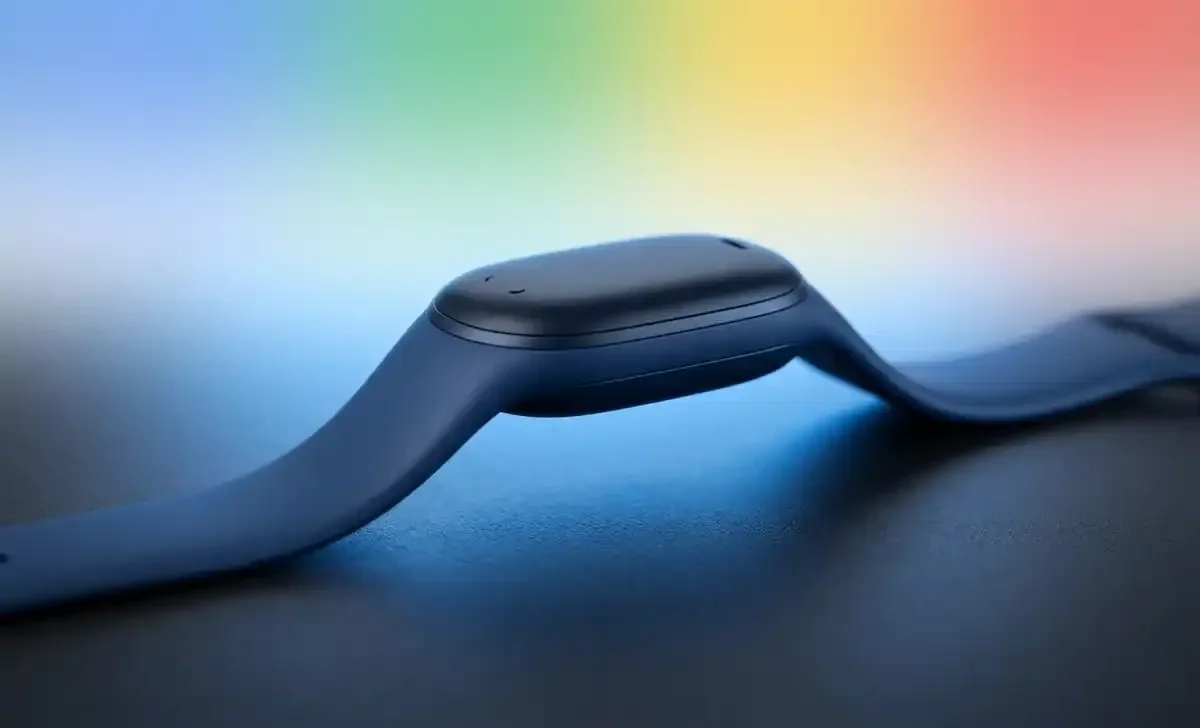
Google may be building a screenless Fitbit — a health tracker with no display, competing directly with Whoop's "wear it, forget it, review it later" model. As of mid-2026, this remains unconfirmed and based on patent filings and industry speculation, not an official Google announcement. This guide separates what's plausible from what's just hype, and helps you decide whether a screenless tracker is even the right category for you.
Fast answer: if it launches roughly as rumored, expect a slim, sensor-only band with 24/7 heart rate, sleep, SpO2, and temperature tracking; 7+ days of battery life; no mandatory subscription; and deep integration with Android and Google Health Connect. Nothing is confirmed on price or release date.
What a Screenless Fitbit Band Would Actually Be
Unlike the Fitbit Charge or Sense line, a screenless band has no touchscreen, no notifications, and no glanceable stats. It's a dedicated sensor: all data streams to the Fitbit app, and you review it after the fact rather than checking your wrist mid-workout.
This is the same core idea that Whoop has run its business on since 2015 — remove the display, and you free up battery, weight, and manufacturing cost for better sensors and longer wear time. Google has filed patents pointing toward screen-free wearable designs, which is the main evidence behind these rumors, but patents don't guarantee a shipping product.
Why Go Screenless? The Actual Trade-off
Removing a screen isn't a downgrade — it's a different bet on how people use health data:
| You get | You give up |
|---|---|
| Longer battery life (no display drain) | At-a-glance stats on your wrist |
| Slimmer, lighter, more sleep-friendly design | On-wrist notifications and replies |
| Better sensor-to-skin contact | Onboard GPS (typically) |
| Lower manufacturing cost | NFC payments, music control |
The underlying philosophy: deliberate review beats reactive checking. Instead of glancing at steps every ten minutes, you review trends once or twice a day in the app — which tends to produce steadier habits and less obsessive checking, according to how athletes describe using Whoop-style devices.
Expected Health Tracking Features
Based on Fitbit's existing sensor suite (Sense, Charge 6) and Google's health platform direction, a screenless band would likely include:
- Continuous heart rate monitoring
- Blood oxygen (SpO2) tracking
- Skin temperature sensing
- Sleep stage tracking (light, deep, REM)
- Respiratory rate monitoring
- A recovery/readiness score, similar to Fitbit's existing "Body Battery"
- Menstrual health tracking
- Automatic workout detection
Likely absent: onboard GPS, NFC payments, a speaker/mic for calls. That's consistent with a "pure sensor" positioning rather than a smartwatch replacement.
On-device processing for features like real-time recovery scoring depends on efficient low-power chips — a trend covered in more detail in this look at AI-optimized CPUs built for on-device inference, which is exactly the kind of hardware that would let a screenless band run health inference without draining the battery.
Battery Life: The Real Selling Point
Screens are the single biggest power drain in wearables. The Apple Watch needs daily charging; even the relatively efficient Fitbit Charge 6 lasts about a week. Whoop, with no screen, gets 4–5 days and uses a slide-on battery pack, so you never have to take the device off to charge it.
If Google follows a similar approach, a realistic range is 7–14 days per charge, with the possibility of continuous-wear charging. For sleep and recovery tracking specifically, this matters beyond convenience — a device you never take off produces more reliable long-term trend data than one you occasionally forget to charge overnight.
Screenless Fitbit (Rumored) vs. Whoop 4.0
| Feature | Screenless Fitbit (Rumored) | Whoop 4.0 |
|---|---|---|
| Display | None | None |
| Battery life | 7–14 days (estimated) | 4–5 days |
| Subscription | Optional (Fitbit Premium) | Mandatory |
| Pricing model | One-time device purchase (estimated) | ~$239/year membership, no device fee |
| Platform | Android + iOS | Android + iOS |
| Ecosystem integration | Deep Android/Google Health Connect ties | Standalone app only |
| Sleep tracking | Advanced | Advanced |
| Recovery scoring | Likely, HR/HRV-based | Yes, HRV-based |
The real differentiator is the business model. Whoop requires an annual membership with no option to just buy the hardware outright. If Google ships this as a standalone purchase with optional premium features, it undercuts Whoop's biggest friction point for price-sensitive buyers.
Practical Example: Who Should Actually Wait for This
Example 1 — The marathon trainee: You're logging 40+ miles a week and want overnight recovery data (HRV, resting heart rate trends, sleep debt) without carrying a bulky smartwatch on long runs. A screenless band fits well — pair it with a phone or dedicated GPS watch for route tracking, since the band itself likely won't have GPS.
Example 2 — The notification-dependent commuter: You rely on wrist buzzes for texts and calendar alerts throughout the day. This device would be a poor fit — you'd be better served by a standard Fitbit Charge or a smartwatch that keeps the screen.
Example 3 — The Whoop user is tired of the subscription: You like the screenless format, but resent paying $240/year regardless of whether you use the app. If Google prices this as a one-time purchase, it directly solves your problem — assuming feature parity holds up.
Design and Comfort
Without a screen, designers get more freedom: a thinner, lighter pod-style body, silicone interchangeable bands, and no raised glass edge to dig into your wrist during pushups or typing — a comfort complaint Whoop users commonly raise about screened alternatives. Expect a lightweight build (likely under 30g) and water resistance rated for swimming (50m+). A minimal LED indicator is probable for sync/charge status, since a screen-free device still needs some feedback mechanism.
Google Ecosystem Integration
This is where a Google-made device could realistically out-position Whoop long-term:
- Google Health Connect already unifies health data across Android apps
- Fitbit app has an established base on both iOS and Android
- Pixel integration could offer deeper dashboard tie-ins for Pixel owners
- Gemini-based coaching is a plausible future layer, turning raw recovery data into personalized suggestions
Apple has held this hardware-software integration advantage with Apple Watch and iPhone for years. Google catching up here depends heavily on backend compute capacity — the kind of infrastructure investment detailed in this piece on expanding AI data center capacity, which is the same category of infrastructure needed to run real-time AI health coaching at scale.
Privacy: What to Actually Check
Any wearable collecting biometric data raises legitimate privacy questions, and that's worth taking more seriously with a Google-backed product than most:
- Where is data stored — on-device, cloud, or both — and can you export or delete it?
- Does Fitbit Premium share anonymized data with partners? Historically, yes, with opt-out controls.
- Ad targeting risk: health data and Google's ad business are a sensitive combination worth reviewing in your account's privacy dashboard.
- Not a medical device: Fitbit's consumer wearables are wellness products, not HIPAA-covered medical devices — don't treat readings as diagnostic.
Data privacy in AI-driven consumer products is an active fight, not a settled one — see the broader industry tension reflected in Meredith Whittaker's exit and warnings around AI and privacy for context on how seriously privacy advocates are taking always-on data collection from consumer hardware.
Pricing Expectations
Nothing is confirmed, but based on Fitbit's existing lineup:
- Device: likely $100–$180 one-time purchase, in line with the Fitbit Charge 6
- Fitbit Premium: likely optional, around $9.99/month or $79.99/year
- Core metrics (heart rate, sleep, activity) are probably free without a subscription
If this holds, the value case against Whoop is straightforward: comparable hardware capability without a mandatory $240/year commitment.
Common Mistakes to Avoid With Any Screenless Tracker
- Expecting it to replace a smartwatch. It won't — no notifications, no GPS, no payments. It's a sensor, not a hub.
- Ignoring the app. All the value lives in software. The hardware just collects the data.
- Buying on hype without checking real usage habits. If you won't actually open the app daily, a basic tracker serves you just as well.
- Judging by single-day numbers. Recovery and sleep scores are only meaningful as 7- and 30-day trends.
- Skipping the baseline period. Most recovery algorithms need 2–4 weeks of consistent wear before scores become personalized and reliable.
Bottom Line
The screenless Fitbit band is a plausible, patent-backed rumor — not a confirmed product. If Google ships it close to what's speculated, the pitch is compelling: Whoop-level recovery tracking and battery life, without Whoop's mandatory subscription, backed by Android's data ecosystem. But until Google confirms specs, pricing, or a release window, treat every number in this guide as an educated estimate. If you're currently shopping, a confirmed device like the Fitbit Charge 6 or Whoop 4.0 remains the safer bet today.
FAQs
Is the screenless Fitbit band an officially confirmed product?
No. As of mid-2026, Google has not announced this device. It's based on patent filings and industry speculation, not a confirmed roadmap.
How is it different from Whoop?
Both are screenless health sensors, but the rumored Fitbit is expected to sell as a one-time hardware purchase with optional premium software, while Whoop requires a mandatory annual membership with no separate hardware cost.
Will it work with an iPhone?
Likely yes — Fitbit currently supports both Android and iOS, though Pixel owners would probably see deeper integration features.
Are screenless trackers less accurate than smartwatches?
Not inherently. Removing the screen can actually improve sensor-to-skin contact and reduce movement interference. Accuracy still depends heavily on consistent, snug wear.
When might it launch?
No confirmed date exists. Based on patent timing and product-cycle patterns, a 2026–2027 window is a reasonable guess, not a fact.
Do I need a subscription to use it?
If Google follows its existing Fitbit model, core metrics (heart rate, sleep, steps) should be available free, with Fitbit Premium as an optional paid layer for deeper analytics — unlike Whoop, which requires payment to use the device at all.