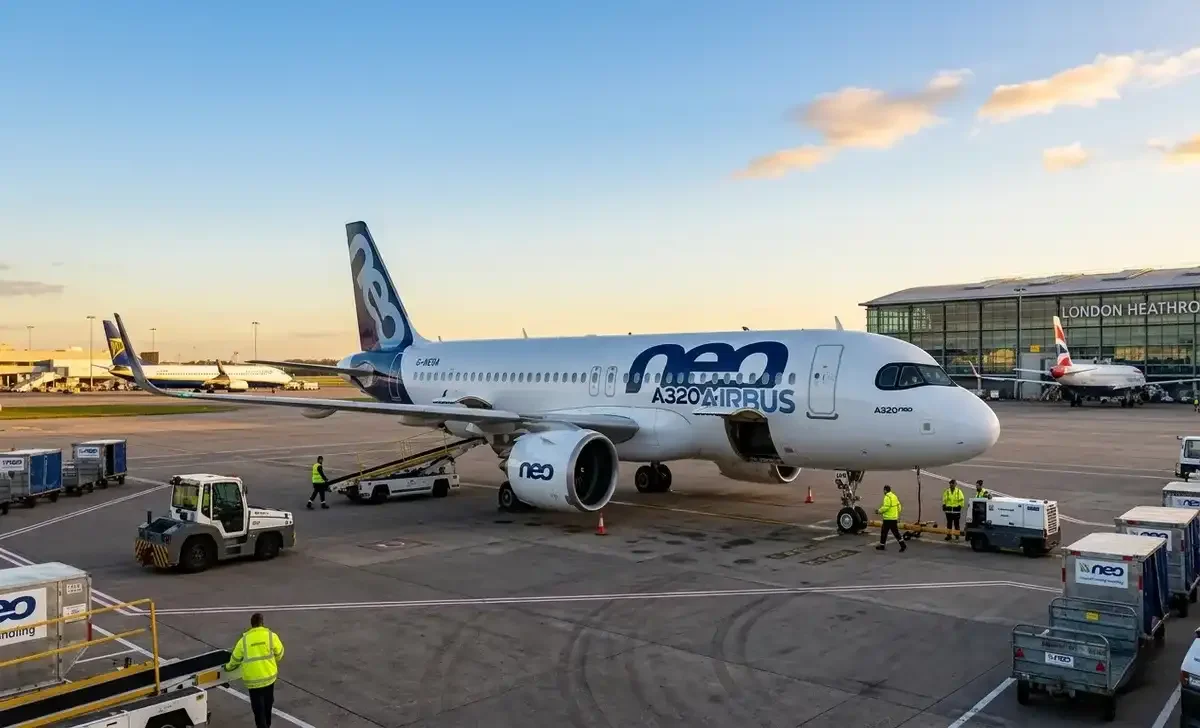
If you've noticed fares creeping up on routes you fly often, or seen an airline quietly retire fewer old planes than planned, you're looking at a downstream effect of a story that rarely gets explained clearly: Airbus, the world's largest aircraft maker, has been struggling to hand over finished jets on schedule. Not to build them — to hand them over. That distinction is the whole story, and most coverage misses it.
This guide explains what's actually going on, why it's happening, who benefits and who absorbs the pain, and how to tell the difference between a genuine crisis and a supply chain catching its breath.
Delivery Is Not the Same Thing as Demand
Aviation news tends to conflate a handful of very different milestones. An order is an airline's promise to buy a future aircraft — often made years before that aircraft exists. A production milestone is when an airframe physically comes together on the assembly line, structurally complete but not yet certified for passengers. A delivery is the formal handover: paperwork signed, payment made, aircraft cleared to fly paying customers.
Only the last of these generates revenue for the manufacturer, and only the last of these puts a usable seat into an airline's schedule. A soaring order book is a sign that airlines want more capacity in the future. It says nothing about whether that capacity is arriving on time. When commentators point to a strong backlog as proof that "everything's fine," they're answering a different question than the one that actually affects passengers, airline planners, and investors: how fast can finished aircraft get out the factory door?
What's Actually Causing the Delays
A supply chain with too many single points of failure
A modern narrow-body jet is assembled from an enormous web of components sourced from specialist suppliers scattered across multiple continents. That distributed model is normally a strength — it spreads cost and risk across many partners rather than concentrating it in a single factory. But it also means a shortage anywhere in that chain, even at a small, obscure supplier removed from Airbus itself by several layers, can leave an otherwise finished aircraft sitting on the tarmac waiting for a missing part.
Recent pressure points include disrupted titanium sourcing that forced manufacturers to scramble for alternative suppliers, cabin-interior specialists falling behind on seats and galleys, longer lead times on aluminium and composite materials, and a persistent shortage of skilled tradespeople across the aerospace supplier base. That last problem isn't unique to aviation — the same structural shortage of skilled labour is hitting heavy-industry sectors well outside aerospace, a sign that this is a broader economic pattern rather than an aerospace-specific failure.
An engine bottleneck largely outside Airbus's control
Perhaps the single biggest constraint has been engines. The engine families used across Airbus's best-selling narrow-body jets have both suffered production and quality problems, including a major recall tied to contamination discovered in certain engine components. That recall pulled a substantial share of the affected fleet out of active service for mandatory inspection, which meant airlines were suddenly short of spare engines just as engine-shop capacity became overwhelmed by inspection backlogs. The result: newly assembled airframes sitting essentially finished, minus a certified engine to bolt on. Airbus doesn't manufacture these engines itself — it buys them from specialist suppliers — so this bottleneck sits largely outside its direct control, even though it shows up squarely in its delivery numbers.
Trade friction adds a quiet, compounding delay.
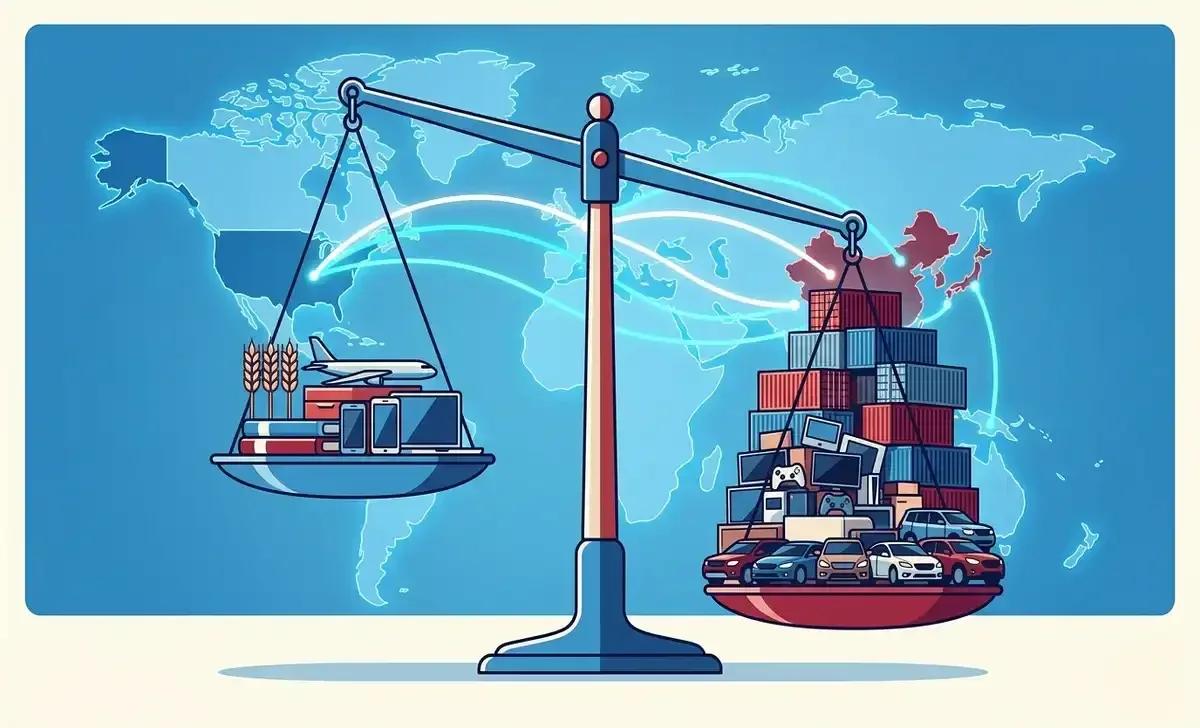
Aerospace supply chains are unusually exposed to shifting trade policy because so many specialty components cross multiple borders before final assembly. Even minor tariff changes or customs friction can add real delay to a delivery timeline, independent of whether any individual supplier is actually behind schedule. Grasping how trade imbalances between major economies actually work helps explain why the cost and availability of aerospace-grade materials have become noticeably more volatile, even though aviation isn't usually the direct target of trade disputes. The same dynamic plays out in other strategically sensitive supply chains, from shipping routes through contested waterways like the Strait of Hormuz to the raw-materials squeeze behind battery manufacturing overcapacity in China — different industries, but the same underlying lesson: globally distributed manufacturing is efficient until a single link in the chain breaks.
How Airlines Are Actually Coping
Airlines facing significant delivery slippage tend to run a fairly consistent playbook rather than simply absorbing the hit passively. They extend leases on older aircraft that were due for retirement, even at a premium, to preserve total seat capacity. They wet-lease additional aircraft, complete with crew, from partner carriers to cover peak seasons without standing up an entirely new training pipeline. They trim thin, underperforming routes to redirect available aircraft hours toward higher-yield flying. They renegotiate delivery slots directly with the manufacturer, sometimes accepting a later date in exchange for better pricing or priority access to scarce engines. And they push back adjacent spending — lounge refreshes, new route launches, cabin overhauls — until the picture stabilises.
The carriers that navigate this most smoothly tend to share the same traits: a fleet that isn't overly dependent on a particular aircraft type or engine option, and strong relationships with leasing companies that let them move quickly whenever spare capacity becomes available.
Who Actually Benefits: The Leasing Market
While manufacturers and airlines absorb the pain of delayed deliveries, aircraft leasing companies have quietly had one of their strongest periods in years. Demand for existing, already-certified aircraft has surged, lease rates have climbed toward multi-year highs (especially for narrow-bodies), lease terms have lengthened as airlines lock in capacity rather than gamble on near-term new deliveries, and competition for used aircraft coming off lease has intensified. Lease rates are, in effect, a live market signal of just how tight aircraft supply really is — set by people with capital on the line, which arguably makes them a more honest gauge than any manufacturer's official guidance.
Is This a Crisis, or Just Friction?
It helps to separate the different questions that coverage often blurs together: is demand for new aircraft weak, and is the manufacturer able to satisfy that demand on schedule? The honest answer is that demand remains robust — airlines are still placing new orders even as they wait longer for existing ones — while execution has clearly been the weak link. That's a meaningful distinction, because a demand problem tends to compound over time as buyers lose confidence, whereas an execution problem tends to resolve as supply chains catch up, workforces are rebuilt, and bottlenecks like engine inspections work their way through the backlog.
Forecasting exactly how quickly that resolution happens is genuinely difficult, and traditional analyst commentary doesn't always move fast enough to be useful. That's part of why some forecasters now look at how prediction markets work as a useful cross-check: because participants back specific, dated outcomes with real money, these markets tend to update faster than institutional research whenever new information emerges, simply because there's a direct cost to being wrong.
How This Differs From Boeing's Troubles
It's tempting to lump Airbus's delivery struggles in with Boeing's well-publicised problems, but the situations are fundamentally different in kind, not just in degree. Airbus's issues are operational — supply chain fragmentation and engine availability, both of which improve with time, investment, and supplier capacity expansion. Boeing's issues stem from a serious safety incident that triggered intensified regulatory oversight and formal production limits, meaning its path forward runs through regulatory sign-off and a slower rebuild of airline and public trust rather than simply fixing a supply chain. That gap matters to airlines deciding how to split future orders between the rival manufacturers, and it's a real factor behind a gradual shift toward Airbus in recent buying decisions.
What to Watch If You Want to Follow This Story Properly
Rather than reacting to whichever headline appears next, it's more useful to track a handful of ongoing signals: whether monthly delivery output is trending upward over time rather than judged month to month in isolation; what engine and structural suppliers say on their own earnings calls, since their commentary tends to lead the manufacturer's own results; how quickly the engine-inspection backlog clears and whether spare-engine availability is improving; whether the manufacturer revises its full-year delivery guidance up or down; whether free cash flow is recovering in line with delivery pace; whether new orders keep arriving even amid delivery delays, confirming demand remains intact; and whether aircraft lease rates are cooling or still climbing, since that's an independent, market-based proxy for how tight supply really is.
Common Misreadings Worth Avoiding
A weak delivery quarter does not mean demand is collapsing — order books remain strong, and the constraint is production capacity, not buyer interest. Comparing today's slowdown to a past financial crisis downturn without context is misleading, because that earlier dip happened as airlines were actively cancelling orders, the near opposite of a situation where airlines want more aircraft than can currently be produced. Blaming the airframe manufacturer alone for engine shortages overlooks that engines are supplied by separate specialist companies facing an industry-wide manufacturing challenge. And expecting a smooth, steadily improving recovery ignores how supply chains actually heal — unevenly, with setbacks, rather than in a straight line.
Conclusion: Read the Backlog and the Delivery Pace as Separate Stories
The Airbus delivery slowdown is best understood as separate stories that keep getting collapsed together. One strand is about demand, and on that front, the picture is genuinely healthy — airlines still want more aircraft than the manufacturer can currently produce. The other strand is about execution, and that's where the real difficulty lies: converting a strong order book into aircraft that are actually sitting on an airline's ramp, ready to fly passengers. Understanding which of those strands you're actually reading about is the difference between a useful, accurate take and a headline built for clicks.
For airlines, the sensible response has been to extend the life of older aircraft, lean more heavily on leasing partners, and renegotiate delivery timelines rather than wait passively for the supply chain to catch up. For anyone trying to make sense of the wider story, the discipline is the same one that applies to most manufacturing-heavy industries under strain: separate short-term operational noise from the underlying structural position, and watch the trend rather than any single data point in isolation.
Frequently Asked Questions
Why are Airbus jet deliveries taking longer than expected?
Mostly because of a fragmented global supply chain for raw materials and cabin interiors, combined with an engine shortage tied to a major manufacturing recall and broader engine-production constraints. Demand for aircraft has remained strong throughout; the challenge has been converting that demand into aircraft actually handed over to airlines.
Does a weak delivery period mean the manufacturer is in financial trouble?
Not in any structural sense. A large, healthy order backlog and a fundamentally sound balance sheet mean the core business remains solid. A weak delivery stretch does create real short-term cash-flow pressure, since revenue is recognised at handover rather than at order, but that's a timing issue rather than an existential one.
How is this different from what Boeing has been dealing with?
Airbus's challenges are largely operational — supply chain and engine issues that improve with investment and time. Boeing's problems are more structural, rooted in a serious safety incident that triggered sustained regulatory oversight and formal limits on production, which requires regulatory sign-off rather than just supply chain fixes to resolve.
When will deliveries return to a normal pace?
Gradual improvement is the realistic expectation as supplier capacity expands and engine-inspection backlogs clear, but a full return to peak production rates is unlikely to happen quickly. Supply chain recoveries rarely move in a straight line, so treat any confident timeline with some scepticism.
Should this affect how someone thinks about investing in the company?
That depends entirely on individual risk tolerance and time horizon, and this isn't financial advice. What the underlying data does support is separating a demand problem, which doesn't currently exist given the size of the order backlog, from an execution problem, which clearly does. Weighing the backlog and cash-flow trend more heavily than any single weak delivery period has historically given people a clearer read on situations like this.
What's the simplest way for a non-expert to follow this story accurately?
Compare delivery output against the same period a year earlier rather than against the immediately preceding period, since aircraft deliveries follow a predictable seasonal pattern and year-over-year comparisons filter out that seasonal noise to reveal the real underlying trend.