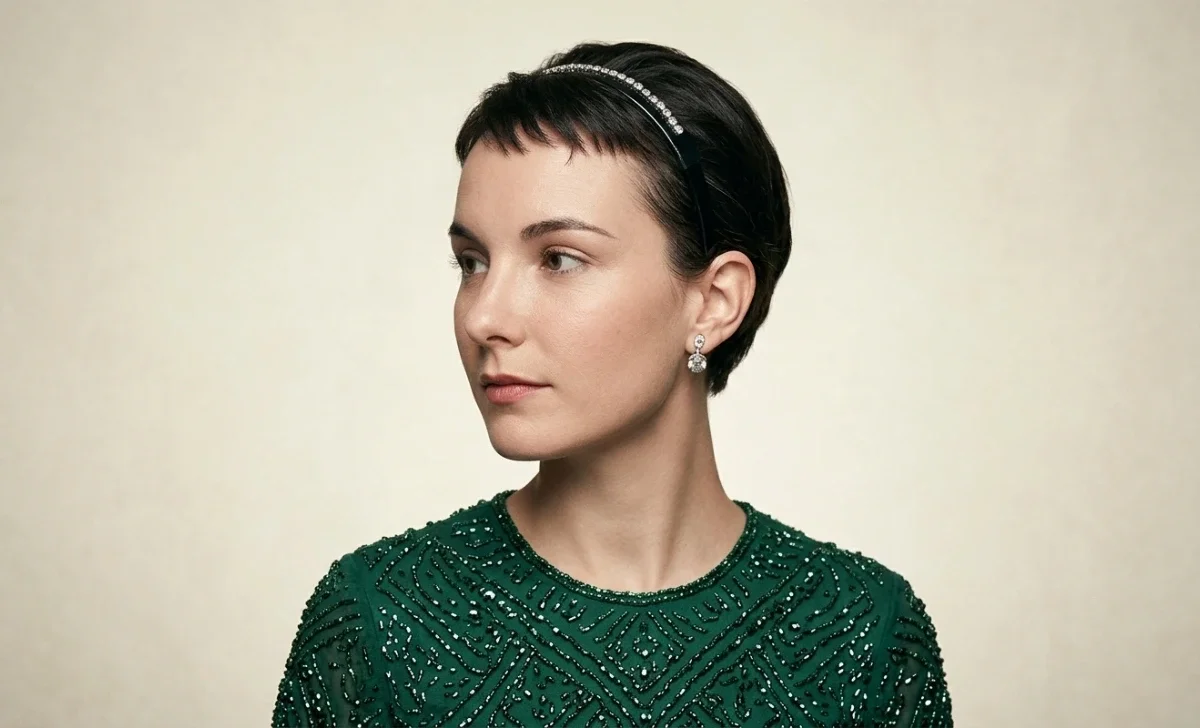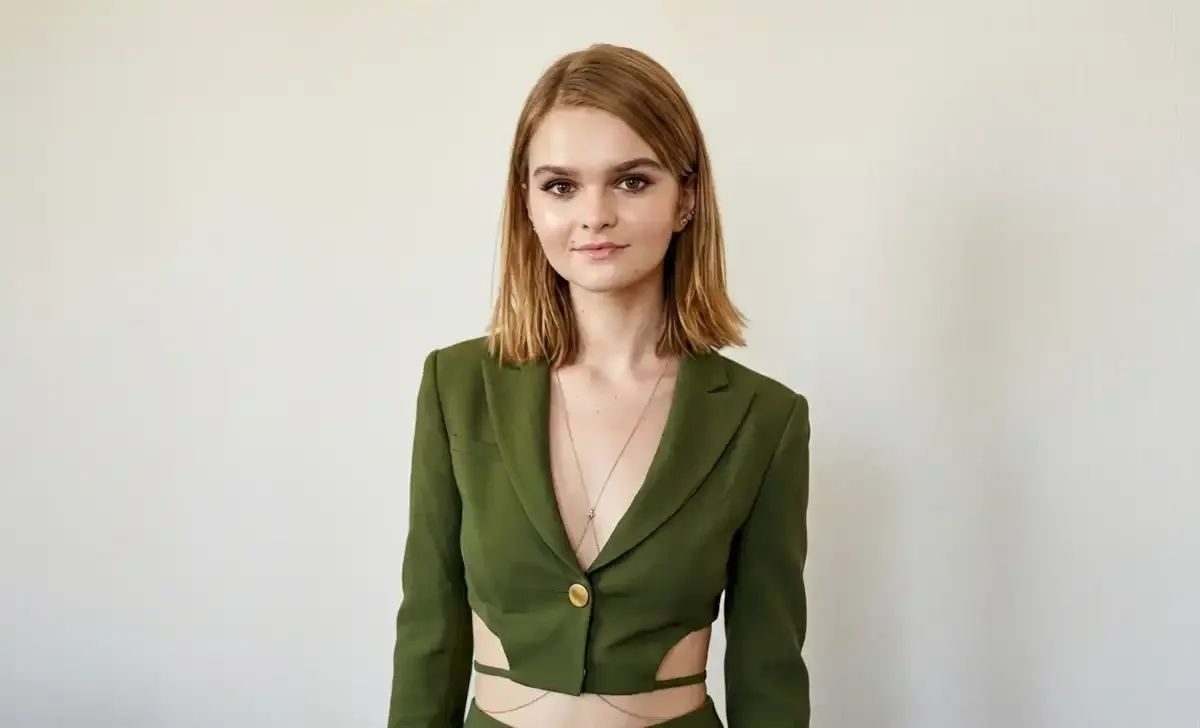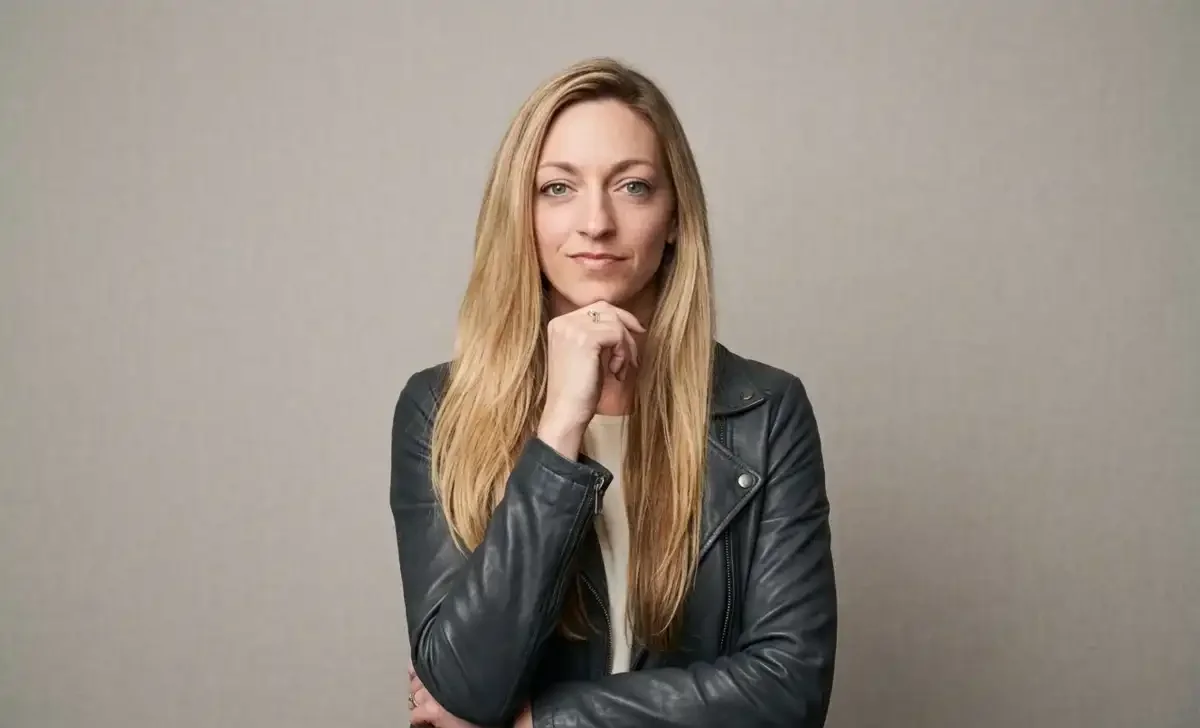
If you've ever clicked a video titled "Why Is the sky blue" and surfaced twenty minutes later having learned about Rayleigh scattering, cannonball physics, and non-Newtonian fluids, there's a good chance Dianna Cowern made it. Under the name Physics Girl, she built one of YouTube's most trusted science channels, grew it to over 3.5 million subscribers, partnered with PBS, and then, in 2022, disappeared from her own channel after developing severe Long COVID.
This guide covers who she is, how she teaches, why her PBS partnership mattered for classrooms, her influence on women in physics, and — because this is what most people searching her name actually want to know — a clear, current account of her health and her 2026 return to YouTube.
Who Is Dianna Cowern?
Dianna Cowern is an American physicist and science communicator who has run the Physics Girl YouTube channel since 2011. Raised on Kauai in Hawaii, she studied physics at MIT, graduating in 2011, and briefly worked as a research fellow at the Harvard-Smithsonian Center for Astrophysics before turning her science-video side project into a full-time media career.
What made her stand out wasn't the MIT degree — it was that she rarely led with it. She built her authority through curiosity and honesty instead of credentials: admitting when she didn't know something, getting visibly excited about a result, and treating physics as a set of puzzles rather than a list of facts to memorize.
In 2025, in recognition of her contribution to science communication, the International Astronomical Union named an asteroid — 21943 Diannacowern — after her.
What Does Physics Girl Actually Cover?
Her catalog spans five recurring areas, each grounded in a physical demonstration rather than a lecture:
Optics and light. Why the sky is blue, how total internal reflection works, and what happens when light bends through unusual materials.
Fluid dynamics. Non-Newtonian fluids, underwater candles, and the pool-physics videos that built her early audience — low production value, but a genuinely good question, chased honestly.
Relativity and spacetime. Her Einstein explainers manage to stay accurate without losing a general audience, which is a harder balance than it sounds.
Quantum mechanics. She's notably willing to say "physicists don't fully agree on this part," instead of flattening open questions into false certainty.
Everyday physics. The physics of walking, musical instruments, and how sound behaves differently underwater versus in the air.
She also films on location at particle accelerators and observatories, giving viewers a look at what real research infrastructure looks like — not the sanitized version in a textbook diagram.
A concrete example of her teaching method
Take her video on fire tornadoes: it opens with the phenomenon already happening on screen, before any explanation. The viewer is curious first, and the convection physics explanation lands only because the hook already earned their attention. Compare that to her Bernoulli's principle video, where she holds a leaf blower and a ball rather than describing the pressure differential in words alone — the demonstration does the teaching that a whiteboard couldn't.
Her PBS Digital Studios Partnership
Physics Girl was produced in partnership with PBS Digital Studios from 2015 to 2020, which expanded both her reach and her institutional credibility. That partnership pushed her videos into middle school, high school, and university classrooms as supplementary material — most commonly as "warm-up" content teachers play at the start of class to spark curiosity before the technical material begins.
This kind of informal, video-based learning sits alongside a broader shift in how educators build engagement before instruction even starts — a shift also visible in projects like the Lauren Cella Gen Z History Series, which applies a similar principle to history education: meet students where their attention already is, then bring the rigor.
Her Role in Representing Women in Physics
Science communication has historically skewed heavily male, and Physics Girl's biggest cultural contribution may simply be that she was visibly, unselfconsciously good at physics, on camera, for over a decade. She's spoken about receiving messages from young women who said they chose to study physics specifically because of her channel — the kind of influence that's hard to measure in analytics but shows up repeatedly in who ends up in undergraduate physics programs.
That effect compounds because it starts early. Research on STEM engagement consistently shows that curiosity about science forms — or gets shut down — well before a child reaches a formal physics classroom, a pattern examined in detail in this piece on the early years education gap. A ten-year-old who gets hooked by a pool-physics video is, in a very real sense, closing that gap on their own, years before a school system would otherwise reach them.
What Actually Happened to Physics Girl (2022–2026)
Here's the timeline, as accurately as it can currently be reported:
- July 2022: Dianna developed Long COVID after a COVID-19 infection.
- Late 2022–early 2023: Symptoms worsened significantly. She described her condition as similar to myalgic encephalomyelitis/chronic fatigue syndrome (ME/CFS) — severe fatigue not relieved by rest, along with brain fog and muscle pain.
- March 2023: She was hospitalized as her symptoms continued to worsen. She became largely bedbound, with her husband, Kyle Kitzmiller (whom she married in May 2022), acting as her full-time caretaker. Her sister organized a donation fund to help cover medical costs and lost income.
- January 2025: In a YouTube update, Dianna reported she was able to stand on her own for short periods — a meaningful but modest milestone after roughly two and a half years of severe illness.
- May 2025: She posted a further update indicating significant improvement, including being able to walk independently.
- July–September 2025: Her health declined again, and she became bedridden for a period — a pattern consistent with the relapsing course common in ME/CFS and Long COVID, where recovery is rarely linear.
- March 2026: After roughly a three-year hiatus from posting, Dianna returned to YouTube with a new video — discussing a viral image of the Sun captured by Japan's Super-Kamiokande neutrino observatory — while sharing that she was still recovering and filming from bed.
Her illness brought unusual public attention to Long COVID and ME/CFS, conditions that remain incompletely understood and for which there is still no approved curative treatment; management is largely symptomatic, centered on pacing strategies to avoid post-exertional crashes. A livestream organized by her husband and former colleagues to raise awareness and funds for ME/CFS research reportedly raised over $150,000.
How to Use Physics Girl Content Well
Cross-reference specific claims. Even a communicator this careful occasionally simplifies. Use her videos as a starting point, then verify anything load-bearing against a textbook or peer-reviewed source.
Introduce it early. Her content works for viewers as young as 10, and the earlier curiosity is sparked, the more it compounds — screen time doesn't have to work against learning if the content is chosen deliberately, a tension explored further in coverage of screen time for kids.
Pair it with practitioner perspectives. Her videos are made by a communicator, not a full-time classroom teacher. For a complementary, on-the-ground view of what actually works in a classroom, Andrea Forcum's Classroom Survival Podcast offers the practitioner's side of the same goal — engagement that survives contact with a real room of students.
Treat it as a gateway, not a destination. A good Physics Girl video should end in a question, not a checkbox. If a video doesn't lead to more reading or a follow-up question, it hasn't done its job yet.
What Physics Girl's Career Actually Demonstrates
Three things hold up regardless of how her recovery continues from here:
Curiosity is the actual mechanism, not a nice-to-have. Nearly every one of her most successful videos opens with a question, not an answer — the demonstration only works because the hook came first.
Accessible is not the same as simplified. Translating quantum mechanics or relativity into plain language without losing accuracy takes more subject mastery than explaining it to other physicists, not less.
Representation isn't abstract. The specific, repeated fact of young women naming their channel as the reason they studied physics is a measurable effect on who chooses to enter a field, not a vague sentiment.
Conclusion
Dianna Cowern built a career on a fairly simple premise: physics is more interesting than most physics classes make it look, and a person can prove that with a leaf blower, a pool, and an honest "I'm not sure, let's find out." That channel reached millions of subscribers, landed in classrooms through a PBS partnership, and measurably changed who felt welcome pursuing physics.
Her Long COVID diagnosis interrupted that work for roughly three years — not as a footnote, but as the central, honestly documented fact of her recent career. Her return to posting in March 2026, filming from bed, is both a health update and, in its own way, a continuation of the same thing she always did: showing an audience something true and difficult without pretending otherwise.
Frequently Asked Questions
Who is Dianna Cowern?
Dianna Cowern is an MIT-educated physicist who has run the Physics Girl YouTube channel since 2011. She built the channel to over 3.5 million subscribers through demonstration-based videos on optics, fluid dynamics, relativity, and quantum mechanics, and partnered with PBS Digital Studios from 2015 to 2020.
What happened to Physics Girl?
Dianna developed Long COVID in July 2022. Her condition, resembling ME/CFS, worsened through 2023 to the point of hospitalization and being largely bedbound, cared for by her husband. Her recovery has followed a relapsing pattern: partial improvement in early to mid-2025, followed by a decline later that year. She returned to posting new videos in March 2026 while still recovering.
Is Physics Girl still making videos in 2026?
Yes, though intermittently. After a roughly three-year break, she posted a new video in March 2026 discussing a solar neutrino image, noting she was filming from bed and still in recovery. Her official channels remain the most reliable source for further updates.
Is Physics Girl affiliated with PBS?
Yes. Physics Girl was produced with PBS Digital Studios from 2015 to 2020, a partnership that helped place her videos in middle school, high school, and university classrooms as supplementary material.
What age is Physics Girl content appropriate for?
Generally 10 and up. Topics range from beginner-friendly demonstrations to university-level explanations of relativity and quantum mechanics, and many teachers use her videos as warm-up material before formal lessons.
Why does Physics Girl matter for women in STEM?
She's one of the more visible women doing physics on the internet with unselfconscious authority, and she's publicly shared messages from young women who credit her channel with their decision to study physics — a concrete, if hard-to-quantify, effect on representation in the field.
How can I support Dianna Cowern or follow her recovery?
Her official site links to her YouTube, Instagram, Facebook, and Patreon, which remain the most current sources for health updates and ways to support her.
What does "Long COVID" actually mean in her case?
She's described her condition as closely resembling myalgic encephalomyelitis/chronic fatigue syndrome (ME/CFS) — severe fatigue unrelieved by rest, brain fog, and muscle pain, with activity-triggered "crashes" (post-exertional malaise). There's currently no approved curative treatment; management relies on pacing to avoid overexertion.