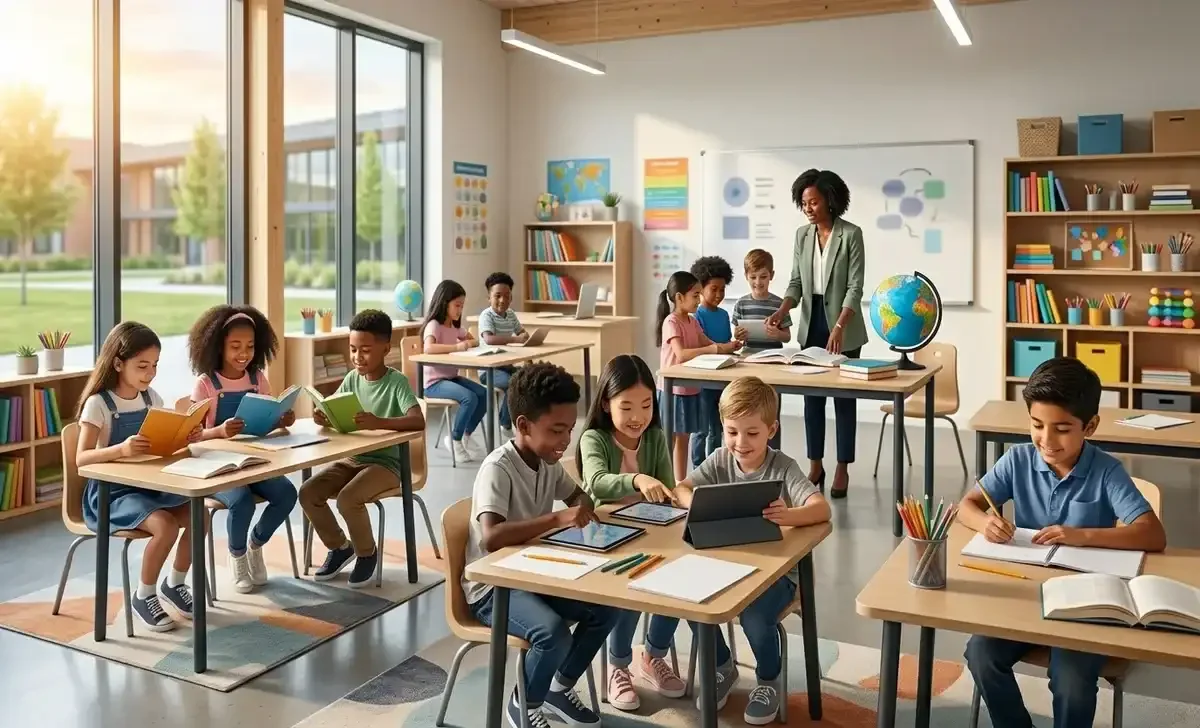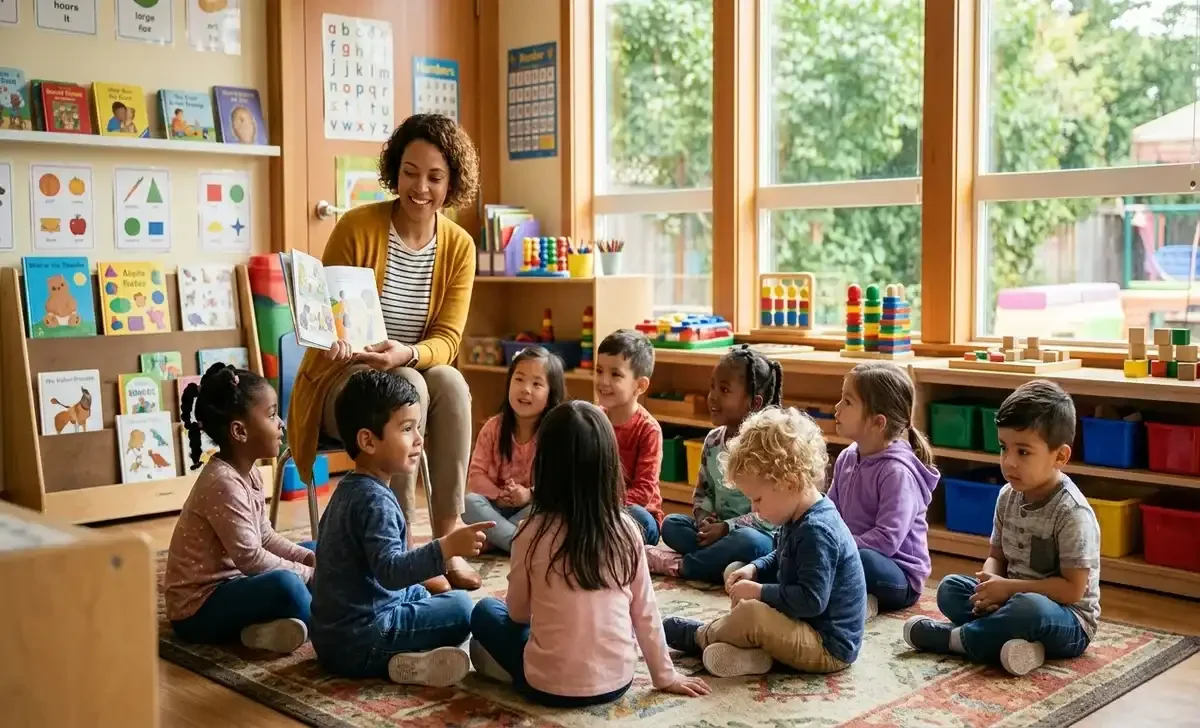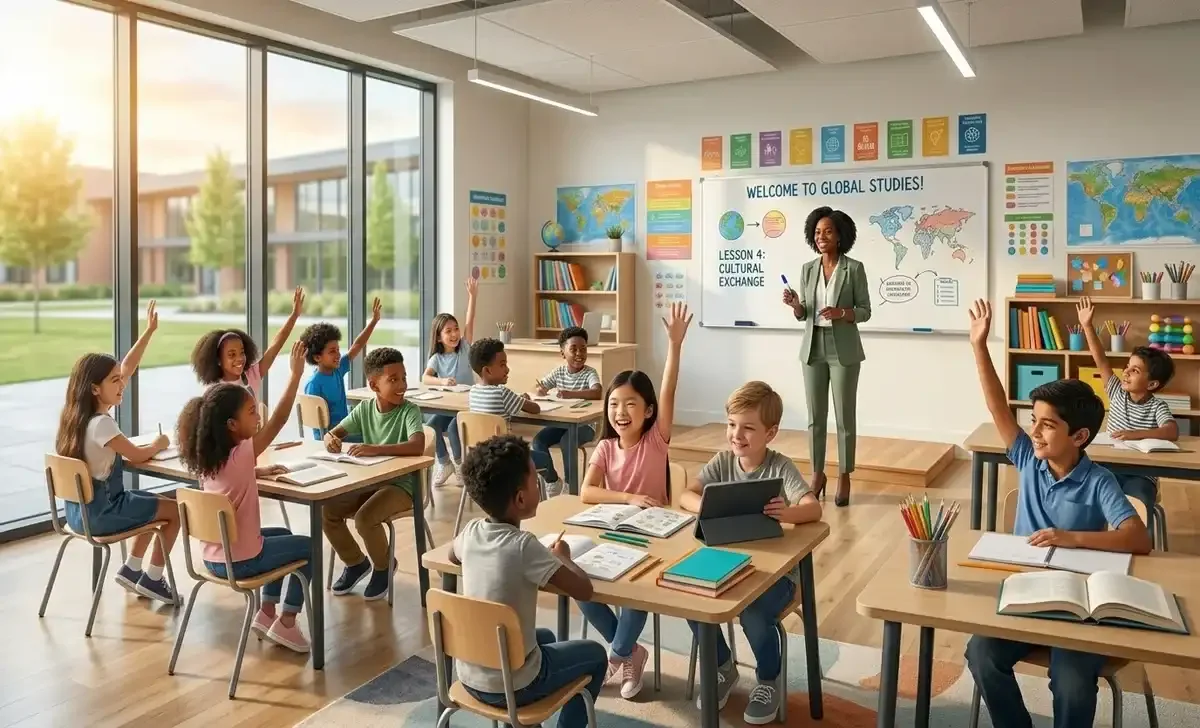
A 4th-grade teacher in a Title I school once told me her biggest breakthrough wasn't a new curriculum — it was switching from "you got this wrong" to "you haven't gotten this yet." Her end-of-year reading scores didn't jump because of a program. They jumped because she changed how students saw their own struggle.
That's the theme running through everything below. Improving student achievement isn't about adding more worksheets or more pressure. It's about a handful of specific, repeatable practices — used consistently — that change how students engage with learning.
This guide is for classroom teachers, school leaders, and parents who want strategies they can actually start using this week, not abstract theory. Each section includes what the research says, what it looks like in practice, and a concrete example.
Set High Expectations — and Back Them With Support
High expectations only work when paired with the scaffolding to meet them. Telling a struggling reader "I know you can do this" without giving them a strategy to try is just pressure with no path forward.
What this looks like in practice:
- Replace "wrong" with "not yet" in verbal and written feedback
- Give the same challenging task to the whole class, then differentiate the support, not the expectation
- Avoid permanent ability grouping based on a single test score
Example: A middle school math teacher stopped giving a separate "easier" worksheet to her lower-scoring group. Instead, everyone got the same problem set, but struggling students got a worked example and sentence starters for explaining their reasoning. Within a semester, the gap between her highest and lowest quartile narrowed on unit tests — because no student was being quietly told they weren't capable of the harder problem.
Use Data Without Drowning in It
Data-driven instruction doesn't mean spreadsheets every night. It means a short, repeatable loop: check, notice, adjust.
A simple weekly loop:
- Pull one quick data point (exit ticket results, a 5-question quiz, homework completion)
- Look for a pattern across the whole class, not individual outliers
- Adjust the next lesson based on what you see — reteach, regroup, or move on
Example: A 7th-grade science teacher noticed on Friday's exit ticket that 60% of students missed the same question about photosynthesis. Instead of moving to the next unit on Monday as planned, she spent 15 minutes re-explaining the concept with a new visual before continuing. That single adjustment prevented the gap from compounding into the next unit, which built directly on that concept.
Personalize Learning Without Personalizing Yourself Into Burnout
Personalized learning gets misunderstood as "a different lesson plan for every student." In a class of 30, that's not sustainable. What's realistic is building in structured flexibility.
Practical, low-prep approaches:
- Choice boards: same learning objective, three ways to demonstrate it (write, build, present)
- Small-group rotations while the rest of the class works independently
- Adaptive practice tools (e.g., Khan Academy, IXL) for skill-building at each student's level
Example: Instead of assigning one essay format to the whole class, a high school English teacher let students choose between a traditional essay, a podcast script, or an annotated visual essay — all assessed against the same rubric for argument and evidence. Engagement on the assignment, measured by on-time submission rate, went up noticeably compared to her standard essay-only unit.
Build Relationships That Make Students Willing to Try
Students take academic risks with teachers they trust. This matters most for students who've already learned that school isn't a safe place to be wrong.
Low-cost, high-impact habits:
- Greet each student by name at the door
- Keep a quick note of something a student mentioned, and follow up on it later in the week
- Respond to mistakes with curiosity ("What were you thinking when you wrote this?") instead of correcting first
Example: A high school history teacher started two-minute check-ins with students who'd been chronically absent. No academic content — just "how's your week going?" Within a month, several of those students started arriving on time and turning in work they'd previously skipped, not because of a new policy, but because someone noticed when they weren't there.
Make Formative Assessment a Daily Habit, Not an Event
The difference between formative and summative assessment is timing: formative happens during learning, while there's still time to act on it.
Tools that take under five minutes:
- Exit tickets with one question tied directly to the day's objective
- Whiteboard check-ins where every student shows their answer at once
- Think-pair-share before moving to independent work
Example: A 3rd-grade teacher uses a 30-second thumbs-up/thumbs-sideways/thumbs-down check after every new concept. When more than a third of the class shows sideways or down, she stops and reteaches immediately rather than waiting for the unit test to reveal the gap, by which point reteaching costs far more class time.
Treat Social-Emotional Skills as Part of Academic Readiness
A student who can't regulate frustration won't push through a hard math problem, no matter how well it's taught. SEL isn't separate from academics — it's the foundation underneath them.
Core skills worth building explicitly:
- Naming emotions accurately (not just "I'm mad" but "I'm frustrated because I don't understand this step")
- Self-management strategies for frustration (a break card, a breathing routine)
- Conflict resolution language students can use without an adult mediating every time
Example: A 5th-grade classroom introduced a "frustration scale" students could point to during independent work, with agreed-upon responses at each level (keep going, ask a peer, ask the teacher, take a break). Off-task behavior during independent work dropped because students had a script instead of just escalating or shutting down.
Make Parental Involvement Easy, Not Just Welcome
Most parents want to be involved — but evening events and jargon-heavy newsletters create barriers. Lowering the effort required matters more than adding more opportunities.
What actually increases involvement:
- Short, plain-language weekly updates (not just "concern" emails)
- Two-way communication — ask parents what their child needs, don't just inform
- Flexible conference scheduling for working parents, including phone or video options
- Translated materials for non-English-speaking families
Example: A middle school switched from a monthly newsletter to a 60-second weekly text update for each grade level ("This week: fractions; ask your child to explain how they'd split a pizza into thirds"). Response rates to teacher messages increased, largely because the format matched how parents already communicate.
Build a Classroom Culture Where Mistakes Are Normal
Culture is set in the first two weeks and reinforced every day after. Students decide quickly whether a classroom is safe to be wrong in.
How to build it deliberately:
- Co-create classroom norms with students rather than just posting rules
- Model your own mistakes out loud ("I miscounted — let me fix that")
- Use restorative conversations for conflict instead of only punitive consequences
Example: A teacher began publicly correcting her own errors on the board without erasing them — crossing out and rewriting instead. Students started doing the same on their own work without prompting, which made error-spotting a normal part of the process instead of something to hide.
Use Technology to Deepen Learning, Not Replace It
Edtech is a tool, not a strategy on its own. The test for any tool: does it help a student understand something faster or more deeply than they would otherwise? If the device adds friction or distraction, it's not pulling its weight — a tension worth weighing carefully, especially given the wider debate around smartphones in schools.
Tools with a clear instructional purpose:
- Adaptive practice platforms for individualized skill-building
- Tools like Desmos for visualizing math concepts that are hard to draw by hand
- Reading platforms that adjust text complexity to a student's level
Example: A geometry teacher replaced a static worksheet on transformations with a Desmos activity where students could drag shapes and watch the coordinates update in real time. Students who'd struggled with the abstract version of the concept on paper could now see it happen, and quiz scores on that topic improved compared to the prior cohort.
Intervene Early — Before the Gap Compounds
By the time a struggling student fails a unit test, the gap has often already widened. Early, structured intervention costs far less time than remediation later.
A realistic early-intervention system:
- Universal screening 2–3 times a year for foundational skills (reading, number sense)
- Tiered support (often called RTI/MTSS) so struggling students get small-group help without waiting to fail first
- Frequent progress monitoring — weekly or biweekly, not just at report card time
This matters most for early literacy. Many of the gaps schools try to close in upper grades actually trace back to the <a href="https://snoopymagazine.co.uk/early-years-education-gap">early years education gap</a>, which makes prevention far more effective than later remediation.
Example: A school implemented universal reading screening in kindergarten through 2nd grade, three times a year. Students flagged as at-risk received 20 minutes of small-group instruction daily. Teachers reported that students who received this early support rarely needed the more intensive (and expensive) interventions typically required by 4th grade.
Common Mistakes That Undermine These Strategies
- Teaching to the test — narrow test prep crowds out the deeper thinking these strategies are meant to build
- Treating non-academic needs as separate — hunger, instability, and stress directly affect a student's capacity to learn
- One-size-fits-all instruction — without flexibility, many students consistently get the wrong level of challenge
- Waiting for failure before intervening — by then, the gap is significantly harder and more expensive to close
- Neglecting teacher capacity — none of these strategies are sustainable if teachers don't have planning time and support to implement them well
Why Long-Term Investment Matters
Individual classroom strategies can only go so far without the systems around them. Funding decisions, staffing ratios, and early childhood access all shape how much room a teacher actually has to apply strategies like these. Anyone evaluating school policy at a higher level should look closely at what genuine investment in education requires — because classroom-level strategy and system-level funding work together, not separately.
Conclusion
None of these ten strategies requires a new curriculum or a budget increase. What they require is consistency: the same high expectations every day, the same quick data checks every week, the same early flags for struggling students before the gap widens. Pick two or three that fit your current classroom or school, apply them deliberately for a full term, and track what actually changes — not just in test scores, but in how willing students are to try.
Frequently Asked Questions
What's the single most effective strategy for improving student achievement?
There isn't one silver bullet, but consistent formative assessment, strong teacher-student relationships, and high expectations paired with support tend to show the largest classroom-level impact. The common thread across all of them is consistency — a simple strategy used every day outperforms an elaborate one used occasionally.
How does poverty affect student achievement?
Students facing food insecurity or housing instability often have less capacity to focus on academics, regardless of teaching quality. Schools can help by building in wraparound supports and early intervention, but addressing poverty's effects on achievement also requires resources beyond what any individual classroom can provide.
What role do parents actually play in achievement outcomes?
A consistent one. Students with involved parents tend to attend more regularly and develop stronger study habits — but involvement doesn't require volunteering or attending every event. Short, accessible communication is often more effective than formal participation requirements.
How can schools realistically close achievement gaps?
Through a combination of early intervention, equitable resource distribution, and consistent classroom practices like the ones above. Gaps that start in early childhood are far harder to close once a student reaches upper elementary, which is why early screening matters so much.
Does social-emotional learning actually improve academic performance, or is it separate from it?
They're connected, not separate. A student who can manage frustration and ask for help is better positioned to engage with difficult academic material. SEL isn't a detour from academics — it's part of what makes sustained academic effort possible.