What if one decision could reduce poverty, boost economic growth, and build a stronger society — all at the same time?
That decision is investment in education.
Yet millions of children around the world still don’t have access to quality schooling. Governments cut education budgets. Families pull kids out of school to work. And the long-term cost of all this? Enormous.
Whether you’re a policymaker, a parent, a donor, or simply someone who cares about the future — understanding why education funding matters can change how you see the world.
In this article, you’ll learn:
- Why investing in education pays off more than almost anything else
- Real-world examples of countries that transformed through education
- Common mistakes in education funding — and how to avoid them
- Practical steps anyone can take to support education investment
Let’s dive in.
1. Education as an Economic Driver
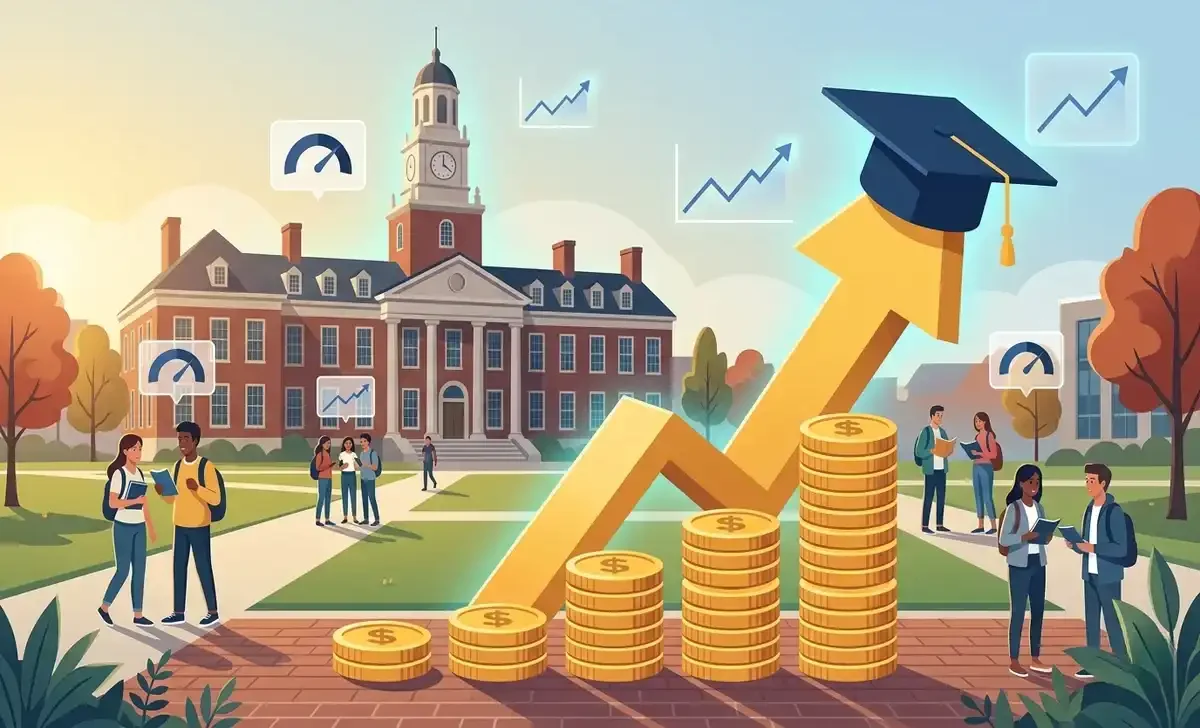
Investment in education is one of the highest-return financial decisions a country can make. The World Bank estimates that each additional year of schooling can increase an individual’s earnings by 8–10%. Multiply that across an entire workforce, and the GDP impact becomes massive.
Countries like South Korea and Singapore were once considered developing nations. Their secret weapon? They poured resources into education — building schools, training teachers, and prioritizing learning at every level.
The result? Both countries now rank among the world’s most competitive economies.
Education creates a skilled workforce. A skilled workforce attracts investment. Investment creates jobs. Jobs create stability. It’s a cycle — and it all starts in the classroom.
Key takeaway: Nations that invest in education today are building their economic strength for the next 30 years.
2. Breaking the Cycle of Poverty
Poverty is stubborn. It passes from one generation to the next like a bad inheritance. But education is one of the few tools powerful enough to interrupt that cycle.
UNESCO data shows that if all adults completed secondary education, global poverty could be cut nearly in half. That’s not a small claim — that’s a transformation.
When children from low-income families go to school, they’re not just learning math or reading. They’re gaining the tools to secure better jobs, make healthier choices, and raise children who will do even better than they did.
In Bangladesh, targeted programs that kept girls in school led to dramatic drops in child marriage and generational poverty within just two decades.
Practical tip: Communities and NGOs can support this by offering scholarships, free school meals, and safe transportation — small changes that keep kids in school longer.
3. Improving Public Health Outcomes
Here’s something most people don’t realize: education and health are deeply connected.
Educated individuals are more likely to understand hygiene, nutrition, disease prevention, and when to seek medical care. They’re less likely to smoke, more likely to vaccinate their children, and better equipped to manage chronic illnesses.
The data backs this up. Studies show that a mother’s level of education is one of the strongest predictors of child survival. In sub-Saharan Africa, children born to educated mothers are 50% more likely to survive past age five.
Investing in education, especially for women, doesn’t just fill classrooms — it fills hospitals with fewer patients.
Real example: In India, female literacy programs in rural states like Kerala contributed directly to some of the lowest infant mortality rates in the country.
4. Empowering Women and Girls
Globally, around 129 million girls are still out of school. That’s not just an education problem. It’s an economic problem, a health problem, and a human rights problem.
When girls are educated, they marry later, have fewer children, earn more income, and reinvest more of that income back into their families. The World Bank calls girls’ education “one of the best investments a developing country can make.”
In Ethiopia and Rwanda, government programs that subsidized girls’ schooling led to major shifts in gender equality indicators within one generation.
Why this matters for investment: Educated women are not just better for society — they are stronger contributors to GDP. Closing the gender gap in education could add trillions to the global economy.
5. Building Democratic and Peaceful Societies
Education shapes more than skills — it shapes citizens.
Countries with higher literacy rates and broader access to quality education tend to have stronger democratic institutions, lower corruption, and fewer violent conflicts. When people can read, think critically, and participate in civic life, they hold governments accountable.
Research from the Peace Research Institute Oslo found a clear link between higher education levels and reduced risk of civil conflict. For a deeper look at how academic institutions shape civic values, see our analysis on higher education and democracy.
This doesn’t happen by accident. It happens when schools teach critical thinking, civic responsibility, and tolerance — not just facts and formulas.
Actionable advice: Curriculum designers and policymakers should embed civic education into national school programs starting at primary level.
6. Driving Innovation and Technology
Every major technological breakthrough of the last century — from the internet to vaccines to renewable energy — came from educated minds.
Innovation doesn’t appear from nowhere. It comes from people who were given the chance to learn deeply, ask hard questions, and experiment. That’s what quality education produces.
Countries investing heavily in STEM education today — like China, Germany, and the United States — are positioning themselves to lead the industries of tomorrow: AI, biotech, clean energy, and space technology.
The risk of underfunding: Nations that don’t prioritize education risk falling behind in global competitiveness within a single generation.
7. Strengthening Early Childhood Education
The first five years of life are when the human brain develops fastest. This is when foundations for language, emotional regulation, and cognitive ability are laid — or missed entirely.
Research from Harvard’s Center on the Developing Child shows that early childhood programs deliver a $7–$12 return for every $1 invested, primarily through reduced crime, better health outcomes, and increased workforce productivity.
Despite this, early childhood education remains underfunded in most low- and middle-income countries.
Programs like Head Start in the US and Integrated Child Development Services in India show what’s possible when governments take early learning seriously. Yet the persistent early years education gap in many regions continues to leave the most vulnerable children behind before they ever reach primary school.
Tip for policymakers: Prioritizing pre-K education is not a social expense — it’s a fiscally smart investment with measurable long-term ROI.
8. The Role of Teacher Training and Quality
You can build a thousand schools. But if the teachers inside them aren’t trained well, the impact is limited.
Teacher quality is the single most important in-school factor affecting student achievement — more than class size, facilities, or technology. That’s the consistent finding from decades of education research.
Finland, consistently ranked among the world’s top education systems, treats teaching like a prestigious profession. Teachers there go through rigorous selection, earn competitive salaries, and receive continuous professional development.
Compare that to countries where teachers are underpaid, undertrained, and unsupported — the results in student outcomes are starkly different. If you're looking for evidence-based methods to close that gap, our guide on improving student achievement outlines proven strategies that educators and policymakers can act on today.
Practical step: Any national education investment strategy must include teacher compensation reform and ongoing training programs.
9. Digital Education and the Future of Learning
COVID-19 exposed a painful truth: millions of students had no access to online learning when schools closed. The digital divide in education is real — and it’s growing.
But it also showed us something hopeful. When technology is accessible, learning can reach students in rural villages, conflict zones, and underserved communities in ways traditional schools never could.
Organizations like Khan Academy, UNICEF’s Learning Passport, and various EdTech startups are proving that digital tools — when paired with good content and trained teachers — can dramatically accelerate learning outcomes.
The investment opportunity: Governments and private sector partners that fund digital infrastructure in schools now will unlock learning for the next generation at scale.
10. How UNICEF and Global Organizations Are Making a Difference
No conversation about investment in education is complete without acknowledging the organizations doing critical work on the ground.
UNICEF operates in over 190 countries and is one of the world’s largest providers of educational support. From building safe learning spaces in conflict zones to supplying textbooks, training teachers, and advocating for education budgets — UNICEF’s work touches millions of children who would otherwise have no access to schooling.
The Global Partnership for Education (GPE) and UNESCO similarly channel billions in funding toward education in the world’s poorest nations.
Their work proves one thing clearly: targeted, strategic investment in education works. It reduces dropout rates, improves learning outcomes, and gives children a fighting chance at a better life.
Expert Tips
- ✅ Start early. Early childhood investment gives the highest return — don’t wait until secondary school.
- ✅ Focus on quality, not just access. Getting kids into classrooms is step one. Keeping them learning is step two.
- ✅ Prioritize marginalized groups. Girls, rural children, and children with disabilities are often left behind — deliberately include them.
- ✅ Measure outcomes, not just inputs. Spending money on education is not the same as improving education. Track learning outcomes.
- ✅ Involve communities. Local buy-in increases school attendance and program sustainability.
Common Mistakes to Avoid
- ❌ Investing in infrastructure while ignoring teachers. Buildings don’t teach — people do.
- ❌ One-size-fits-all curriculum. Local contexts matter. A curriculum designed in a capital city may not work in a rural village.
- ❌ Ignoring girls’ enrollment. Programs that don’t specifically address gender barriers fail to reach half the population.
- ❌ Short-term funding cycles. Education transformation takes 10–20 years. Cutting funding after 2–3 years destroys progress.
- ❌ Focusing only on formal schooling. Vocational training, adult literacy, and non-formal education are equally important.
FAQs
Q1: Why is investment in education important for economic growth?
Education builds human capital — the skills, knowledge, and capabilities of a workforce. Higher human capital leads to greater productivity, innovation, and GDP growth. Countries with strong education systems consistently outperform those without in long-term economic indicators.
Q2: How much should a country invest in education?
UNESCO recommends that countries allocate at least 4–6% of GDP or 15–20% of total government expenditure to education. Many high-performing nations exceed this. Underfunding education is one of the most costly long-term mistakes a government can make.
Q3: What is the return on investment for education?
The ROI on education is significant. Each additional year of schooling increases individual earnings by roughly 8–10%. Early childhood programs return $7–$12 for every dollar invested. At a national level, improved education outcomes correlate strongly with reduced poverty, better health, and stronger institutions.
Q4: How does education investment reduce poverty?
Education increases earning potential, improves health literacy, delays early marriage, and builds problem-solving skills. These factors combined allow individuals to break out of poverty and raise children who are better equipped to stay out of it.
Q5: What role does UNICEF play in education investment?
UNICEF is one of the world’s leading advocates and funders of education in developing countries. It builds learning spaces in emergencies, trains teachers, provides learning materials, and works with governments to improve education policy — reaching millions of children who would otherwise have no schooling.