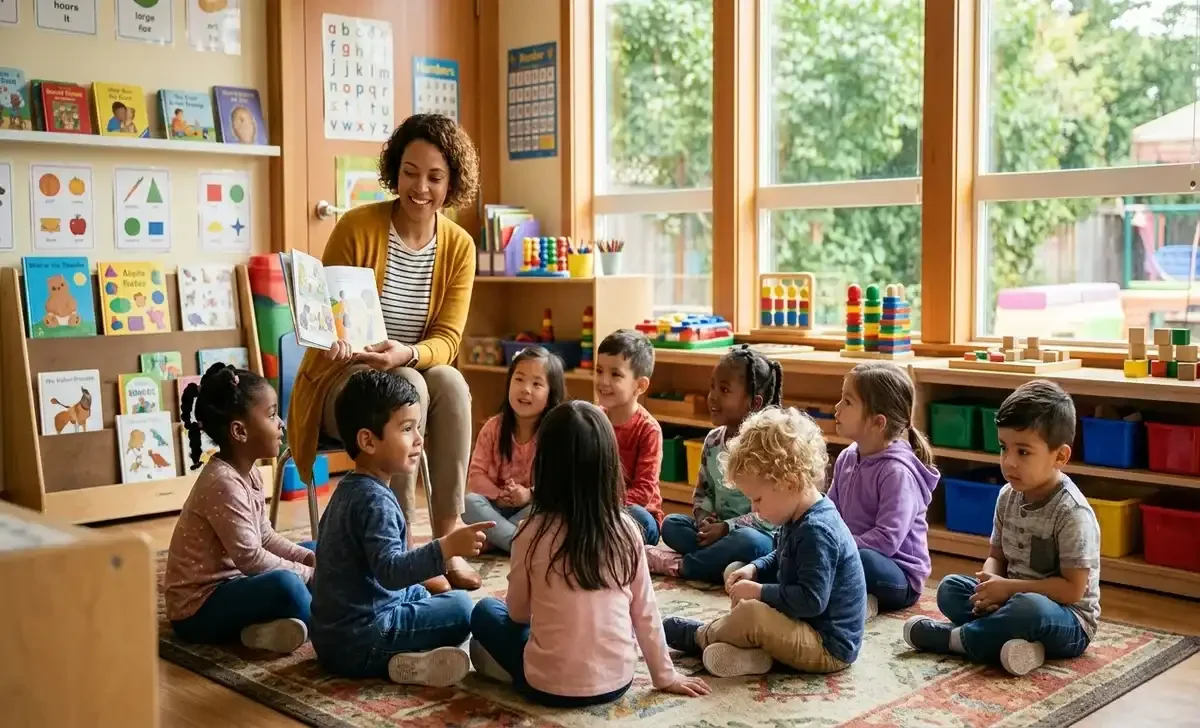
The early years education gap is one of the most pressing challenges in modern education — and it starts earlier than most people think.
By the time children walk through the school gates on their first day, the gap between the most and least advantaged kids can already be significant. Research shows that cognitive, language, and social development gaps emerge as early as age two. And once those gaps form, they're remarkably difficult to close.
Whether you're a parent, teacher, policy-maker, or early years practitioner, understanding what drives this gap — and what actually works to close it — is essential. In this post, we break down 10 critical factors shaping the early years education gap, backed by research and real-world insight.
Let's get into it.
What Is the Early Years Education Gap?
Before we dive in, let's be clear about what we mean.
The early years education gap refers to the measurable differences in school readiness, vocabulary, social skills, and cognitive development between children from different socioeconomic, cultural, or geographic backgrounds — typically measured between ages 0 and 5.
In the UK, studies from the Education Policy Institute show that disadvantaged children are, on average, 4–6 months behind their peers by the time they start primary school. In the US, the picture is similar: children from low-income families are already nearly a year behind in reading and maths by kindergarten entry.
These aren't small differences. They compound. A child who enters school already behind has less time, fewer resources, and more barriers to catch up — which is why early intervention matters so much.
1. Income Inequality and Family Poverty
Perhaps the most powerful driver of the early years education gap is household income. Children growing up in poverty face a cascade of disadvantages that directly affect their development.
Financial stress affects parenting quality — not because low-income parents care less, but because survival stress leaves less bandwidth for enriching interaction. There's less money for books, educational toys, or stimulating days out. Housing instability means frequent moves, disrupted routines, and inconsistent caregiving.
The numbers are sobering. Research from the Joseph Rowntree Foundation found that children from the poorest households are significantly less likely to achieve expected development levels at age five compared to their wealthier peers.
What helps:
- Targeted early years funding for disadvantaged families
- Free childcare hours extended to 9–12 month olds in high-poverty areas
- Cash-first family support programmes rather than in-kind benefits alone
Income inequality doesn't cause the gap alone — but it shapes nearly every other factor on this list.
2. Language Development Disparities
The language gap is one of the earliest and most measurable signs of the early years education gap.
By age three, children from higher-income families have heard an estimated 30 million more words than children from lower-income households — a concept popularised as the "30 Million Word Gap" by Hart and Risley (1995). More recent research has nuanced this figure, but the core finding holds: early language exposure profoundly shapes vocabulary, literacy, and even brain architecture.
Children who enter school with limited vocabulary struggle to access the curriculum from day one. Reading requires knowing words. Maths word problems require language. Even social interactions depend on language competence.
Practical steps:
- "Talk more, screen less" programmes for parents of under-twos
- Library outreach in deprived communities (story time, book-gifting schemes)
- Training childcare workers in language-rich interaction techniques
- NHS-linked speech and language therapy referral pathways for under-3s
Language is foundational. Close this gap early, and you close several others at once.
3. Access to Quality Early Childcare
Not all childcare is created equal — and access to quality early years provision is deeply unequal.
Government-funded childcare hours exist in many countries, but the settings delivering them vary wildly. A private nursery in an affluent suburb may offer forest school sessions, qualified teachers, and rich learning environments. A community-run playgroup in a deprived area may be understaffed, under-resourced, and operating in a draughty village hall.
This isn't a criticism of the people working in those settings — they're often dedicated professionals doing extraordinary work. It's a systemic funding issue.
Key barriers to quality childcare access:
- Cost (even "free" hours come with hidden charges)
- Availability in rural or deprived urban areas
- Inflexible hours that don't suit shift workers
- Cultural and linguistic barriers for migrant families
Research from the Sutton Trust consistently shows that disadvantaged children are least likely to access the highest-quality early years settings — the very children who would benefit most from them.
4. Parental Education and Involvement
Parents are a child's first teacher. The level of parental education and engagement with early learning is one of the strongest predictors of school readiness.
Parents with higher education levels tend to engage in more cognitively stimulating activities with their children — reading aloud, asking open-ended questions, explaining the world around them. This isn't about being "better" parents. It's about confidence, knowledge, and time.
What the evidence says:
- Children read to daily from birth are significantly more prepared for school
- Parental involvement in early years settings boosts outcomes even when quality of provision is modest
- Family learning programmes (where parents learn alongside their children) show strong evidence of impact
Actionable advice for educators and settings:
- Offer parent workshops in accessible formats (evenings, online, multilingual)
- Share weekly "home learning" suggestions that cost nothing
- Build trust with families — some parents had poor school experiences themselves and may feel anxious around educational settings
Support the parent, support the child.
5. Screen Time vs. Meaningful Interaction
This one is more nuanced than headlines suggest.
Screen time itself isn't the villain — passive, unsupervised screen time is. A two-year-old sat in front of a tablet for four hours a day is missing out on four hours of talking, playing, exploring, and connecting. That matters enormously during a developmental window that never returns.
The American Academy of Pediatrics recommends no screen time for children under 18 months (except video calls) and limited, high-quality co-viewed content for 18–24 month olds. Most European paediatric bodies echo this. For a deeper look at how digital exposure shapes young minds, this guide on screen time for kids offers valuable evidence-based perspective for parents and practitioners alike.
The real issue is opportunity cost. Every hour of passive screen time is an hour not spent in:
- Back-and-forth conversation
- Physical play (fine and gross motor development)
- Imaginative and creative play
- Social interaction with peers and adults
This is particularly acute in households where screens act as babysitters out of necessity — because parents are working, stressed, or simply exhausted.
Rather than shaming parents, the conversation needs to shift to making meaningful interaction more accessible and less effortful.
6. Nutrition and Physical Health
You cannot separate cognitive development from physical health. And yet, conversations about the early years education gap rarely start here.
Malnutrition in early life — including micronutrient deficiencies like iron, iodine, and zinc — directly impairs brain development. Children who are regularly hungry struggle to concentrate, regulate their emotions, and engage with learning.
In the UK, around 4 million children live in food-insecure households. Food banks, breakfast clubs, and free school meals help — but they often reach children at age 4 or 5, years after critical developmental windows have passed.
What early years settings can do:
- Offer a nutritious snack as standard (not as a paid add-on)
- Screen for food insecurity sensitively and connect families to support
- Advocate for universal free meals in nursery provision
- Teach basic nutrition and cooking skills as part of family learning programmes
A hungry child cannot learn. This is not a controversial statement. It needs to become an urgent policy priority.
7. Geographic Inequality
Where a child is born in the UK — or any country — still significantly shapes their early years experience.
Children in coastal towns, former industrial areas, and rural communities often have access to fewer quality childcare settings, fewer NHS services, and less community infrastructure than children in major cities. Even within cities, postcode determines quality dramatically.
The Early Years Alliance has repeatedly highlighted "childcare deserts" — areas where the number of childcare places is nowhere near sufficient for the number of children who need them. These deserts are overwhelmingly in deprived areas.
Geographic inequality means:
- Families travel further for decent provision (a barrier for those without cars)
- Settings in deprived areas close more frequently due to funding pressure
- Specialist services (speech therapy, SEND support) are harder to access
- Community-based family support is thinner on the ground
Levelling up isn't a slogan. It requires targeted investment in places left behind — and sustained commitment, not one-off grants.
8. Special Educational Needs and Early Identification
Children with special educational needs and disabilities (SEND) are significantly over-represented in the early years education gap — and often, the gap exists not because of their needs themselves, but because those needs go unidentified and unsupported.
Early identification is everything. A child with hearing loss who isn't diagnosed until age three has already missed three years of critical language development. A child with autism who doesn't receive targeted support in their early years may enter school overwhelmed and unable to access learning.
The system is creaking:
- EHCP (Education, Health and Care Plan) waiting times have ballooned in recent years
- Specialist SEND practitioners are in short supply in early years settings
- Many childcare workers feel underprepared to support children with complex needs
What needs to change:
- Universal 2-year development checks properly resourced and followed up
- Co-located health visiting and childcare to streamline referrals
- SEND-specific training built into all early years qualifications
- Adequate top-up funding so settings can genuinely include all children
Inclusion isn't just an ideal. It requires infrastructure.
9. Educator Quality and Workforce Challenges
The quality of adults working with young children matters enormously. Yet the early years workforce is chronically undervalued, underpaid, and under-supported.
In England, a qualified teacher in a primary school earns significantly more than a Level 3 qualified nursery practitioner — despite both being responsible for children's development during equally critical periods. The result? High turnover, recruitment crises, and a sector struggling to attract graduates.
Why this matters for the gap:
- High staff turnover disrupts the secure attachments children need for learning
- Under-resourced settings can't afford to train staff in evidence-based practice
- Graduates increasingly avoid early years due to poor pay and conditions
The evidence is clear: the higher the qualification level of early years staff, the better the outcomes for children — particularly disadvantaged children. Graduate-led practice closes gaps. But you can't sustain graduate-led practice on poverty wages.
This is a political choice, not an inevitability.
10. Government Funding and Policy Gaps
All of the above factors connect to one root issue: the early years sector has been systematically underfunded for decades.
The expansion of "free" childcare hours in the UK sounds generous — but the funding rate paid to providers has consistently fallen short of the actual cost of delivery. Settings absorb losses, cut corners, or close. The children who lose out most are always the most disadvantaged. As explored in this analysis of investment in education, sustainable funding frameworks — rather than reactive grants — are what meaningfully shift long-term outcomes for children.
Meanwhile, short-termism in policy makes sustained improvement impossible. Every change of government brings a new early years strategy. Evidence-based programmes are scrapped before they have time to show results. Evaluation is treated as optional.
What good policy looks like:
- Long-term, sustained investment (at least a decade)
- Funding rates that reflect the actual cost of quality provision
- A designated Minister for Early Years with cross-departmental authority
- Robust, independent evaluation of every funded programme
The £1.8m early years overhauls make headlines. But without systemic change, they're sticking plasters on a structural wound.
Expert Tips to Close the Early Years Education Gap
Drawing from the research and practice evidence, here are the strategies that genuinely move the needle. For a broader look at how these principles apply across age groups, the proven strategies for improving student achievement are worth exploring alongside the early years-specific guidance below.
- Start at birth, not school entry. The 0–2 window is the most critical. Home visiting programmes (like Family Nurse Partnership) show strong evidence for high-risk families.
- Prioritise the parent-child relationship. Programmes that support parental sensitivity and responsiveness have outsized impact on child outcomes.
- Use data to target support. Early years settings should use development tracking tools to identify children falling behind and act quickly — not wait for formal referrals.
- Train the workforce properly. Invest in continuous professional development. Evidence-based approaches like Sustained Shared Thinking need to be practised, not just discussed in training days.
- Make it hyper-local. What works in one community may not work in another. Trust and fund local practitioners to adapt evidence-based approaches to their context.
- Don't forget dads. Father engagement is consistently underestimated. Targeted dad-inclusive programmes show real benefits for child development.
Common Mistakes to Avoid
Even well-intentioned efforts to close the early years education gap can go wrong. Watch out for:
1. Focusing on school readiness at the expense of wellbeing Pushing academic skills on 3-year-olds isn't developmentally appropriate. Play is learning. Don't let outcomes-obsession strip the joy from early childhood.
2. Deficit thinking about families Framing low-income parents as the problem — rather than poverty itself — is both inaccurate and damaging. Programmes that build on family strengths work better than those that imply parents are failing.
3. Short-term interventions without sustained support A 6-week parenting programme won't close a gap shaped by years of structural disadvantage. Support needs to be relational, sustained, and trusted.
4. Ignoring staff wellbeing You cannot pour from an empty cup. Early years practitioners dealing with burnout, low pay, and poor conditions cannot deliver the sensitive, responsive practice that closes gaps.
5. Measuring the wrong things If the only metric is "school readiness" at age 5, you'll miss the children who needed help at age 2. Broader, earlier measurement frameworks are essential.
FAQs
Q1: What age does the early years education gap begin?
Research suggests developmental gaps linked to socioeconomic disadvantage can emerge as early as 18–24 months. By age three, vocabulary differences between high- and low-income children are already measurable. This is why investment before school age — ideally from birth — is critical.
Q2: Can the early years education gap be closed?
Yes — but not easily, and not through single interventions. Evidence shows that sustained, high-quality early years provision significantly reduces gaps. Countries like Finland and Denmark, which invest heavily in universal early childhood education, show much smaller outcome gaps by school entry.
Q3: How does the early years education gap affect later life?
Children who enter school developmentally behind are more likely to struggle academically throughout school, less likely to pursue higher education, and face higher risks of unemployment and poor health in adulthood. The gap compounds over time, which is why early intervention offers the best return on investment.
Q4: What role do parents play in closing the early years education gap?
A central one — but not in isolation. Parental reading, talk, and play with children are among the strongest predictors of school readiness. However, parents need support too. Family learning programmes, accessible early years services, and financial stability all enable parents to engage more effectively with their children's early development.
Q5: What government policies have the biggest impact on the early years education gap?
The strongest evidence supports: universal access to high-quality childcare from age 1, well-funded home visiting for at-risk families, properly paid and qualified early years workforce, integrated health and education services, and targeted cash support for the lowest-income families with young children.