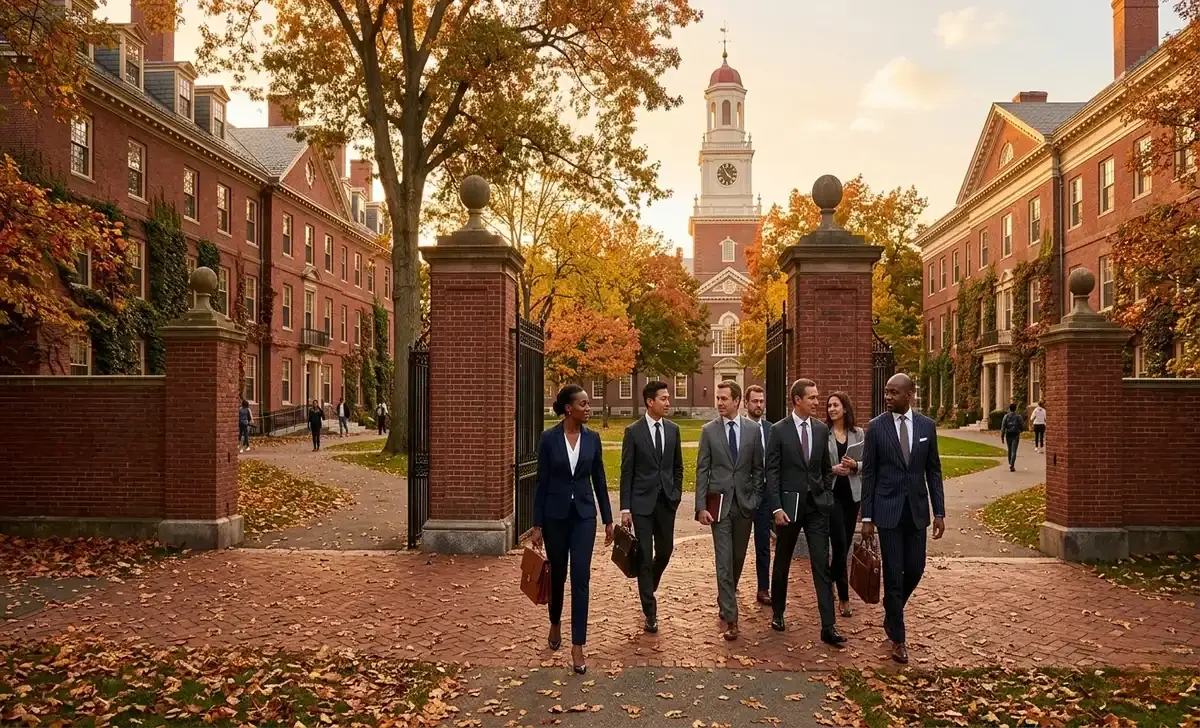
Harvard University commands global respect — for its research output, its $50+ billion endowment, and its outsized influence on public policy, science, and business. But behind every major decision sits a governing structure most people have never examined closely: the Harvard Board.
If you're wondering who actually controls Harvard — who hires the president, approves billion-dollar budgets, and sets the university's long-term direction — this guide answers every question clearly. Whether you're a prospective student, an alumnus considering your vote, or a policy researcher studying institutional power, understanding the Harvard Board is essential to understanding Harvard itself.
What Is the Harvard Board?
The "Harvard Board" is not a single entity. It refers to two separate governing bodies that together form Harvard's bicameral governance system:
- The Harvard Corporation (officially: the President and Fellows of Harvard College)
- The Board of Overseers
Think of them like two chambers of a legislature. The Corporation holds executive authority — it makes binding decisions. The Overseers provide oversight, conduct reviews, and represent the broader alumni community. Neither operates alone, and major decisions like electing a new university president require both bodies to act.
This system has been in continuous operation since 1650, making it one of the oldest governance structures in American institutional history. It predates the United States itself.
The Harvard Corporation: Who Holds Real Power
The Harvard Corporation is the senior governing body. For most of its history, it had just seven members — a number small enough that critics argued it concentrated too much power in too few hands. In 2010, Harvard expanded the Corporation to 13 members to improve decision-making and reduce groupthink risk.
Today, the Corporation includes:
- The university president
- The university treasurer
- 11 elected fellows
How Members Are Chosen
The Corporation is self-perpetuating: current members vote to elect new ones. There is no external election, no alumni vote, and no government appointment. This stability has advantages — it insulates Harvard from short-term political pressure — but it has also drawn sustained criticism for creating an insular culture that lacks democratic accountability.
What the Corporation Actually Does
- Appoints, evaluates, and, if necessary, removes the university president
- Approves Harvard's annual operating budget
- Sets investment policy for the endowment (currently over $50 billion — the largest university endowment in the world)
- Authorizes major real estate acquisitions and capital construction projects
- Establishes the university's long-term strategic direction
Practical example: When President Claudine Gay resigned in early 2024 following congressional testimony and plagiarism allegations, it was the Corporation that managed the transition, evaluated the situation, and ultimately accepted her resignation. No faculty vote, no alumni referendum — the Corporation decided.
The Board of Overseers: The Democratic Check
The Board of Overseers has 30 members elected by Harvard alumni. Any person who attended Harvard for at least one academic year is eligible to vote. Elections are held each spring, and the Harvard Alumni Association nominates official candidates — but alumni can also organize petition campaigns to place alternative candidates on the ballot.
What Overseers Do
- Conduct formal "visitations" to Harvard's schools and faculties, producing detailed reviews of academic quality, research priorities, and institutional performance
- Provide required consent on major Corporation decisions, including the election of a new university president
- Advise on strategic matters related to education, research, and campus life
- Serve as an organized voice for Harvard's global alumni community
Why Overseer Elections Matter More Than Most Alumni Realize
Because Overseers are elected, not appointed, they represent one of the few genuinely democratic levers in Harvard's governance. Alumni advocacy groups have used Overseer elections to force public debates on issues the Corporation would prefer to handle quietly.
Practical example: In recent years, organized alumni slates have successfully won Overseer seats specifically to advocate for fossil fuel divestment from Harvard's endowment. Their presence on the board forced the issue onto the agenda in a way that donor letters and open letters never had.
The table below summarizes the key structural differences between the two boards:
| Feature | Harvard Corporation | Board of Overseers |
|---|---|---|
| Size | 13 members | 30 members |
| Term length | 6 years | 6 years |
| Selection method | Self-perpetuating (internal vote) | Elected by alumni |
| Primary role | Executive governance | Advisory and oversight |
| Binding authority | Yes | Limited |
| Meeting frequency | Multiple times per year | Several times per year |
Who Gets Appointed to the Harvard Board?
Harvard Corporation Fellows
Because the Corporation selects its own members, the profile of a typical fellow is predictable: senior executives at major corporations, former government officials (cabinet secretaries, ambassadors, federal judges), leading scientists and university administrators, and major philanthropists. Diversity of background has improved over recent decades, but critics note the pool still skews heavily toward established institutional power.
Recent High-Profile Appointments
In 2025, Harvard made two significant additions to the Board of Overseers. Blackstone CFO Jon Gray — one of the most powerful figures in global finance, overseeing operations at the world's largest alternative asset manager — joined the board, signaling Harvard's continued interest in maintaining close ties with Wall Street and the private equity industry. A former U.S. Cabinet Secretary also joined, bringing deep policy experience at a time when universities face intensified federal scrutiny and funding debates.
These appointments reflect a consistent pattern: Harvard recruits board members who combine elite credentials with access to networks — financial, political, or global — that directly benefit the institution.
Board of Overseers: A More Open Path
Any Harvard alumnus or alumna can run for an Overseer seat. The standard route is nomination by the Harvard Alumni Association, but candidates can also qualify through a petition process. This makes the Overseers meaningfully more accessible than the Corporation, though winning still requires significant name recognition or organized backing.
The Harvard Board's Role in Financial Decisions
Harvard's endowment exceeded $50 billion as of recent reporting, dwarfing every other university endowment in the world. The Corporation sits at the top of the decision-making chain for how that money is managed and deployed.
Day-to-day investment management is handled by Harvard Management Company (HMC), a wholly-owned subsidiary. But the Corporation sets overall investment policy, approves the annual payout rate (typically 5–6% of endowment value per year, which funds a substantial share of Harvard's operating budget), and authorizes major capital expenditures.
The board also oversees financial aid policy — determining how accessible Harvard is to students across economic backgrounds. This is an area where board decisions have real consequences for thousands of families each year, and one that has become increasingly entangled with political pressures. The broader tension between institutional financial priorities and equitable access is explored in analyses of playing politics with scholarships, and understanding how endowments translate into academic outcomes requires looking at how institutions like Harvard set the standard for the sector.
Financial trends Harvard sets — payout rates, alternative investment allocations, financial aid structures — are often replicated by smaller endowments across American higher education. The board's financial decisions, in other words, shape the sector far beyond Cambridge.
How the Board Handles Controversy
No institution of Harvard's size avoids controversy. The Corporation has navigated several major crises in recent years, and how it has responded reveals a great deal about how the board exercises power.
Presidential leadership (2024): The resignation of President Claudine Gay following congressional testimony and plagiarism allegations put intense scrutiny on the Corporation's judgment — both in its original selection of Gay and in its handling of her departure.
Admissions policy (2023): The U.S. Supreme Court struck down Harvard's race-conscious admissions practices, forcing the board to oversee a fundamental redesign of how the university selects students. The Corporation had to act quickly to comply while preserving as much of Harvard's admissions philosophy as legally possible.
Donor pressure: High-profile donors have threatened to withdraw major gifts over Harvard's responses to campus protests and political controversies. The board must weigh donor relations against institutional independence — a tension with no clean resolution.
In each case, the Corporation functions as the final decision-making authority. Its pace is deliberate, which supporters argue protects Harvard from reactive decisions and critics argue insulates the board from legitimate accountability.
Academic Freedom and the Limits of Board Authority
A foundational principle of university governance is that boards should not interfere in faculty hiring, curriculum design, or research priorities. These are supposed to be protected by academic freedom — the idea that scholarly inquiry must be insulated from outside pressure.
In practice, the line is frequently tested. When donors pressure the board to defund certain research areas, or when political figures demand action on campus speech policies, the Corporation must decide how to respond without compromising Harvard's scholarly integrity. This tension sits at the heart of a larger question about higher education and democracy — whether elite governing structures are genuinely accountable to the public they claim to serve.
The Harvard Board has generally tried to maintain this separation, but doing so in an increasingly polarized political environment requires continuous active effort. How the board navigates these pressures over the next decade will define Harvard's academic reputation as much as any research output.
How to Influence the Harvard Board as an Alumni
Most Harvard graduates don't realize they hold a direct mechanism for influencing the university's direction. Here's how to use it:
Vote in Overseer elections. Elections are held each spring. All eligible alumni receive ballot information. Participation rates are historically low, which means organized groups can have an outsized influence with relatively modest mobilization.
Support or organize petition candidacies. Alternative candidate slates backed by alumni advocacy groups have successfully won Overseer seats on issues including fossil fuel divestment, campus speech policy, and governance transparency. Running requires gathering petition signatures — a manageable threshold for well-organized groups.
Monitor endowment reports. Harvard Management Company releases annual reports detailing investment performance and allocation. These reports reveal how the board's financial strategy is actually playing out and provide concrete data points for alumni advocacy.
Follow Overseer visitation reports. When available, these reports offer rare, detailed assessments of Harvard's schools from a governance perspective — useful for anyone tracking the board's priorities.
Conclusion: Why the Harvard Board Matters Beyond Cambridge
The Harvard Board is not a ceremonial body. The Corporation holds genuine binding authority over one of the world's most influential institutions, and its decisions — on financial strategy, academic leadership, admissions policy, and campus governance — ripple through higher education globally.
Understanding how Harvard is governed means understanding that significant power is concentrated in a small, largely self-selected group. The Corporation's 13 members exercise more influence over Harvard's direction than any single faculty, donor class, or alumni cohort. The Board of Overseers provides a meaningful but limited check, and alumni elections remain the most accessible democratic lever available to Harvard graduates who want to hold the institution accountable.
For anyone who cares about the future of elite higher education — how it balances access and excellence, how it handles political pressure, how it allocates enormous financial resources — the Harvard Board is the right place to look.
FAQs
How many members are on the Harvard Board?
The Harvard Corporation has 13 members. The Board of Overseers has 30 members. Together they form Harvard's bicameral governance structure.
How is the Harvard Corporation selected?
The Corporation is self-perpetuating — current members vote to elect new ones. This is entirely separate from the Board of Overseers, which is elected by Harvard alumni.
What is the difference between the Harvard Corporation and the Board of Overseers?
The Corporation is the executive governing body with binding authority over finances, leadership, and major institutional decisions. The Overseers are a larger advisory body elected by alumni, whose primary role is oversight, review, and providing consent on specific major decisions.
Can Harvard alumni run for the Harvard Board?
Alumni cannot run for the Corporation, which selects its own members. However, any Harvard alumnus or alumna can run for the Board of Overseers, either through nomination by the Harvard Alumni Association or by gathering the required petition signatures.
How does Harvard's governance compare to peer institutions?
Yale uses a single governing board rather than Harvard's bicameral structure. Princeton and other peer institutions vary in their governance models. Harvard's dual-board system is older and more complex than most, which provides stability but also creates more opportunities for governance friction.
How has the Harvard Board responded to recent controversies?
The Corporation managed the resignation of President Claudine Gay in early 2024, oversaw Harvard's response to the Supreme Court's 2023 admissions ruling, and has navigated sustained donor pressure related to campus political controversies — acting as the final authority in each case.
Does the Harvard Board interfere in academic decisions?
Officially, no. Academic freedom principles are designed to keep the board out of faculty hiring, curriculum, and research. In practice, the line can blur when donor pressure or political scrutiny reaches the board level, and how the Corporation handles those pressures is an ongoing governance challenge.