Let's be honest: most of us sat through history class half-asleep, staring at the clock.
Dates, battles, dead kings — it can feel impossibly disconnected from real life. That was the problem Lauren Cella, a 10th-grade world history teacher at McFarland High School in California, decided to solve. Not with a new curriculum or a fancy lesson plan — but with a TikTok account and a cup of iced coffee.
Her "Gen Z Teaches History" series has since become one of the most talked-about examples of educational content on social media. It blends Gen Z slang, Taylor Swift lyrics, and sharp historical insight into bite-sized videos that have earned over 30 million combined views on TikTok and Instagram.
In this post, we break down exactly what the Lauren Cella Gen Z history series is, why it works, and what students, teachers, and curious minds can take away from it.
Who Is Lauren Cella?
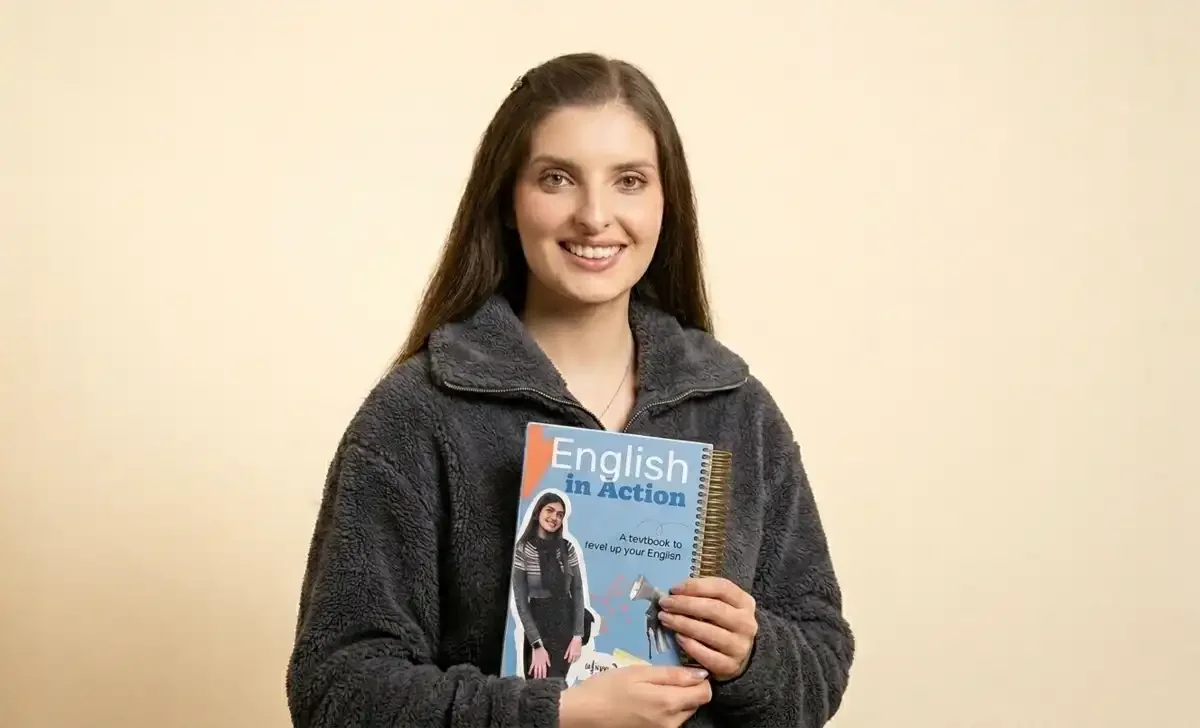
Lauren Cella is a history teacher, content creator, and media studies graduate who teaches at McFarland High School in California's Central Valley. She studied journalism and history at San Diego State University — a combination that gave her both the storytelling instincts and the subject matter expertise to create something genuinely different.
Cella is of Mexican, Puerto Rican, and Chinese heritage, and that diverse background shapes how she approaches historical storytelling. She doesn't just present the "winner's version" of events. She actively seeks out the fuller picture — which is exactly what her students, many of whom are Latino, connect with.
Outside the classroom, she's a wife, mother, and social media creator with over 216,000 Instagram followers and a growing TikTok audience. Her handle is @laurencella on Instagram and @laurencella92 on TikTok.
What makes her stand out isn't just the content — it's the clarity of her mission: to make history accessible, honest, and genuinely fun.
What Is the "Gen Z Teaches History" Series?
The "Gen Z Teaches History" series is a collection of short-form videos in which Lauren Cella plays the role of a Gen Z teacher from the future looking back at historical events. The premise is simple but clever: instead of a boring lecture, you get a fast-paced breakdown packed with current slang, pop culture references, and the kind of blunt commentary that cuts through the noise.
She covers everything from ancient civilizations to modern geopolitics — all in under two minutes per video. The format works because it's built on real historical accuracy wrapped in language that feels current and relatable.
As Cella puts it: "History is interesting. I think other people make it boring. I'm not making it interesting. I'm just telling you what happened."
That attitude — confident, unapologetic, and direct — is baked into every single video.
The Iced Coffee Signature Moment
If you've watched more than one of Cella's videos, you've noticed the iced coffee. It's not a prop she planned. It just a signature moment that fans now anticipate in every upload.
At a key turning point in each story, she shakes her ice-filled cup, switches hands, and delivers: "Meanwhile…" — signaling a crucial twist or new context. It's become as recognizable as a catchphrase.
The ice-cup trick is a small detail that packs a big punch. It signals a narrative shift in a way that's visual, physical, and memorable. No textbook has ever done that. In fact, Cella has admitted she eventually switched to fake ice because the real stuff melted during multiple takes.
That small workaround is very on-brand for a series that finds creative solutions to make education feel effortless.
4. Topics Covered in the Series
The range of topics in Lauren Cella's Gen Z history series is genuinely impressive. She doesn't stick to safe, western-centric narratives. Some of the most-watched topics include:
- World War I — including the Franz Ferdinand assassination, delivered with the line: "This whole thing starts when this guy Franz Ferdinand goes and catches the fade."
- World War II and the Atomic Bomb
- The French Revolution
- Cleopatra — described as having "a substantial amount of rizz."
- King Henry VIII — called "the Tom Sandoval of his time."
- Czar Nicholas II
- The Great Depression — the stock market crash described as "the Great Market Crash."
- Cinco de Mayo — her video on this topic alone gathered over 530,000 views and corrected common misconceptions
- Gen X history — breaking down why the so-called "forgotten generation" actually shaped modern culture
The variety is wide, but the formula stays consistent: find the drama, name it in language people actually use, and don't leave out the complicated parts.
Understanding how racism education shapes historical context is also a big part of what makes Cella's work feel complete — she doesn't sanitize history for comfort.
How Gen Z Slang Makes History Stick
Here's where the series gets genuinely clever from an educational standpoint. Language isn't just decoration in Cella's videos — it's a memory tool.
When she describes WWI starting because "Franz Ferdinand went and caught the fade," she's using a phrase that means "to get into a fight." You can't unhear that once you know what it means. And crucially, the slang forces you to translate, which means you process the information more actively than if you just heard a standard sentence.
Some of the recurring terms include:
- "Rizz" — charisma or charm
- "Caught the fade" — got into a fight
- "Unalived" — died (used to avoid platform content restrictions)
- "Bestie" — used to address the audience directly
- "No cap" — truthfully
- "Flop era" — a period when everything goes wrong
- "Main character energy" — acting like the protagonist of your own story
Each term maps onto a real concept. The slang isn't replacing history — it's encoding it in a form that younger audiences retrieve faster. That's not dumbing down. That's smart instructional design.
Why the Series Resonates Across Generations
Here's something worth noting: Cella's audience isn't just Gen Z. Millennials, Gen X parents, and even older viewers have commented in their thousands, saying these videos taught them things they never learned in school.
One commenter on her Cinco de Mayo video wrote that it was the first time in 49 years they truly understood what the holiday meant. That's not a small thing. That's a failure of traditional education being quietly corrected by a two-minute TikTok.
The cross-generational appeal comes down to a few factors:
- Humor is universal — even if you don't get every reference, the timing and energy are infectious
- The history is actually correct — accuracy builds trust across age groups
- The format is honest — Cella acknowledges when history was messy, partial, or unfair, which adults recognize as more truthful than the textbook version they were given
This is a series that makes people feel like they were lied to by their education system — and then immediately hands them the real story. That's a powerful combination.
How It Started: A Pandemic-Era Idea
Lauren Cella launched her first "Gen Z Teaches History" video during the COVID-19 pandemic. Like so many teachers at the time, she was searching for ways to stay connected with students who were suddenly learning from home.
Her students had been encouraging her to join TikTok for a while. She finally gave in, and the concept for the series was born from a simple observation: her students were funny, blunt, and deeply skeptical of one-sided narratives. So she asked herself, what would history sound like if they were the ones teaching it?
She imitated the way her teenage students spoke, took inspiration from millennial comedies like Clueless and Legally Blonde, and combined that with her journalism training from San Diego State. The result was the viral series we know now.
She expected to be a "one-hit wonder." Instead, the consistency paid off, and the audience kept growing — proving there was a massive unmet demand for history that feels real, not rehearsed.
The Teaching Philosophy Behind the Humor
Lauren Cella's approach isn't just entertainment for its own sake. There's a genuine pedagogical philosophy underneath the laughs.
Her core belief: history should tell the full story, not just the comfortable one. As she puts it, "The way we were taught was so boring and so dry and only told one side of the story, and Gen Z is not about that."
The series also functions as a bridge between generations. By using Gen Z language to explain historical events to all audiences, she creates a space where younger viewers feel respected and older viewers feel invited to learn something new. Neither group is talked down to.
Her mission statement from her own website says it well: she wants her content to be "a bridge that connects people across generations and helps us relate to one another." Whether someone learns history, learns new slang, or both, the video has done its job.
This philosophy connects to a broader conversation about improving student achievement through proven educational strategies — showing that engagement and accuracy don't have to be in conflict.
From TikTok to NBC: The Media Journey
Lauren Cella's rise from classroom teacher to national media personality is worth tracing because it happened organically.
Her videos started gaining traction on TikTok and Instagram, where the combined view count eventually surpassed 30 million. News outlets, including NBC News, EdSurge, and Upworthy, covered her work. She collaborated with teachers across the globe and caught the attention of television producers.
In April 2024, she appeared on NBC's game show Password, alongside Jimmy Fallon and Keke Palmer — an opportunity she described as something she "never thought would happen in her wildest dreams."
The McFarland Unified School District, far from discouraging her social media work, actually celebrated it. Cella was quick to credit the district for "encouraging teachers to be forward thinkers" — a notable sign of institutional support for creative pedagogy.
The progression from viral TikTok teacher to network television guest is a modern version of thought leadership. It happened because the content was genuinely good and the mission was clear from day one.
Classroom Resources on LaurenCella.com
For educators who want to bring the series into their classrooms, Lauren Cella has a dedicated website at laurencella.com that offers curriculum resources tied directly to her videos.
The site provides activities for all 20 videos in the series — described as "no prep required," which is music to any teacher's ears. The resources are designed to extend the learning beyond the two-minute video format into classroom discussions and activities.
This expansion from content creator to curriculum provider is significant. It shows that the series was never just about views — it was always about learning outcomes. That's a distinction that matters, especially as schools navigate the role of digital content in formal education.
The intersection of digital media and formal learning is something researchers and policymakers are increasingly examining. Discussions around investment in education increasingly include how platforms like TikTok can be harnessed — rather than feared — as legitimate learning tools.
Expert Tips for Educators Using Viral Content
If you're a teacher or curriculum designer wanting to apply what Cella has built, here are practical takeaways:
- Lead with the drama. Every historical event has conflict, betrayal, ambition, or irony. Find it and name it first.
- Use the language of your students. You don't have to be fluent in slang, but acknowledging their vocabulary signals respect.
- Stay accurate. Viral success without factual integrity collapses quickly. The humor works because the history checks out.
- Embrace a persona. Cella's "Gen Z teacher from the future" framing gives her creative permission to be funny without undercutting the content.
- Consistency matters more than virality. Cella's growth was gradual. She stayed consistent for over a year before the audience truly exploded.
- Short format is not shallow format. Brevity requires clarity. If you can explain something in 90 seconds, you understand it deeply.
Common Mistakes to Avoid
Even with the best intentions, educators and content creators can misstep when trying to replicate this kind of approach:
- Forcing slang inauthentically. If the language feels like a desperate reach, students notice immediately. Watch, listen, and absorb before you imitate.
- Prioritizing humor over accuracy. Comedy that gets the facts wrong erodes trust. Every punchline needs to be grounded in something real.
- Covering only "comfortable" history. Cella's work is compelling partly because she doesn't shy away from uncomfortable truths. Sanitizing the story for easy applause undermines the whole point.
- Ignoring the "Meanwhile" moment. The pivot to context — Cella's iced coffee transition — is what turns a fact into a story. Always include the "why it matters."
- Treating short-form video as lesser content. Two minutes, done well, can outperform a 45-minute lecture. Don't underestimate the format.
Conclusion
The Lauren Cella Gen Z history series is more than a TikTok trend — it's a rethinking of how we share knowledge across generations. By combining real historical research with genuine humor and cultural fluency, Cella has done something most textbooks never manage: she makes you care what happened next.
Whether you're a student who dreaded history class, a teacher looking for fresh approaches, or just someone who ends up watching TikTok at midnight, her work offers something valuable. The past doesn't have to be distant. Sometimes all it takes is someone willing to translate it.
If you haven't watched her series yet, start with her Cinco de Mayo video or the Great Depression breakdown. Then try explaining it to someone else using the slang. You'll be surprised how much sticks.
FAQs
What is Lauren Cella's Gen Z history series?
It's a viral short-form video series called "Gen Z Teaches History," in which California educator Lauren Cella explains historical events using Gen Z slang, pop culture references, and Taylor Swift lyrics. The series has over 30 million combined views on TikTok and Instagram.
Where can I watch Lauren Cella's history videos?
You can follow her on TikTok at @laurencella92 and on Instagram at @laurencella. Classroom resources and curriculum materials are also available at laurencella.com.
What topics does Lauren Cella cover in her history series?
She covers a wide range of topics, including World War I and II, the Great Depression, the French Revolution, Cleopatra, King Henry VIII, Czar Nicholas II, Cinco de Mayo, Gen X history, and more.
Is Lauren Cella's history content accurate?
Yes. Despite the humor and slang, Cella's content is grounded in accurate historical information. She is a trained history teacher with a journalism background from San Diego State University, and fact accuracy is central to her credibility.
How has the Gen Z history series impacted education?
The series has sparked wider conversations about student engagement, inclusive storytelling, and the role of social media in formal education. It has also given teachers a new model: humor and accuracy are not mutually exclusive, and meeting students in their own language is a form of respect.