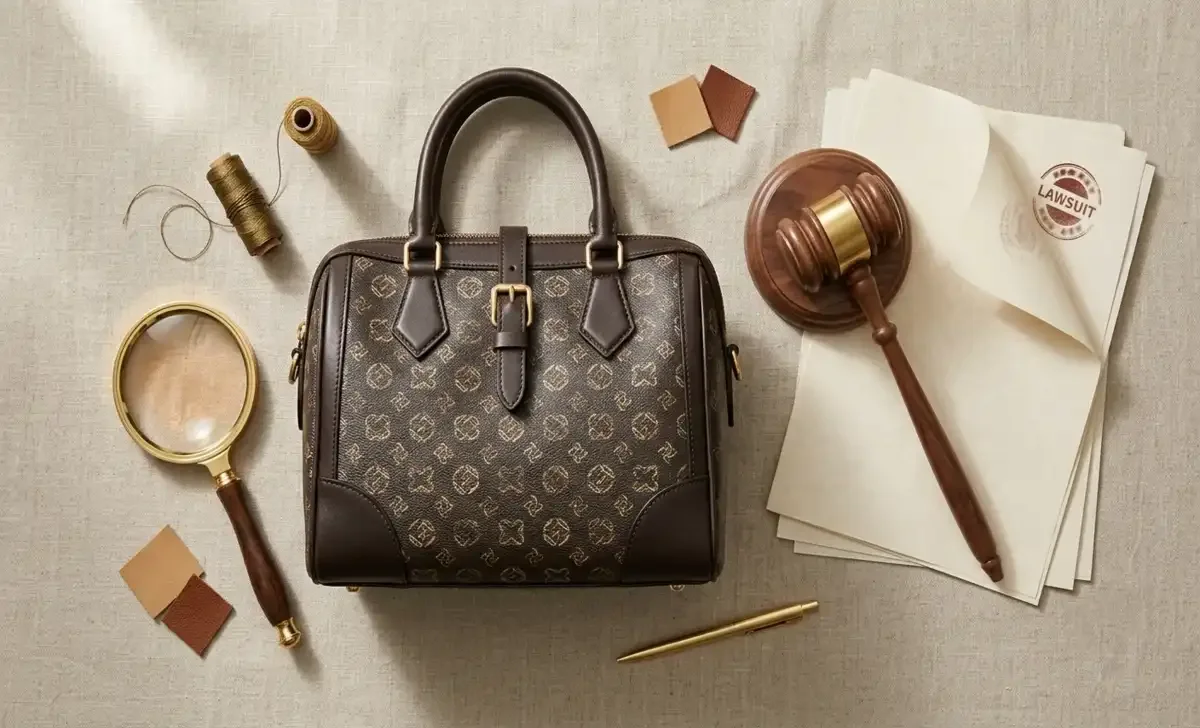
Louis Vuitton doesn't just sell handbags. It fights for them.
If you've searched "Louis Vuitton lawsuit," you've probably noticed something interesting. This isn't one court case. It's a pattern. Louis Vuitton is involved in dozens of legal disputes at any given time, spanning several continents and several very different kinds of claims.
Some of these lawsuits protect the brand from counterfeiters. Others involve small businesses caught in the crossfire of trademark law. And a few, like a recent data breach case, involve regular customers whose personal information may have been exposed.
This guide breaks down the most important Louis Vuitton lawsuits happening right now, explains what each one means, and shows what you can learn from them — whether you're a shopper, a small business owner, or just someone following luxury fashion news.
Louis Vuitton vs. Maryland Live! Casino
This is the case getting the most attention right now, and it reads almost like a marketing stunt gone wrong.
In April 2026, Maryland Live! Casino in Hanover launched a rewards promotion called "The Art of Luxury." Members could collect handbags and toiletry bags featuring a floral pattern that looked strikingly close to Louis Vuitton's signature monogram, but with the "LV" initials swapped out for "Live!"
Louis Vuitton sent a cease-and-desist letter. The casino allegedly agreed to stop, then ran a second promotion in May called "Endless Elegance," which offered customers a chance to win what it described as authentic Louis Vuitton merchandise.
Louis Vuitton filed suit in U.S. District Court for Maryland, accusing the casino operators of trademark infringement, counterfeiting, false association, trademark dilution, and unfair competition. The brand is asking for damages, destruction of the infringing products, and a corrective advertising campaign to clear up any confusion.
The lesson here is simple: pairing a well-known logo with your own brand name doesn't make it safe to use, even as a promotional giveaway.
Louis Vuitton vs. an Atlanta Shopping Center ($584 Million Judgment)
Before the casino case made headlines, Louis Vuitton had already secured one of its largest wins to date. A federal court awarded the brand a $584 million default judgment against an Atlanta shopping center that Louis Vuitton claimed had become a hub for counterfeit merchandise sales.
The court found that the property had effectively allowed vendors to sell fake Louis Vuitton goods on its premises without meaningful intervention. Because the shopping center failed to properly respond to the case, the judgment was entered by default.
This case matters because it shows Louis Vuitton doesn't only pursue the sellers of fake goods. It also goes after the landlords, marketplaces, and venues that host them, arguing they share responsibility when they know infringement is happening and do nothing.
For property owners and marketplace operators, this is a clear warning: ignoring repeated complaints about counterfeit activity on your premises can expose you to massive liability, even if you didn't manufacture a single fake item yourself.
Louis Vuitton vs. an Online Replica Seller
In a separate case, Louis Vuitton won a $1.3 million judgment against an online retailer selling replica goods. The court didn't stop at financial damages. It also issued an order disabling the seller's web domain entirely.
This combination of remedies is becoming more common in counterfeit litigation. Courts are increasingly willing to shut down the digital storefront itself, not just fine the operator, because take-down orders and financial penalties alone often aren't enough to stop repeat offenders from simply rebranding and reopening.
If you're a consumer, this case is a good reminder to check for hallmarks of authenticity before buying luxury goods online, especially through unfamiliar websites offering steep discounts. If a deal feels too good to be true on a Louis Vuitton bag, it almost always is.
Louis Vuitton vs. Molly Tea (China Trademark Case)
This case shows how far Louis Vuitton's trademark protection extends, even into completely unrelated industries.
Molly Tea, a Shenzhen-based beverage chain with more than 2,000 stores worldwide, used a floral logo that a Chinese court found too similar to Louis Vuitton's four-petal monogram. The Suzhou Intermediate People's Court ordered Molly Tea to pay roughly 10.3 million yuan (about $1.5 million) in damages and litigation costs.
The court also required Molly Tea to publish a corrective statement across its website, mini-program, and major social platforms. Molly Tea has since revamped its logo and is reportedly hiring an in-house intellectual property lawyer to manage its trademark portfolio going forward.
What makes this case notable is the reasoning. Chinese courts have increasingly accepted that cross-industry brand collaborations are common today, so consumers seeing a similar logo on tea packaging could reasonably assume Louis Vuitton had licensed or partnered with the brand. That's the kind of consumer confusion trademark law exists to prevent, even when the products themselves (handbags versus bubble tea) are nothing alike.
Louis Vuitton vs. Licores do Vale (Portugal)
Not every Louis Vuitton lawsuit ends in a win for the fashion house, and this case is a good example.
Licores do Vale, a small liqueur producer based in the northern Portuguese town of Monção, registered a logo using the initials "LV." Louis Vuitton challenged the trademark, arguing the two letters were arranged in a way that too closely resembled its own branding on a visual, phonetic, and conceptual level.
The dispute dragged on for more than a year before a Portuguese court sided with the small liqueur maker. The founders, who run the business alongside selling jams and honey at local agricultural fairs, celebrated the win publicly, noting that initials like "LV" don't belong exclusively to one company.
This case is worth remembering because it shows trademark disputes aren't automatically won by the bigger brand. Courts look at actual consumer confusion, industry context, and how the mark is used, not just brand recognition.
Louis Vuitton vs. a South Korean Bag Remodeling Service
This is one of the more unusual Louis Vuitton lawsuits in recent memory, and it also went against the brand.
Louis Vuitton sued a South Korean company that offered a "reform" service, where customers sent in their own Louis Vuitton bags to be reworked into new styles using the original monogram material. Louis Vuitton argued this constituted trademark infringement and unfair competition.
South Korea's Supreme Court disagreed. In a February 2026 ruling, the court held that remodeling a bag at the request of its actual owner, using materials from a genuine product, doesn't infringe trademark rights. The key detail was that customers already owned the original bags and voluntarily requested the alterations.
This ruling could shape how "upcycling" and bag customization businesses operate across other markets, and it's a useful precedent for anyone in the secondhand luxury goods or repair industry.
Winkler v. Louis Vuitton North America (Data Breach Class Action)
Not every Louis Vuitton lawsuit is about counterfeiting. Some involve everyday customers.
In early 2026, plaintiff Adriana Winkler filed a class action against Louis Vuitton North America in the Southern District of New York. The case centers on a data breach connected to the brand's Salesforce database, which reportedly exposed customer names, addresses, dates of birth, driver's license numbers, and partial Social Security numbers.
The lawsuit accuses Louis Vuitton of negligence and breach of implied contract, and alleges violations of the Maryland Consumer Protection Act. Winkler claims the company failed to use basic safeguards, including restricted network access and multi-factor authentication.
This case follows an earlier wave of lawsuits filed after a related breach reportedly affected more than 400,000 people worldwide. If you're a Louis Vuitton customer and received a breach notification, this is the kind of case that could eventually lead to compensation, so it's worth keeping any notification letters on file.
Louis Vuitton's Global Counterfeiting Crackdown Pattern
Zoom out, and a clear pattern emerges. Louis Vuitton, founded in 1854 and owned by LVMH, treats trademark enforcement as a core part of its business strategy, not an occasional legal chore.
The brand pursues:
- Individual counterfeit sellers, both online and in physical markets
- Landlords and marketplace operators who allegedly allow counterfeiting on their property
- Companies in unrelated industries using similar monograms or initials
- Businesses that create the impression of a partnership without authorization
This aggressive posture protects billions of dollars in brand value. Counterfeiting isn't a niche problem in luxury goods; it's a massive global industry, and brand dilution from cheap imitations can erode the exclusivity that luxury pricing depends on. It's a similar dynamic to how entire industries can face oversupply and price pressure when one sector expands too fast, the kind of imbalance explored in this breakdown of China's battery overcapacity problem, where too much unchecked output distorts an entire market.
What Happens If Your Business Gets a Cease-and-Desist from Louis Vuitton
If you run a small business and ever receive a cease-and-desist letter referencing Louis Vuitton's trademarks, don't panic, but don't ignore it either.
Here's a realistic breakdown of what usually happens:
- Step 1: Louis Vuitton's legal team identifies a product, logo, or promotion they believe infringes on their trademarks.
- Step 2: A cease-and-desist letter is sent, usually demanding you stop using the design and sometimes destroy existing inventory.
- Step 3: If you comply and confirm in writing, the matter often ends there.
- Step 4: If you continue the activity, or Louis Vuitton believes you're just paying lip service to compliance, a lawsuit typically follows.
The Maryland Live! The casino case above is a textbook example of step four. The casino reportedly said it would stop, then launched a second, related promotion. That single decision turned a manageable dispute into a federal lawsuit.
Expert Tips
- Search the trademark registry before launching a design. A quick check with the USPTO or your country's equivalent database can save you from an expensive mistake.
- Take cease-and-desist letters seriously, even if you think you're in the right. Consult an intellectual property attorney before responding.
- Avoid "close enough" branding. Swapping a monogram's initials, as in the casino case, doesn't create meaningful legal distance from the original design.
- Document authorization for any collaboration. If you're partnering with a brand, get it in writing, and don't imply a partnership that doesn't exist.
- If you're a consumer affected by a data breach, keep records. Save breach notification letters and monitor your credit, since class actions can take months or years to resolve.
Common Mistakes to Avoid
- Assuming small changes are enough. Removing a logo but keeping a nearly identical pattern often isn't a real fix.
- Ignoring a cease-and-desist letter. Silence rarely helps and can be used against you later.
- Continuing a paused campaign in a new form. Courts notice when a "new" promotion looks a lot like the old one.
- Assuming bigger brands always win. As the Portuguese liqueur and South Korean remodeling cases show, courts weigh facts, not brand size.
- Overlooking data breach notifications. Treating a breach letter as junk mail can cost you the chance to join a class action later.
Conclusion
The phrase "Louis Vuitton lawsuit" covers a lot of ground. It includes billion-dollar counterfeit judgments, quirky trademark disputes with a Portuguese liqueur brand, a data breach affecting hundreds of thousands of customers, and a casino promotion that spiraled into federal court.
What ties these cases together is a brand that treats legal enforcement as central to protecting its value, whether that means chasing down counterfeiters, challenging small businesses over a logo, or defending itself in a class action. Some of these fights Louis Vuitton wins decisively. Others don't go its way at all.
If you're a business owner, the takeaway is straightforward: understand trademark boundaries before you launch a campaign, and take any legal notice seriously. If you're a consumer, especially one affected by the Salesforce data breach, keep an eye on class action updates in case you're eligible for compensation.
Legal battles like these will keep coming as long as luxury brands remain valuable targets for imitation. Bookmark this page, since the list of Louis Vuitton lawsuits is likely to keep growing throughout 2026.
Frequently Asked Questions
What is the most recent Louis Vuitton lawsuit?
As of mid-2026, the most prominent active case is Louis Vuitton's trademark lawsuit against Maryland Live! Casino over promotional bags that allegedly copied its monogram design.
Has Louis Vuitton ever lost a lawsuit?
Yes. Recent examples include a Portuguese court ruling in favor of a small liqueur brand using "LV" initials, and South Korea's Supreme Court siding with a bag remodeling service.
What is the Louis Vuitton data breach lawsuit about?
The Winkler class action alleges Louis Vuitton failed to protect customer data, including partial Social Security numbers, in a breach connected to its Salesforce database.
Why does Louis Vuitton sue so many companies?
Trademark law generally requires brands to actively defend their marks or risk weakening their legal protection. Louis Vuitton's aggressive enforcement is partly strategic and partly a legal necessity.
Can I be sued for using a design similar to Louis Vuitton's monogram?
Potentially, yes. If your design could confuse consumers into thinking there's a connection to Louis Vuitton, you could face a cease-and-desist letter or lawsuit, regardless of your intent.