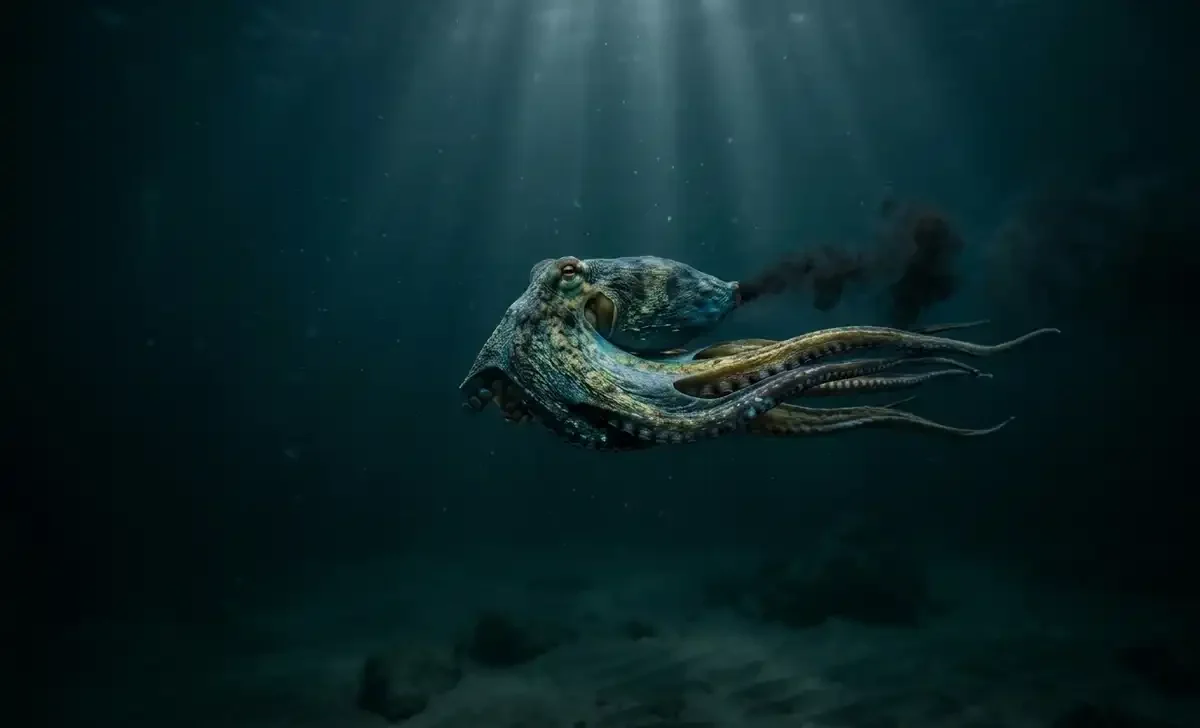
A female octopus leaves the safety of her home waters. Something goes wrong. And somehow, she gets away.
That is the heart of a new Blue Planet III clip. Filmmakers captured the octopus's lucky escape after she ventured from her normal underwater habitat. The sequence comes from the new series with Sir David Attenborough, who is still making nature documentaries in his 101st year.
So how does an octopus escape death here? Not every detail has been released. This article sticks to what is confirmed, explains why moments like this happen in the wild, and shows you where to watch.
What Happened to the Octopus in Blue Planet III?
The Hunting Encounter That Turned Dangerous
The octopus went out hunting, and the hunt went badly. That is the core of the report. She left her normal underwater habitat, and the trip nearly cost her life.
How the Octopus Found Herself in Danger
The reporting doesn't say how the danger began. It doesn't name the location, the other animal involved, or what drew her away from home. We won't guess. Once the full episode airs, those answers should be clearer.
How the Octopus Escaped Death
The Critical Moment That Changed Everything
The clip is described as a lucky escape, and that word matters. It suggests she was close to dying and that luck played a part. The exact turning point hasn't been described in the sources we found.
How the Octopus Managed to Escape
The method of escape hasn't been confirmed either. We know the result: she narrowly escaped death. We can't yet say whether she used camouflage, speed or something else, and it would be wrong to invent a play-by-play. The next section explains the tools octopuses commonly rely on.
Why Did the Octopus's Hunt Go Wrong?
The Risks of Hunting in the Ocean
An octopus is a skilled hunter, but hunting always carries risk. She has to leave cover, move across open ground and commit to a catch. Any of those steps can expose her.
The sea is also crowded. Animals compete for food and space, in places as busy as the waters near the Strait of Hormuz. A small mistake in open water can turn a hunter into prey.
The Predator-Prey Struggle Behind the Encounter
Octopuses sit in the middle of the food chain. They hunt crabs and other small animals, and larger animals hunt them. The same trip that puts food within reach can put an octopus within reach of something bigger.
Escapes aren't limited to the sea. Land animals do it too, as with this escaped zoo wolf. In every case, survival comes down to quick decisions in a few seconds.
How Octopuses Survive Dangerous Encounters
This is general science, not a description of the Blue Planet III scene.
Camouflage and Other Defence Mechanisms
Octopuses can change skin colour and texture in moments, which helps them vanish against rock, sand or weed. Many can also squirt ink to cloud the water and break a predator's line of sight. A third trick is jet propulsion: they push water out of their body to shoot away fast.
The Intelligence and Flexibility That Help Octopuses Escape
An octopus has no hard skeleton, so she can squeeze through gaps far smaller than her body. She is also a strong problem-solver, able to adjust her tactics mid-escape. That mix of a soft body and a sharp mind is why octopuses have a reputation as escape artists.
What Makes the Blue Planet III Encounter Remarkable?
What the Footage Reveals About Marine Life
Wildlife rarely goes to plan. The clip is a reminder that even a clever, well-equipped animal can misjudge a situation. It shows risk and survival happening in the same moment.
The Importance of Capturing Rare Wildlife Behaviour
Moments like this are hard to film. Crews have to be in the right place at the right time, often for long periods. Reaching the sea's hidden corners takes the same persistence as other big exploration efforts, such as NASA's moon mission. Each clip adds to what we know about how ocean animals behave in real life.
Where to Watch the Blue Planet III Octopus Scene
The clip was shared as a BBC News video: watch it on the BBC. I'd check that the link still works before publishing.
The full series is coming soon:
- UK: Blue Planet III starts on Sunday 1 November at 8pm on BBC One and iPlayer.
- Outside the UK: It launches from November into 2027 across the world.
No episode number has been confirmed for this scene, so check the BBC listings once the series begins.
Conclusion
An octopus left home, a hunt went wrong, and she lived to tell the tale. That is what we can say for sure. The rest, including the predator, the place and the escape itself, will have to wait for the series.
Frequently Asked Questions
How did the octopus escape death?
The reports confirm she escaped but don't say how. The method hasn't been described publicly, so any detailed explanation would be guesswork.
Did the octopus survive the encounter?
She survived the moment shown. The footage is described as a narrow escape from death. Her longer-term fate hasn't been reported.
Why did the octopus's hunt go wrong?
We don't know the specific cause. She had left her normal habitat, which is risky, but the other animal involved hasn't been named.
How do octopuses escape predators?
They use camouflage, ink clouds, fast jets of water and squeezing through tiny gaps. They also use intelligence to react quickly.
Where can you watch the Blue Planet III octopus scene?
You can watch the clip on the BBC link above. The full series starts on BBC One and iPlayer on 1 November in the UK.