If you've been following Taiwan's tech sector lately, you've probably seen headlines about the Unimicron offering. It's a big deal, and not just because of the dollar amount attached to it.
Unimicron Technology, one of the world's largest printed circuit board and IC substrate makers, is raising as much as $1.4 billion through a sale of global depositary shares. That's a massive number for a company most casual investors have never heard of. But Unimicron sits quietly at the center of the AI hardware boom, supplying the substrates that hold advanced chips together.
In this article, we'll walk through exactly what the Unimicron offering is, why it's happening right now, and what it could mean for anyone watching the AI supply chain closely. Whether you're a curious investor or just trying to understand why this name keeps popping up in tech news, you'll find clear answers below.
What Is the Unimicron Offering?
The Unimicron offering refers to a sale of global depositary shares, or GDSs, that lets the company raise money from international investors without a full-blown listing on a foreign exchange. Unimicron is selling 50 million of these shares, priced between roughly $26.96 and $27.76 each.
Do the math, and that puts the total raise at up to $1.4 billion. That's a discount of 3% to 6% off Unimicron's closing price in Taipei the day before pricing.
Why a discount? It's standard practice. Companies typically price share offerings slightly below market value to attract buyers quickly and make sure the deal actually sells out. Think of it like a store offering a small markdown to move inventory fast — except here, the "inventory" is ownership in a chip supplier riding the AI wave.
This isn't Unimicron's first rodeo either. The company's board had already signaled plans earlier in the year to issue shares this way, so the offering wasn't exactly a surprise to people tracking Taiwanese tech stocks closely.
Who Is Unimicron Technology?
Before diving deeper into the offering, it helps to know who's actually behind it.
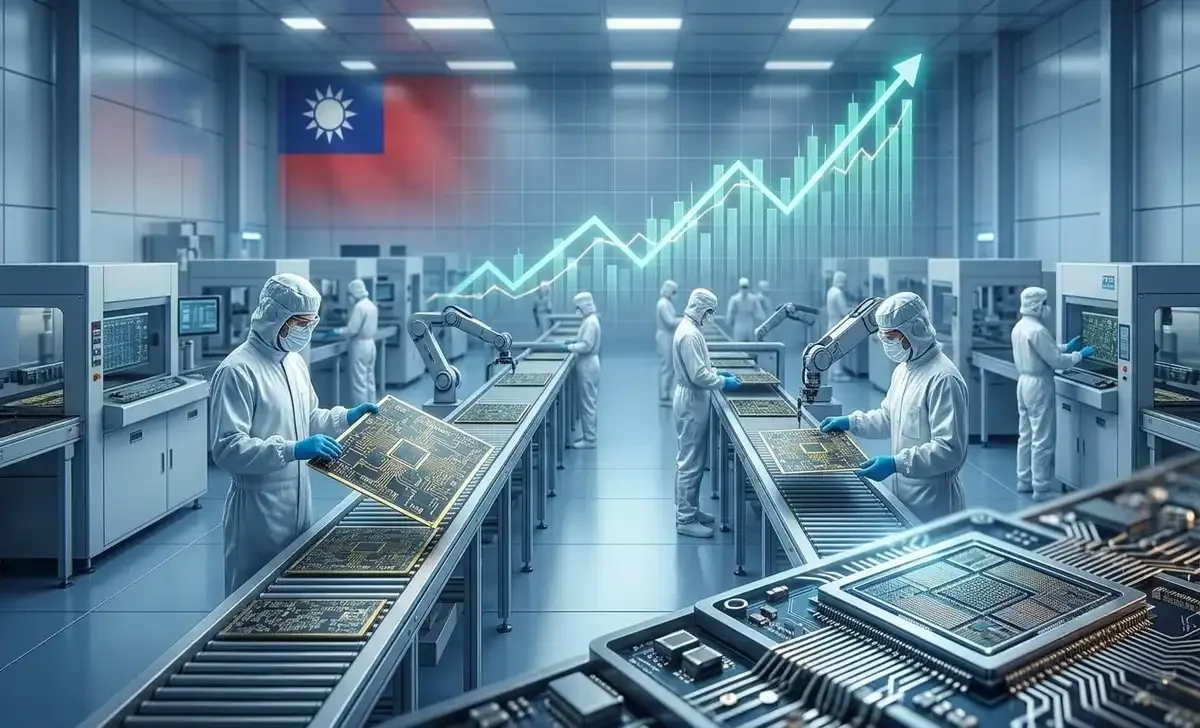
Unimicron Technology Corp is a Taiwan-based manufacturer founded back in 1990. It's headquartered in Taoyuan City and employs more than 31,000 people worldwide. The company makes printed circuit boards, high-density interconnect boards, flexible circuit boards, and — most importantly for this story — IC substrates used in advanced semiconductor packaging.
If you've ever wondered what physically connects a high-end chip to the rest of a device or server, substrates are a big part of that answer. They're the unsung hero of modern electronics.
Unimicron trades on the Taiwan Stock Exchange under ticker 3037, and its market capitalization has climbed into the tens of billions of dollars as demand for AI infrastructure has surged. The company also has smaller side businesses in food manufacturing and property management, but its core identity is squarely in chip and circuit board manufacturing.
Why Is Unimicron Raising Money Right Now?
Timing matters a lot in finance, and Unimicron's timing here is no accident.
The company is capitalizing on what analysts describe as heightened investor enthusiasm for anything tied to the artificial intelligence boom. Chip suppliers, substrate makers, and packaging companies have all seen their valuations climb as AI data center spending accelerates worldwide.
Raising capital while your stock is trading near record highs is a classic corporate finance move. It lets a company bring in more money for fewer shares sold, which is far more efficient than raising the same amount during a stock slump.
There's also a practical reason behind this specific raise. Unimicron has said the proceeds will go toward procuring raw materials in foreign currencies — a detail that matters more than it might seem at first glance, which we'll unpack next.
How the GDR Pricing Actually Works
Global depositary shares can sound confusing if you've never encountered them before, so let's simplify it.
A GDR (global depositary receipt) is essentially a certificate that represents shares in a foreign company, allowing international investors to buy in without dealing directly with a foreign stock exchange. It's a common tool for Asian and European companies that want to tap global capital pools, especially U.S. dollar liquidity.
Here's what happened with Unimicron:
- The company priced 50 million GDSs
- Price range: $26.96 to $27.76 per share
- That's a 3–6% discount to its last Taipei closing price
- Total potential raise: up to $1.4 billion
This kind of structure lets Unimicron access dollar-denominated capital directly, which lines up neatly with its stated goal of buying raw materials priced in foreign currencies. It's a smart way to hedge currency risk while raising growth capital at the same time.
What Unimicron Plans to Do With the Cash
Unimicron has been fairly direct about its intentions: the funds are earmarked to procure raw materials in foreign currencies. In plain terms, that means buying the copper, resins, specialty chemicals, and other substrate-building inputs that are often priced in U.S. dollars or other non-Taiwanese currencies.
This matters because substrate manufacturing is materials-intensive, and pricing volatility in raw inputs can squeeze margins fast. By raising dollars directly, Unimicron reduces the need to convert Taiwan dollars every time it places a large materials order, smoothing out currency exposure.
There's also a bigger strategic picture here. Unimicron has publicly targeted record revenue in 2026, aiming to exceed its previous 2022 peak, largely driven by advanced substrate and AI system-board upgrades. Having a larger cash cushion supports that expansion without relying entirely on debt or squeezed operating cash flow.
The AI Substrate Connection Nobody Talks About
Most people talking about the AI boom focus on chipmakers like Nvidia or AMD. Substrate suppliers rarely get the spotlight, even though they're just as essential.
Advanced AI chips — the ones powering data centers and large language models — require increasingly sophisticated substrates to handle higher power density and more complex interconnects. Unimicron has specifically pointed to demand from AI-related ASICs (custom AI chips) and networking switches as a key growth driver.
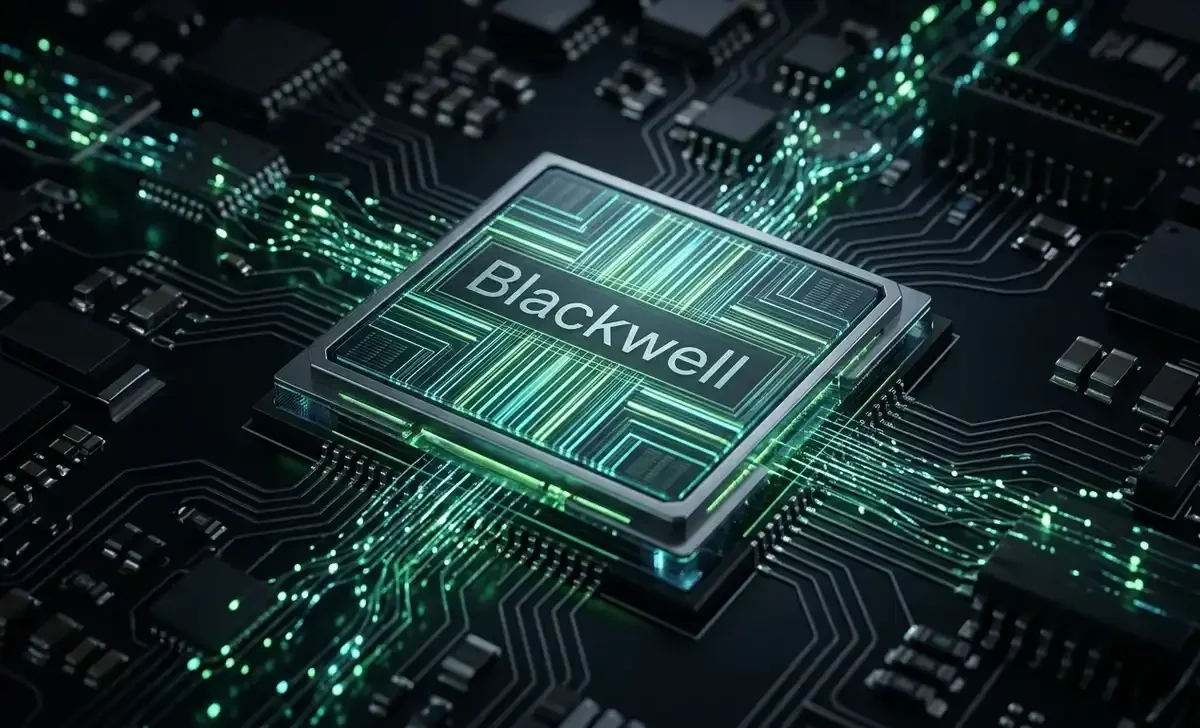
This lines up with broader trends across the semiconductor supply chain, where demand for cutting-edge packaging technology has been accelerating right alongside chip design itself. For a deeper look at how chip demand is reshaping hardware strategy industry-wide, this breakdown of Nvidia's Blackwell chip rollout is worth a read.
It's also part of a much larger pattern of capital pouring into AI infrastructure, something covered well in this piece on current AI demand trends.
Unimicron's Recent Financial Performance
Numbers tell a clearer story than press releases, so here's a snapshot of Unimicron's recent results:
- Q1 2026 revenue: NT$37.4 billion, up 24.5% year-over-year
- Q1 2026 net income: NT$5.38 billion, up roughly 482% year-over-year
- Gross margin: Improved to 18.0%, up from 13.4% a year earlier
- Cash position: NT$60.2 billion, up from NT$44.1 billion the year before
That's a sharp turnaround. Earnings had actually declined at an average annual rate over the past five years before this recent surge, driven largely by substrate demand and automotive-related growth. The past year's earnings growth significantly outpaced the broader electronics industry in Taiwan.
Analyst price targets have also moved up substantially, with consensus estimates sitting well above where the stock traded just months earlier. That kind of momentum is exactly the environment companies look for before launching a share offering.
Risks Every Investor Should Weigh
No offering is risk-free, and it's worth being clear-eyed here.
Valuation concerns. Unimicron's price-to-earnings ratio has climbed into territory that reflects high growth expectations already baked into the stock. If AI-related demand cools even slightly, that valuation could compress quickly.
Earnings volatility. Despite the recent surge, Unimicron's earnings have historically been choppy, with several quarters of declining margins over the past few years.
Dilution. Issuing 50 million new shares dilutes existing shareholders' ownership stake, even if the capital raised fuels future growth.
Currency and raw material costs. While this raise helps hedge currency exposure, the underlying business still depends heavily on global supply chains for specialty materials, which can be affected by trade policy shifts or geopolitical tension.
Sector concentration risk. A huge chunk of Unimicron's growth story depends on continued AI infrastructure spending. If that spending slows, so does the tailwind behind this stock. It's a similar dynamic playing out across the chip world, discussed in this piece on finding a tech stock entry point after a pullback.
How This Stacks Up Against Other Taiwan Tech Raises
Taiwan's tech sector has seen a wave of capital raises as AI infrastructure spending accelerates globally. Unimicron's $1.4 billion target puts it among the larger recent offerings from the region's chip supply chain.
Earlier in the year, Unimicron's board had floated an even larger figure — around $2.6 billion — before settling into the final structure and pricing seen in this offering. That's not unusual; initial board resolutions often set an upper bound that gets refined once market conditions and investor appetite become clearer.
Compared to peers, Unimicron's approach of using GDRs rather than a straightforward secondary offering on the Taiwan exchange reflects a deliberate strategy to reach international, dollar-based investors — a group increasingly important as global capital continues flowing toward AI infrastructure plays.
What It Means for the Broader PCB Industry
Unimicron isn't operating in a vacuum. Its competitors — including TTM Technologies, AT&S, and other regional substrate makers — are watching this offering closely.
A successful raise signals strong investor confidence in the substrate and advanced packaging segment, specifically, not just chips broadly. That could encourage other PCB and substrate manufacturers to pursue similar capital raises while market sentiment remains favorable.
It also reflects a broader industry shift: companies further down the semiconductor supply chain, the ones making the unglamorous components that hold everything together, are finally getting recognized for their role in the AI buildout. That includes data center infrastructure providers too, a trend visible in projects like the expansion covered in this look at Microsoft's data center investments and this report on the Adani data center push in India.
Should You Pay Attention to This Stock?
Here's an honest, balanced take.
Pros:
- Direct exposure to AI infrastructure demand without chip-design risk
- Strong recent revenue and margin improvement
- Clear use-of-proceeds plan tied to operational needs
- Established market leader with decades of manufacturing experience
Cons:
- High valuation relative to historical earnings
- Recent share dilution from the offering itself
- Heavy dependence on continued AI capital expenditure cycles
- History of volatile year-over-year earnings
This isn't investment advice — it's context. Whether Unimicron fits your portfolio depends on your risk tolerance, time horizon, and how much AI-supply-chain exposure you already hold elsewhere.
Expert Tips
- Read the prospectus, not just headlines. GDR offerings often include specific covenants and lock-up periods that affect how and when shares can trade.
- Compare margin trends, not just revenue growth. Unimicron's margin improvement matters more long-term than a single strong quarter.
- Watch AI capex announcements from hyperscalers. Unimicron's fortunes are tightly linked to spending decisions made by companies building out AI factories and data centers, a topic explored well in this piece on modern AI factories.
- Track currency movements. Since part of this raise addresses foreign currency exposure, shifts in the U.S. dollar versus the Taiwan dollar could meaningfully affect future materials costs.
Common Mistakes to Avoid
- Chasing the stock purely because of AI hype. Momentum can reverse quickly if broader chip demand softens.
- Ignoring dilution effects. New shares mean your existing stake, if you already hold Unimicron, represents a slightly smaller slice of the company.
- Assuming all substrate makers benefit equally. Not every company in this space has Unimicron's scale or customer relationships.
- Overlooking currency risk. International investors sometimes forget that GDR pricing and returns can be affected by exchange rate swings.
- Skipping due diligence on use of proceeds. Always check whether a capital raise is for growth, debt repayment, or simply operational cash flow needs.
Conclusion
The Unimicron offering is a clear signal of just how much capital is flowing into the companies quietly powering the AI infrastructure boom. This isn't a flashy chip-design story — it's a substrate and PCB manufacturer capitalizing on genuine demand growth while raising capital on favorable terms.
For investors, the key takeaway is balance. Unimicron's recent numbers are impressive, and its position in the AI supply chain is real. But valuation, dilution, and sector concentration risks deserve just as much attention as the headline growth figures.
If you're tracking this space, keep watching how the offering performs once it prices and settles, and pay close attention to Unimicron's next earnings report for signs that this growth story has staying power.
Frequently Asked Questions
What is the Unimicron offering?
It's a sale of up to 50 million global depositary shares by Unimicron Technology, aiming to raise as much as $1.4 billion to fund raw material purchases in foreign currencies.
Why is Unimicron doing a share offering now?
The company is taking advantage of strong investor demand for AI-linked chip suppliers, along with a favorable stock price, to raise capital efficiently.
What does Unimicron actually manufacture?
Unimicron produces printed circuit boards, IC substrates, high-density interconnect boards, and flexible circuit boards used in electronics and advanced chip packaging.
Is Unimicron a good investment after this offering?
That depends on individual risk tolerance. The company shows strong recent growth tied to AI demand, but also carries valuation and dilution risks worth weighing carefully.
How does a GDR offering differ from a regular stock sale?
A GDR lets international investors buy shares in a foreign company through depositary receipts, making it easier to raise dollar-denominated capital without a full foreign exchange listing.