Every four years, billions of people ask the same question: Where can I actually watch the World Cup? The answer has never been more complicated — or more frustrating. Rights deals shift at the last minute, streaming platforms replace traditional broadcasters, and fans are left scrambling days before kick-off.
This guide cuts through the confusion around World Cup broadcast rights and gives you a clear, practical picture of what's happening, why it's happening, and exactly what you can do to make sure you don't miss a single match in 2026.
Why World Cup Broadcast Rights Are So Complicated
FIFA sells broadcast rights on a territory-by-territory basis — there is no single global deal. The broadcaster showing a match in the UK is entirely separate from the one airing it in Brazil, South Korea, or Nigeria. These contracts are negotiated years — sometimes a decade — before the tournament begins, which means the media landscape can shift dramatically between signing and broadcast.
Add the aggressive entry of streaming platforms, the fragmentation of pay-TV bundles, and deep-pocketed tech companies outbidding legacy broadcasters, and you end up with a bidding war that rarely resolves cleanly. The consequences for fans are real: split rights packages, last-minute platform switches, and genuine uncertainty about where to tune in.
Key structural reasons why rights deals create confusion:
- Rights are sold country by country — no unified global broadcast arrangement exists
- Contracts can span 8–12 years, creating mismatches with today's streaming landscape
- Sub-licensing agreements add additional layers that rarely get publicised
- FIFA prioritises revenue maximisation over viewer accessibility in many markets
The Streaming Takeover: What It Means for Everyday Fans
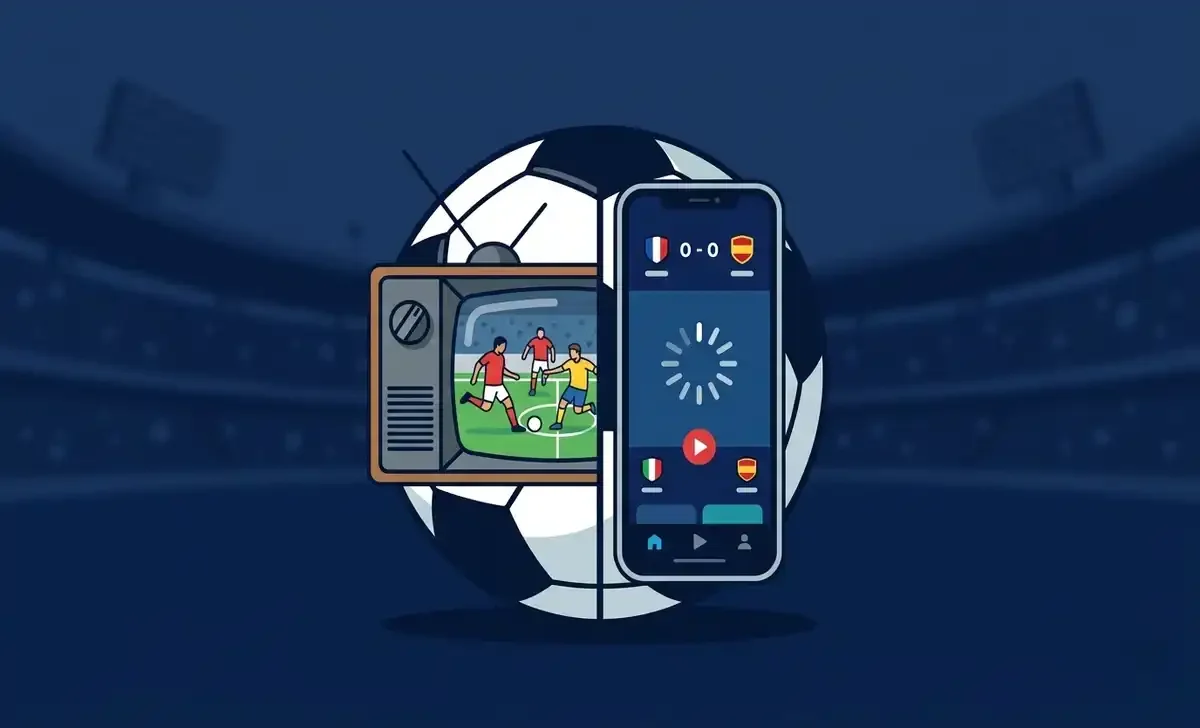
Watching the World Cup used to mean turning on the TV. Now it means auditing your subscriptions and hoping one of them covers your country's rights. Amazon Prime, Apple TV+, DAZN, Peacock, and Paramount+ have all entered live sports rights aggressively — and FIFA has been more than willing to take their money.
For fans, this creates practical problems. You may need a new subscription you didn't plan for. Streaming apps frequently crash under the load of millions of simultaneous viewers during major matches. Commentary quality on newer platforms can be inconsistent. And if you cut the cord expecting to save money, you may end up spending just as much stitching together multiple subscriptions to cover an entire tournament.
There are genuine upsides — 4K picture quality, multi-angle viewing, and on-demand replays are real improvements. But those benefits mean little when fans don't know which app to open in the first place.
Practical example: During the 2022 Qatar World Cup in the United States, rights were split across FOX Sports, Telemundo, and Peacock. A casual fan who hadn't tracked rights developments could easily miss matches simply because they were searching on the wrong platform.
Regional Blackouts and Coverage Gaps: A Growing Problem
One of the most frustrating aspects of the current broadcast landscape is the geographic blackout. If you're abroad for work or on holiday, a game you've planned your evening around can be blocked entirely — even if you're a paying subscriber to a platform that holds rights in your home country.
This happens because rights are licensed per territory. A broadcaster holding Spanish rights has no obligation to serve a viewer in Germany. VPNs have become the default workaround, but most major streaming platforms actively detect and block them, and repeated use can get your account flagged or suspended.
Some markets face total coverage gaps — no broadcaster has secured rights at all. In the lead-up to recent tournaments, several countries across Southeast Asia, parts of Sub-Saharan Africa, and smaller Caribbean nations found themselves in legal broadcasting limbo. Fans in these regions are effectively pushed toward pirated streams by default, not by choice.
FIFA has occasionally stepped in with free digital coverage for unserved markets, but these solutions are poorly publicised and difficult to find without insider knowledge.
The Legal Battles Fans Never See
What you watch on screen is often the result of intense legal disputes happening well out of public view. Broadcast rights conflicts — including contract violations, unauthorised sub-licensing, and piracy injunctions — regularly end up in court, creating uncertainty about which entity legally holds the right to broadcast.
When a broadcaster loses a bid or has a contract terminated, litigation can follow quickly. These disputes don't just cost money — they directly delay or disrupt fan access during negotiations. The financial complexity of media rights shares structural similarities with securities litigation, where large sums, competing claims, and contractual ambiguity create prolonged disputes that ultimately hurt ordinary stakeholders — in this case, the fans waiting to watch.
Rights holders also regularly seek court orders to block illegal streams. While legitimate, enforcement actions sometimes sweep up viewers in geographic grey areas who are simply trying to access coverage they assumed was available to them.
Free-to-Air TV Is Losing Ground — And That's a Real Access Problem
There was a time when major World Cup matches were guaranteed on free-to-air television — BBC, ITV, ARD, RAI. No subscription. No login. Just switch on the TV.
That era is eroding steadily. As streaming platforms and pay-TV networks pay increasingly large fees for rights, free-to-air broadcasters are being priced out. Some countries have "listed event" legislation that legally requires major sporting events to remain on free-to-air platforms — but these laws are under constant commercial pressure and don't apply globally.
In markets without such protections, lower-income households face a genuine access problem. When a World Cup ends up behind a £15-per-month subscription, a meaningful portion of the population simply cannot watch. This reflects a broader tension: the relentless pursuit of higher rights fees doesn't automatically produce a better experience for the people who matter most — the fans. It's a dynamic worth reflecting on, much like the question of whether chasing commercial achievement ever translates into genuine value, explored thoughtfully in this piece on fulfillment beyond material achievement.
The Hidden Coopetition Between Broadcasters
Here's something most fans never consider: broadcasters that appear to be fierce competitors often cooperate behind the scenes. This is known as coopetition — a blend of competition and collaboration — and it's more common in media rights than the public realises.
Two broadcasters might jointly bid for a rights package, splitting costs and territories. A streaming platform might partner with a traditional TV network to share infrastructure. A pay-TV giant might sub-license a handful of matches to a free-to-air channel in exchange for reduced rights costs. Understanding this dynamic helps explain the confusing multi-platform landscapes fans encounter.
For a deeper look at how this functions as a broader business strategy, this guide to coopetition strategy offers useful context. For fans, the practical implication is this: the "official rights holder" in your country may not be the only legitimate place to find coverage. Sub-licensed matches and partnership deals often create additional viewing options that never get properly publicised.
How to Guarantee You Don't Miss a Match: A Step-by-Step Plan
Given how unpredictable the rights landscape has become, being proactive is the only reliable strategy. Here's what actually works:
- Research your country's rights holder early. Don't wait until the week before the tournament. Search "[your country] World Cup 2026 broadcaster" now and bookmark the relevant pages. This information typically becomes public 6–12 months before the event.
- Check for sub-licensed matches. Your official rights holder may have passed some games to a secondary platform. Look for official press releases rather than social media speculation, which is frequently inaccurate.
- Audit your streaming options in advance. Confirm which platforms hold rights, check they're compatible with your devices, compare subscription costs, and look for trial periods.
- Test your setup before the tournament opens. Download apps, create accounts, and do a test stream at least a week before kick-off. Don't wait for the opening match to discover a technical issue.
- Have a backup location plan. Know which sports bars or public venues near you will be showing key matches. If streaming fails under peak load — and it sometimes does — knowing your offline options saves real stress.
- Check FIFA's own digital offerings. If your country has no broadcaster, FIFA occasionally provides free streams in unserved markets. These are rarely publicised, so check the FIFA website directly.
FIFA's Role in the Broadcast Chaos
It would be unfair to place all responsibility on broadcasters. FIFA's own commercial strategy is a significant driver of the confusion fans experience. The organisation's primary obligation is to its own revenue, and selling rights to the highest bidder — even where that creates access problems — aligns perfectly with that objective.
FIFA has resisted calls to mandate free-to-air access in markets where it has leverage to do so. Its rights deals are notoriously opaque, making it difficult for fans, journalists, or regulators to hold anyone accountable. For 2026, the expanded 48-team format means more matches, more broadcast hours, and greater complexity in how rights packages are structured. Whether the increase in content translates into improved access remains to be seen.
FIFA has also floated the idea of its own direct-to-consumer streaming platform. If it ever controls a global service directly, it could simplify access — or simply create a new global paywall that excludes even more people.
Practical Tips for Cord-Cutters and Casual Fans
Cord-cutters and casual viewers — those tuning in mainly for knockout rounds or the final — are the most vulnerable to broadcast uncertainty because they're least likely to have tracked rights developments. By the time they decide to watch, the picture may have already changed.
The three approaches cord-cutters typically take:
- The Multi-Sub Approach: Subscribe to every platform holding any World Cup rights for the tournament's duration, then cancel. Expensive but comprehensive.
- The Pick-and-Choose Approach: Follow only specific matches — your team's group games, knockout rounds — and accept missing others. Requires advanced research but is far more affordable.
- The Community Approach: Watch at pubs, sports bars, or friends' homes with the relevant subscriptions. Cheapest option, but dependent on others' schedules.
Tip: Set calendar reminders for broadcast rights announcements, which typically come 6–12 months before the tournament. Don't rely on stumbling across the news — missing the announcement often means scrambling at the worst possible moment.
FAQs
Who holds World Cup 2026 broadcast rights in the United States?
FOX Sports and Telemundo/Peacock held rights for the 2022 tournament. For 2026 — hosted partly on US soil — the rights landscape may evolve. Check official FIFA communications and the relevant broadcasters' press releases for confirmed details of the event.
Can I use a VPN to access World Cup streams from another country?
It is technically possible but increasingly risky. Most major streaming platforms actively detect and block VPN connections. If flagged, your stream may be cut and your account suspended. Always review a platform's terms of service before attempting this.
Will any 2026 World Cup matches be free to watch?
This depends entirely on your country. Nations with "listed event" legislation require certain matches to be free-to-air TV. In many markets, all coverage sits behind a paywall. Research your specific country's broadcasting regulations well before the tournament begins.
What happens if a broadcaster loses rights partway through the tournament?
This is rare but has occurred in regional markets during other competitions. FIFA typically intervenes to ensure continuity of service, usually transferring rights to a secondary broadcaster at short notice. However, the interim period can leave fans without clear guidance on where to watch.
Why are World Cup broadcast rights so expensive?
The World Cup delivers one of the largest and most reliable live audiences on the planet. Advertisers pay premium rates to reach those viewers, which allows broadcasters to justify enormous rights fees. Global rights for the 2022 Qatar World Cup were reportedly valued at over $3 billion in total.
Is piracy a real risk if I use unofficial streams?
Yes — beyond legal risk in many jurisdictions, unofficial streams are technically unreliable, frequently cutting out during critical moments. Rights holders also actively pursue piracy injunctions, which can shut down streams mid-match. Legitimate alternatives, including FIFA's own offerings in unserved markets, are always preferable.