Few words in medicine trigger as much fear as Ebola. With a fatality rate that has reached 90% in some outbreaks, it has earned its reputation as one of the deadliest pathogens humans have ever encountered.
But for all its notoriety, Ebola is widely misunderstood. People confuse how it spreads, who is at risk, and what treatments exist. Myths circulate faster than facts, and that gap in knowledge can be genuinely dangerous — especially during an outbreak.
In this guide, you'll get a clear, honest, and medically grounded breakdown of Ebola: what it is, where it comes from, what it does to the human body, how outbreaks are managed, and where research stands today. Whether you're a student, a healthcare professional, or simply a curious reader, this is the guide you've been looking for.
What Is Ebola?
Ebola virus disease (EVD), formerly known as Ebola hemorrhagic fever, is a severe and often fatal illness caused by the Ebola virus — a member of the Filoviridae family. There are six known species of the virus, with Zaire ebolavirus being the most lethal and responsible for the largest outbreaks on record.
The virus was first identified in 1976 near the Ebola River in what is now the Democratic Republic of Congo (DRC), which gave it its name. It primarily affects humans and other primates, including gorillas and chimpanzees.
What makes Ebola uniquely dangerous is its ability to overwhelm the immune system rapidly, attack multiple organ systems simultaneously, and, in severe cases, cause hemorrhaging — internal and external bleeding. However, it is important to note that not every Ebola case leads to dramatic bleeding. Many patients die from dehydration, organ failure, and systemic shock.
The virus is not airborne. This distinction is critical and often misunderstood, and we'll cover it in detail later in this article.
A Brief History of Ebola Outbreaks
Ebola has struck repeatedly since its discovery in 1976, though always in relatively contained geographic areas — until 2014.
Key outbreaks include:
- 1976 – DRC and Sudan: The first two recorded outbreaks occurred almost simultaneously, with the DRC strain killing roughly 88% of those infected.
- 1995 – DRC (Kikwit): A major outbreak killed 254 people and alarmed global health authorities.
- 2000–2001 – Uganda: An outbreak of the Sudan strain infected over 400 people.
- 2014–2016 – West Africa: The largest Ebola outbreak in history, affecting Guinea, Sierra Leone, and Liberia. Over 28,000 cases were recorded. More than 11,000 people died.
- 2018–2020 – Eastern DRC: The second-largest outbreak on record, complicated by ongoing armed conflict in the region.
- 2022 – Uganda: A rare outbreak of the Sudan strain, which at the time had no approved vaccine.
Each outbreak has taught researchers and public health officials something new — about transmission dynamics, community response, and the limits of healthcare infrastructure in affected regions.
How Ebola Spreads (And How It Doesn't)
This is arguably the most important section in any Ebola article — because misunderstanding transmission causes panic, discrimination, and poor policy decisions.
Ebola spreads through direct contact with:
- Blood, body fluids (sweat, saliva, vomit, urine, feces, semen, breast milk) of an infected person who is showing symptoms
- Objects contaminated with these fluids (needles, medical equipment, bedding)
- The bodies or body fluids of people who have died from Ebola
Ebola does NOT spread through:
- Air or aerosols (it is not airborne)
- Water or food
- Casual contact with someone who has no symptoms
- Insects, including mosquitoes
A person infected with Ebola is not contagious until they develop symptoms. This is a key fact. Someone who has been exposed to Ebola but feels completely well cannot transmit the disease. That window between exposure and symptoms — the incubation period — is typically 2 to 21 days.
This is why contact tracing and isolation of symptomatic individuals are the primary tools for containing outbreaks.
Signs and Symptoms: What Ebola Actually Does to the Body
Ebola begins deceptively. In its early stages, it looks almost identical to influenza or malaria — which is part of what makes it so hard to diagnose quickly in regions where these diseases are common.
Early symptoms (Days 1–5):
- Sudden fever
- Severe headache
- Muscle pain and weakness
- Fatigue
- Sore throat
Later symptoms (Days 5–10):
- Vomiting and diarrhea (often severe)
- Rash
- Impaired kidney and liver function
- Internal and external bleeding (in some cases)
The bleeding — which ranges from blood in stool to bleeding from the gums — is what gave Ebola its original name: hemorrhagic fever. However, not all patients bleed externally. The more consistent and deadly feature is the catastrophic fluid loss from vomiting and diarrhea, which causes dangerous dehydration and electrolyte imbalance.
At its worst, Ebola triggers what's called a "cytokine storm" — an overreaction of the immune system that begins destroying the body's own tissues. Death typically occurs 8 to 10 days after symptom onset in fatal cases, usually from organ failure and shock.
Diagnosing Ebola
Diagnosing Ebola in the field is a significant challenge, particularly in low-resource settings. The early symptoms overlap with so many other diseases — malaria, typhoid, cholera, and even COVID-19 — that clinical assessment alone is insufficient.
Laboratory confirmation methods include:
- RT-PCR (Reverse Transcriptase Polymerase Chain Reaction): The gold standard. Detects viral RNA in blood samples. Highly accurate but requires trained lab personnel and equipment.
- Antigen-capture ELISA: Detects viral proteins. Useful during the acute phase of illness.
- Rapid diagnostic tests (RDTs): Newer lateral flow assays that can give results in 15–30 minutes. Useful for field settings but must be confirmed with PCR.
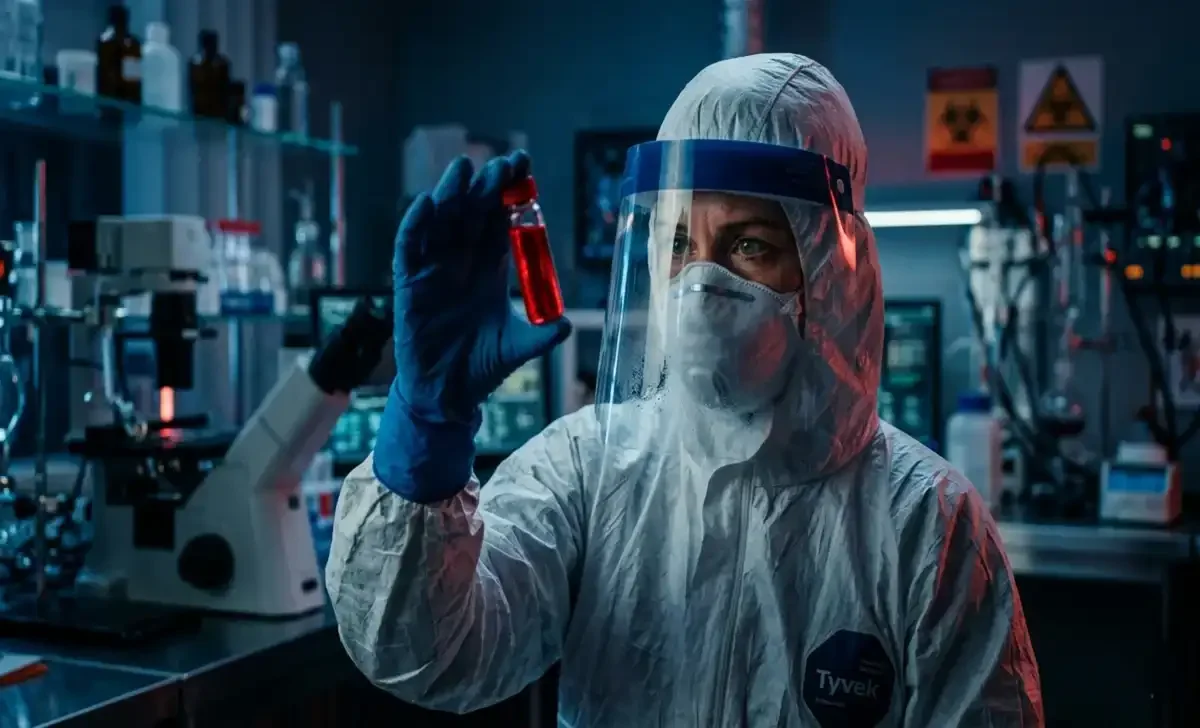
All sample collection must be performed by healthcare workers in full personal protective equipment (PPE). Even a single droplet of contaminated blood on unprotected skin can transmit the virus — which is why Ebola has historically had such high healthcare worker infection rates during outbreaks.
Treatment Options Available Today
For decades, Ebola had no approved treatment. The standard of care was purely supportive: IV fluids, electrolytes, and management of secondary infections. Survival often came down to how quickly a patient received treatment and how robust their immune response was.
That has changed.
Current treatments include:
- Inmazeb (atoltivimab, maftivimab, and odesivimab-ebgn): Approved by the U.S. FDA in 2020. A cocktail of three monoclonal antibodies targeting the Zaire strain. Clinical trials showed survival rates of 63.5% in treated patients versus 33.5% in the placebo group.
- Ebanga (ansuvimab-zykl): Also FDA-approved in 2020. A single monoclonal antibody that demonstrated a 78% survival rate in clinical trials — compared to 50% in controls.
- Supportive care advances: Improved rehydration protocols, oxygen therapy, and intensive care support have also substantially improved outcomes.
It's worth noting that both approved treatments work specifically against Zaire ebolavirus. For other strains like Sudan ebolavirus, effective treatments are still being developed — a gap made painfully visible during the 2022 Uganda outbreak.
The 2014–2016 West Africa Outbreak: A Turning Point
The 2014–2016 West Africa outbreak changed everything about how the world thinks about Ebola. Before this, outbreaks had been terrible but geographically limited — mostly confined to remote areas with limited population movement.
West Africa was different. Urbanization, porous borders, and deeply embedded cultural burial practices (which involve touching the deceased) created conditions for explosive spread. Cases appeared in capital cities. A handful traveled internationally — including to the United States and Spain — triggering global alarm.
The response revealed critical weaknesses in global health infrastructure: underfunded health systems, lack of trained personnel, shortage of PPE, and an absence of proven treatments or vaccines. It also exposed something more uncomfortable — the slow initial response of international agencies, including the World Health Organization (WHO), which took months to declare a Public Health Emergency of International Concern.
The lessons were harsh. But they also spurred a surge in funding, research, and coordination that has since led to the vaccines and treatments we now have. In many ways, this outbreak was the event that forced the global health community to take Ebola — and pandemic preparedness more broadly — seriously.
This kind of systemic change driven by crisis is a theme seen across many sectors. Just as public health systems evolved under pressure, industries from finance to energy have faced their own reckoning moments that forced structural transformation. Understanding how innovation can emerge without conventional technology offers useful parallels for how health systems have adapted.
Ebola Vaccines: What We Have Now
One of the genuine success stories of the Ebola response is vaccine development. In less than a decade, researchers went from having nothing to having proven vaccines approved for use.
Ervebo (rVSV-ZEBOV): Developed by Merck and approved by the FDA and EMA in 2019, Ervebo is a live attenuated vaccine targeting Zaire ebolavirus. It was first used in a "ring vaccination" strategy during the 2018–2020 DRC outbreak — vaccinating everyone who came into contact with a confirmed case. Results were remarkable. In areas where vaccination reached quickly, transmission chains were broken.
Zabdeno and Mvabea (Ad26.ZEBOV + MVA-BN-Filo): A two-dose regimen developed by Janssen and approved in the EU in 2020. It requires an 8-week interval between doses, making it less suited to emergency ring vaccination but valuable for preventive vaccination of healthcare workers and at-risk populations.
Neither vaccine protects against the Sudan strain — a gap that became urgent during the 2022 Uganda outbreak. Multiple Sudan-strain vaccine candidates are now in accelerated trials, including candidates from Oxford's Jenner Institute and the Sabin Vaccine Institute.
The Role of Healthcare Workers and Global Response
Healthcare workers sit on the front line of every Ebola outbreak. They are also disproportionately affected. During the 2014–2016 West Africa epidemic, over 500 healthcare workers died — a staggering toll that reflects both the virus's danger and the critical shortage of PPE.
Effective outbreak response depends on several interconnected elements:
- Surveillance systems that can detect cases quickly and accurately
- Rapid response teams that can deploy to hot zones within 72 hours
- Community trust — without local cooperation, contact tracing fails
- Safe burial teams trained in culturally sensitive but biosecure practices
- Psychosocial support for survivors, who often face stigma after recovery
Global coordination has improved significantly since 2014. The WHO's Health Emergencies Programme, GOARN (Global Outbreak Alert and Response Network), and bilateral partnerships between nations have created a more responsive system — though funding remains inconsistent. Cybersecurity threats to health data infrastructure have also emerged as a growing concern — a risk explored in depth in this analysis of evolving cyber crime threats that increasingly target critical institutions, including hospitals during outbreak responses.
Preparedness, Prevention, and What Individuals Can Do
For most people living outside of West or Central Africa, direct exposure to Ebola is extraordinarily unlikely. However, preparedness matters — and understanding the basics can help in both day-to-day health decision-making and in contributing to informed public discourse.
Practical prevention steps include:
- Avoid contact with blood or body fluids of any person who is ill with an unknown cause, especially in regions with known Ebola activity
- Follow public health guidance during any outbreak notification — isolation, quarantine measures, and travel advisories exist for good reasons
- Healthcare workers should follow strict PPE protocols, including gloves, gowns, eye protection, and face masks, when treating any patient with hemorrhagic fever symptoms
- Travelers to affected regions should register with their home country's foreign ministry, follow travel advisories, and seek medical attention immediately if symptoms develop after return
Beyond individual action, supporting global health equity matters enormously. Outbreaks spread and worsen in regions with fragile health systems. The relationship between economic development, institutional resilience, and disease outcomes is well-documented. Communities with better access to clean water, functioning hospitals, and educated workforces consistently manage outbreaks more effectively. This is why investment in global public health infrastructure — much like investment in economic systems at risk — is a matter of collective self-interest. The concept of systemic risk in economic structures maps meaningfully onto health system fragility: when underlying structures are weak, shocks become catastrophes.
Expert Tips
- Don't rely on fever scanners alone. They became common during the 2014 outbreak at airports but can miss early-stage Ebola entirely. Proper epidemiological screening (travel history, symptom timeline) is more reliable.
- Understand the 21-day rule. If you've been exposed to Ebola or returned from an active outbreak zone, a full 21-day monitoring period is recommended — even if you feel well. The incubation period can extend to three weeks.
- Survivors aren't necessarily "clear." Ebola RNA has been detected in semen for up to 18 months after recovery. Male survivors need regular testing and should practice safe sex during this period.
- Ring vaccination is more effective when deployed early. The sooner exposed contacts are vaccinated after a confirmed case is identified, the more rapidly a transmission chain can be broken.
- Stigma is a public health problem. Survivors in many communities face serious discrimination. Public education that frames Ebola accurately — not as a "death sentence" and not as spread by casual contact — reduces stigma and encourages people to seek care rather than hide symptoms.
Common Mistakes to Avoid
- Assuming Ebola is airborne. It is not. This misconception leads to disproportionate fear and misdirected prevention efforts.
- Conflating all Ebola strains. Different strains vary significantly in lethality. Reston ebolavirus, for example, does not cause disease in humans.
- Thinking about geography makes you safe. In the age of global travel, Ebola has appeared outside Africa — in Spain, the United States, and Italy. Vigilance matters everywhere.
- Ignoring the psychosocial dimension. Treating Ebola purely as a biological problem misses the community dynamics, trust deficits, and cultural practices that shape how outbreaks evolve.
- Underestimating supportive care. Even without antivirals, early, aggressive supportive care — IV fluids, nutrition, treating secondary infections — can substantially improve survival odds.
- Overlooking healthcare worker safety. Protecting frontline workers isn't just humanitarian; it's strategic. An overwhelmed and unprotected health workforce accelerates the spread.
FAQs
Can Ebola become a global pandemic like COVID-19?
It's possible but considered unlikely given current knowledge. Ebola spreads only through direct contact with bodily fluids of symptomatic patients — it is not airborne, meaning it lacks the transmission efficiency of respiratory viruses like SARS-CoV-2. However, urbanization and global travel mean any outbreak requires a swift, coordinated international response.
Can someone survive Ebola?
Yes. Survival rates have improved dramatically with modern treatment. In clinical trials, the monoclonal antibody treatments Inmazeb and Ebanga showed survival rates of 63–78% in patients who received them early. Historically, some outbreaks had survival rates as high as 40–50% even with only supportive care.
Is there an Ebola vaccine for the general public?
Currently, Ebola vaccines (Ervebo and the Zabdeno/Mvabea regimen) are not part of routine public vaccination programs. They are used strategically during outbreaks via ring vaccination and for healthcare workers in high-risk regions. The general public in non-endemic countries does not currently receive Ebola vaccination.
How long does Ebola live outside the body?
On dry surfaces at room temperature, Ebola can remain viable for several hours. In liquid at room temperature, it has been detected for several days. At lower temperatures or in organic material, survival can be longer — which is why decontamination of clinical environments is so important during outbreaks.
What happens after someone recovers from Ebola?
Recovery from Ebola is difficult. Survivors frequently experience post-Ebola syndrome — a constellation of symptoms including joint and muscle pain, fatigue, eye problems (including uveitis and vision loss), hearing difficulties, and neurological issues. Mental health impacts, including PTSD, are also common. Long-term follow-up care is essential for survivors.
This article is intended for educational purposes. Always consult qualified medical professionals and official public health authorities (WHO, CDC) for guidance during any health emergency.