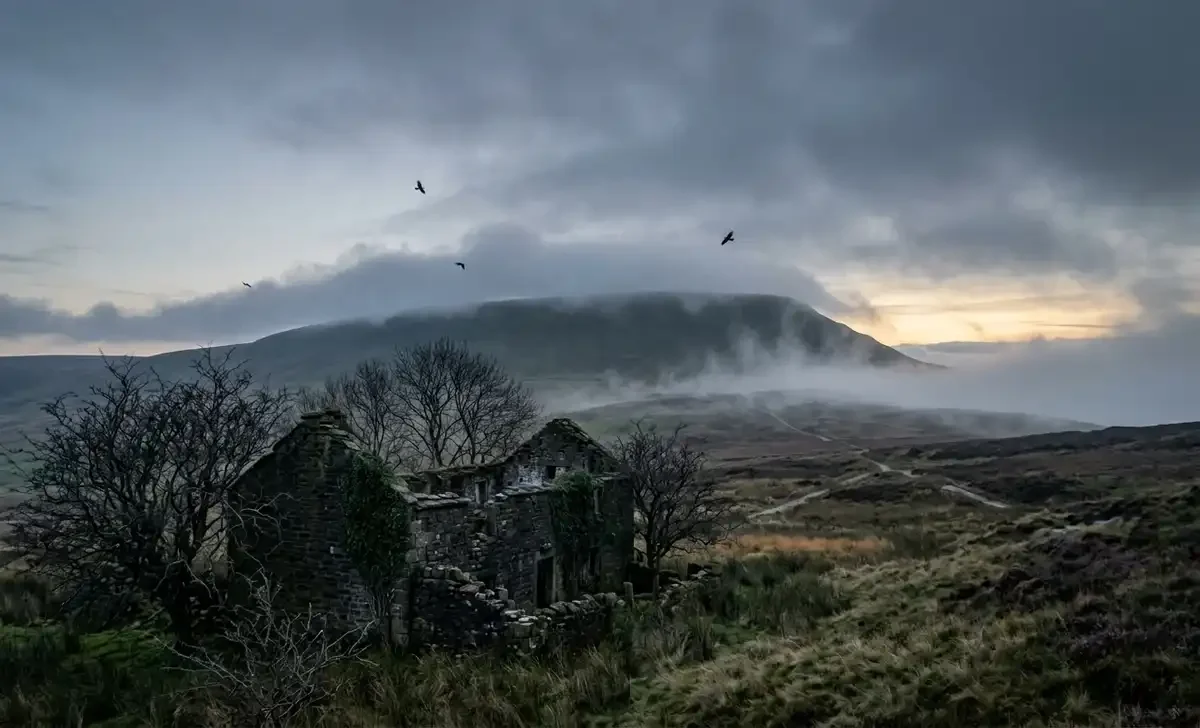
Pendle Hill does not look sinister. It is a long, broad hill in Lancashire, and on a clear day the views are lovely. On a grey one, with cloud sitting low over the moor, it feels different.
It was in the villages and farms around this hill that one of the most famous witch cases in English history began. In 1612, twelve people from the Pendle area were accused of witchcraft. Ten were hanged at Lancaster in a single day. These people are now known as the Pendle witches.
Why does this case still grab people four centuries later? Partly because we know so much about it. A court clerk wrote a detailed account, and it names the accused, their families, and even their pet spirits. Partly because it was so ordinary. There was no great plot here. There was a beggar, a pedlar, a few old feuds, and a nervous country.
In this guide, you will meet the people at the heart of the Pendle witch trials, follow the accusations from the first arrest to the gallows, and see how historians separate fact from folklore. You will also find places you can visit today.
Who Were the Pendle Witches?
The Pendle witches were people from the area around Pendle Hill in Lancashire who were accused of witchcraft in 1612. Most were poor. Most were related to one another or lived close by. Nearly all of them were tied, one way or another, to two local families.
They did not call themselves witches. That label came from their neighbours, from the magistrate, and from a legal system that believed witchcraft was real and deadly.
The 1612 Lancashire Witch Trials Explained
The Lancashire witch trials took place at the Lancaster assizes, the travelling court that heard serious crimes. The main hearings were held on 18 and 19 August 1612 in Lancaster Castle. The judges were Sir James Altham and Sir Edward Bromley.
The charges were mostly about maleficium, a Latin term for harm done by magic. In plain words, the accused were said to have killed people, crippled them, or made them ill by supernatural means.
Not every case was heard at Lancaster. Jennet Preston, a woman from Gisburn, was tried at York and hanged there on 27 July 1612. Her case is closely linked to the Pendle trials, so she is often counted among the Lancashire victims.
Why the Pendle Witches Became Infamous
Three things made this case stand out.
First, the number. Ten people were hanged at Lancaster on a single day. That was an unusually large group for England, where witch trials were generally smaller affairs.
Second, the record. Thomas Potts, the clerk of the court, published a long account of the trials the following year. Few English witch cases of this period are described in such detail.
Third, the story itself. It has a cursed pedlar, a secret meeting on Good Friday, and a child who helped send her own mother to the gallows. It reads like fiction, but the people were real.
The Dark History of Pendle Forest in the 17th Century
To understand the trials, you have to picture the place. Pendle Forest was not a dense wood. It was an old hunting district of farms, hamlets, and rough upland, a long way from the centre of power in London.
Life, Poverty, and Superstition in Lancashire
Life here was hard. Many families farmed small plots on poor land. Others survived through odd jobs, begging, or selling small goods. A bad harvest or a sick animal could mean real hunger.
In that world, bad luck needed an explanation. Illness, a dead cow, or a sudden death could not be traced to germs or weather the way we do today. Many people looked for a cause they could blame. Often that cause was a neighbour with a grudge.
Belief in spirits, curses, and cunning folk was normal. Local healers used charms and prayers, and many people relied on them. The line between a helper and a witch could be thin. It often depended on who was telling the story.
The Demdike and Chattox Families
Two families sat at the centre of the case.
Elizabeth Southerns, known as Old Demdike, was a widow of about eighty. She was blind, and she lived at a place called Malkin Tower with her family. By her own account, she had worked as a cunning woman, someone who used charms to heal and to harm, for decades.
Anne Whittle, known as Old Chattox, was also elderly. She lived nearby with her daughter, Anne Redferne. The two families were rivals. They competed for the same small pool of local trade, and each side blamed the other for past misfortune.
According to Potts, Elizabeth Device, Demdike’s daughter, believed Chattox had killed her husband, John Device. The story went that John had agreed to pay Chattox a measure of meal each year for protection, and that he died after failing to pay. Whether any of this was true is impossible to prove. What matters is that people believed it.
King James I and the Fear of Witchcraft
The mood in the wider country made things worse. King James I had written a book on witchcraft, Daemonologie, in 1597. He believed witches were real and dangerous. In 1604, a new Witchcraft Act made it a serious crime, punishable by death, to use or consult evil spirits.
Lancashire was also a county with many Catholics at a time when Catholics were distrusted. The Gunpowder Plot of 1605 was still fresh in people’s minds. Fear of secret enemies, whether religious or magical, was high. Local officials who wanted to prove their loyalty had good reasons to take witchcraft seriously.
How the Pendle Witch Hunt Began
The whole affair began with a few words on a road.
Alizon Device’s Encounter With John Law
On 18 March 1612, Alizon Device, Demdike’s granddaughter, was out begging near Colne. She met a pedlar named John Law and asked him for some pins. Pins were useful and cheap, and she may have wanted to buy them, or may have been asking for a handout. The accounts differ.
Law refused. Alizon was angry. Soon after, Law collapsed and was left lame and unable to speak well. Today, doctors would suspect a stroke. Law, his family, and Alizon herself saw something else. Alizon later said she had cursed him, and that a black dog, a spirit she said was in her service, had told her to do it.
The First Accusations and Roger Nowell’s Investigation
The case landed on the desk of Roger Nowell, a local magistrate. Nowell was an ambitious man who took witchcraft seriously. He questioned Alizon at the end of March. She confessed.
Nowell then looked into her family and neighbours. Demdike, Chattox, and Anne Redferne were questioned and sent to Lancaster Castle in early April. Demdike gave a detailed confession. She spoke of a spirit called Tibb that had appeared to her in the shape of a boy near a stone quarry. Chattox described a spirit named Fancie.
These confessions fit the beliefs of the time. Many officials expected witches to have a spirit helper, known as a familiar. Once a suspect began to describe one, the story took shape.
How Rivalries Escalated Into a Witch Hunt
This is where private quarrels became public charges. Once the first arrests were made, neighbours with their own grudges saw a chance to be heard. People who had long suspected someone of bringing harm now had an official who would listen.
The pattern is clear in the records. Each new accusation pulled in more family members and more neighbours. Within weeks, what had started as one cursed pedlar had become something far bigger.
The People Accused in the Pendle Witch Trials
Here is a quick look at the main figures. Where the sources are thin or biased, it is worth remembering that nearly everything we know comes from the prosecution side.
Elizabeth Southerns, Known as Old Demdike
Demdike is often called the most famous Pendle witch, though she never reached trial. She confessed freely and gave the investigators a great deal. Some historians think she may have believed she had real powers. Others think she was pressured, or told her questioners what they wanted to hear. She died in Lancaster Castle before the trial.
Anne Whittle, Known as Old Chattox
Chattox was accused of killing several people, including members of the Nutter family. She confessed to some of the charges. She was convicted and hanged on 20 August 1612.
Alizon Device and Elizabeth Device
Alizon started the case by cursing John Law, and she was the first to confess. She was in her early twenties or younger. Her mother, Elizabeth, was described by Potts as a harsh, foul-mouthed woman. Elizabeth was charged with killing a man named Henry Mitton and was heavily affected by the evidence her own children gave. Both women were hanged.
James Device and Jennet Device
James, Elizabeth’s son, gave long and dramatic statements about the Malkin Tower meeting and about killing people with clay figures. He later seemed to retreat from some of this, but it was too late. He was hanged.
Jennet, his younger sister, was about nine years old. Her evidence would become the most important in the case. She lived. She was later accused of witchcraft herself in the 1630s, and the outcome of that case is unclear.
Alice Nutter and the Other Accused Individuals
Alice Nutter does not fit the usual picture. She was a well-off widow from Roughlee, with land and standing. She was charged with killing Henry Mitton by witchcraft. Potts records little of her defence.
Why was she there? Historians do not know. Some suspect a land dispute, or a religious link, since some think she may have been a Catholic. These are theories, not facts.
The others who were hanged alongside them were Anne Redferne, Katherine Hewitt, John Bulcock, Jane Bulcock, and Isobel Robey. Several others, including Jane Southworth, Jennet Bierley, and Ellen Bierley, were acquitted.
Malkin Tower: The Mysterious Gathering That Changed Everything
What Was Malkin Tower?
Malkin Tower was the home of Demdike and her family. Despite the grand name, it was almost certainly a poor farmhouse or cottage. No one has ever agreed on where it stood. Several sites near Pendle have been suggested, but none is proven.
The Alleged Good Friday Gathering of 1612
On Good Friday, 10 April 1612, a group of people reportedly met at Malkin Tower. According to the prosecution, this was a gathering of witches. They were said to have plotted to blow up Lancaster Castle and free the prisoners held there, and to have eaten a stolen sheep.
Many historians doubt the sinister reading. Good Friday was a day many Catholics marked with special observance, and Elizabeth Device had said that friends and family came to visit. It may have been a family gathering, or a quiet religious meeting held out of sight. The court read it as a witches’ sabbath.
How the Gathering Led to More Arrests
Roger Nowell used the meeting to widen the net. Those who had attended, or were said to have attended, were questioned and held. This is how Alice Nutter, Katherine Hewitt, and the Bulcocks were drawn in. Clay figures and a human skull were reportedly found at Malkin Tower, and these items were used as supposed proof of magic.
Inside the Pendle Witch Trials at Lancaster Castle
The Court Proceedings in August 1612
The accused were brought before the judges in Lancaster Castle in mid-August. Trials moved quickly. Several defendants were tried in a single day. Most had no lawyer. Their families were poor and could not speak for them.
The Evidence Used Against the Accused
The evidence in a case like this looked very different from what a court would accept now. It included:
- Confessions taken earlier by Roger Nowell
- Statements from neighbours about illnesses and deaths
- Claims about familiars, the spirit helpers
- Alleged witch’s marks on the body
- Clay figures and other items said to be used in spells
Many of the confessions were given under pressure, in prison, to a magistrate who wanted answers. Even so, they carried huge weight in court.
Jennet Device’s Controversial Testimony
Jennet Device, aged about nine, took the stand against her own family. By Potts’s account, she described what she had seen at Malkin Tower on Good Friday and named her mother, brother, and others.
The law of the time did not usually allow such young children to give sworn evidence. The judges made an exception. Elizabeth Device screamed and cursed at her daughter so wildly that she had to be removed from the court. Jennet was lifted onto a table so the judges could hear her.
It is easy to read this today as a child being used by the system. We cannot know what she truly believed, or what was said to her beforehand. Her words, however, helped decide the case.
The Trials of Alice Nutter and Alizon Device
Alizon Device was tried for the harm done to John Law. She stood by her confession, and John Law himself was brought into court. According to Potts, Alizon knelt in front of him and begged his forgiveness.
Alice Nutter was tried for the death of Henry Mitton. Potts says she held her silence. She did not confess, and she did not, in his account, say much in her own defence. She was found guilty all the same.
What Happened to the Pendle Witches?
The Verdicts and Those Who Were Acquitted
Most were found guilty. A few were not. Jane Southworth, Jennet Bierley, and Ellen Bierley were acquitted. Margaret Pearson, who was tried for a lesser offence, was sentenced to stand in the pillory and then to a year in prison.
Anne Redferne’s case is more complicated. She was cleared on one charge but convicted on another, which sealed her fate.
The Executions of 20 August 1612
On 20 August 1612, ten people were hanged at Lancaster: Anne Whittle, Elizabeth Device, Alizon Device, James Device, Anne Redferne, Alice Nutter, Katherine Hewitt, John Bulcock, Jane Bulcock, and Isobel Robey.
By then, Jennet Preston had already been hanged in York.
The Fate of Old Demdike and the Other Accused
Demdike never faced a jury. She died in Lancaster Castle in the weeks before the trial, likely from the harsh conditions. Her death meant she was spared the gallows, though not the label that outlived her.
The Wonderfull Discoverie: The Historical Account Behind the Trials
Thomas Potts and His Published Account
The main source for the case is The Wonderfull Discoverie of Witches in the Countie of Lancaster, published in 1613 by Thomas Potts. Potts was the clerk of the court at Lancaster. He wrote it on the instruction of the judges.
Without it, we would know far less. But it is not a neutral record. Potts wrote to praise the judges, to support the verdicts, and to show that justice had been done. That shapes everything in it.
How Much of the Trial Story Can Historians Verify?
Historians treat Potts with care. Some points have support from other records, such as the people involved, the date of the trials, and the executions. Other parts are less certain. The speeches, the confessions, and the content of the Good Friday meeting all come to us through Potts and the officials around him.
The safest way to read the case is this: the people and events are real, but the supernatural parts are claims made by the prosecution, not facts.
Why Were the Pendle Witches Accused?
Witchcraft Beliefs and Religious Tensions
In 1612, almost everyone believed witches existed. This was not a fringe idea. It was part of how people understood the world, shaped by both church teaching and popular tradition.
Religion added pressure. England was Protestant, and Lancashire held many families who stayed loyal to the old Catholic faith. Officials were on guard against anything that looked like a hidden, disloyal group. A secret meeting at Malkin Tower on Good Friday fit that fear very neatly.
Family Feuds, Fear, and Community Suspicion
The feud between the Demdike and Chattox families clearly mattered. Each had accused the other of harm, and each had its own stories of theft, death, and revenge.
Small communities also run on suspicion. When people depend on each other and have little to spare, a quarrel can turn dangerous. A refused request for pins, a hard word, or a sick child could be remembered for years, and then told to a magistrate.
The Role of English Witchcraft Laws
The law gave those fears a path to the courtroom. The Witchcraft Acts of 1563 and 1604 made the crime formal, and the 1604 version was harsher. Officials like Roger Nowell had both the power and the legal tools to act. Once a case started, the system was built to take it seriously.
England’s witchcraft laws were not repealed until 1735.
Is Pendle Hill Haunted? The Legends Behind Its Spooky Reputation
The Origins of Pendle Hill’s Witchcraft Legends
The hill itself had little to do with the trials. The accused lived in the villages and farms nearby, and the court was in Lancaster, many miles away. Pendle Hill took the name later, as the story grew.
Over time, writers and storytellers tied the case to the hill. Novels, poems, and tour stories did the rest. Today, the hill is linked with witches in a way the original records do not quite support.
It does have another history. In 1652, the Quaker founder George Fox climbed Pendle Hill and described a vision there that helped shape his movement.
Historical Facts Versus Local Folklore
Here is a simple way to sort the two.
- Documented: The accusations, the arrests, the trial, and the hangings
- Disputed: The confessions, the Malkin Tower meeting, and the claims about familiars
- Legend: Ghosts, curses that still linger, and many of the spooky tales told on the hill
There is no solid evidence that Pendle Hill is haunted. What it has is atmosphere, and a story that people keep telling.
Why the Pendle Witches Still Fascinate People Today
Part of the pull is the mystery. Part is the sadness. We now see the accused as victims of a frightened system, and that makes the story feel uncomfortably close.
The case has also fed books, plays, and films for generations. If you enjoy tracing the link between history and the screen, the film-making hub of Culver City shows how another place became part of popular storytelling, though in a very different way.
Following the Footsteps of the Pendle Witches
You can still visit many of the places in this story. A few are real sites with real history. Others are more about atmosphere, so go with open eyes.
Exploring Pendle Hill and Pendle Forest
Pendle Hill rises to about 557 metres (1,827 feet) and is popular with walkers. The paths vary from gentle to steep, so check the weather and wear proper boots. The surrounding villages, such as Barrowford and Roughlee, are worth a stop. The Pendle Heritage Centre in Barrowford is a good starting point for the local story.
If you like remote, dramatic hill scenery, the Ishkoman Valley in Pakistan offers a very different, mountainous landscape that travellers often add to their wish lists.
Visiting Lancaster Castle
Lancaster Castle is where the accused were held and tried. It has served as a court and a prison for centuries. Guided tours are offered at set times, and they cover the courtroom and the cells. Opening times change, and parts of the building are in use, so check the official site before you go.
The hangings took place at a site outside the castle. The exact spot is debated, so it is best to treat any marker as a general guide.
Newchurch in Pendle and Other Historic Landmarks
Newchurch in Pendle is a small village at the foot of the hill. Its church has a well-known stone “Eye of God” on the tower. Local stories link the area to the Pendle witches, and the village is a common stop for visitors. You will find witch-themed shops and cafes, which add to the fun but are not a direct record of the history.
In Roughlee, you can find a statue honouring Alice Nutter. There is also a long-distance walking route that connects the Pendle area with Lancaster, for those who want to follow the accused’s path.
The Lasting Legacy of the Pendle Witches
How the Trials Shaped England’s History of Witchcraft
The Pendle case is one of the best-documented English witch trials. It shows how a legal system, a political climate, and old village quarrels could combine. Later cases, including a second Lancashire scare in the 1630s, show that these fears did not vanish quickly.
The trials also helped shape how later generations pictured English witches: the cursing old woman, the animal familiar, the secret meeting. Much of that picture comes from Potts.
How the Accused Are Remembered Today
Today, the accused are more often seen as victims than villains. Local groups, writers, and historians have worked to tell their stories with more care. The 400th anniversary in 2012 brought new attention, events, and artwork. Calls to formally pardon the accused have also been raised in recent years, though a pardon remains a matter of debate.
What has changed most is the tone. Visitors now come to remember people, not just to be spooked.
Conclusion
Behind the spooky name is a human tragedy. A woman cursed a pedlar. A magistrate pursued the matter. Neighbours settled old scores. Within five months, ten people were dead on a gallows in Lancaster, and a few more were caught in the wreckage.
The mystery of Pendle Hill, with its low cloud and its old stories, adds to the pull of the tale. But the evidence points somewhere else. It points to fear, poverty, rivalry, and a legal system that was ready to believe the worst.
Perhaps that is the real lesson. The Pendle witches were not dangerous. The danger came from a society that was frightened, and from how quickly accusation could become proof.
Your Next Step
If this story caught your interest, read Potts’s Wonderfull Discoverie for yourself, then walk the paths around Pendle Hill and visit Lancaster Castle. Seeing the landscape makes the history feel real.
Planning a bigger trip? A guide like this Toronto and Niagara Falls tour can help you shape the next adventure.
Frequently Asked Questions About the Pendle Witches
Who Were the Pendle Witches?
They were a group of people from the Pendle Hill area in Lancashire who were accused of witchcraft in 1612. Most were poor and linked to two rival families. Their trial at Lancaster Castle became one of England’s best-known witch cases.
How Many People Were Executed in the Pendle Witch Trials?
Ten people were hanged at Lancaster on 20 August 1612. Jennet Preston, tried separately at York, was hanged on 27 July 1612, so the total linked to the wider case is often given as eleven. Old Demdike died in prison before trial.
Were the Pendle Witches Really Witches?
There is no evidence they had supernatural powers. The charges rested on confessions, rumour, and testimony shaped by the beliefs of the day. Some of the accused may have used folk charms or healing, but that is very different from the crimes they were charged with.
Who Was the Most Famous Pendle Witch?
Old Demdike, Elizabeth Southerns, is usually named as the best known, since the stories centre on her. Alice Nutter is also well known, largely because she was wealthy and her role is so puzzling.
What Happened to Old Demdike?
Demdike was arrested in spring 1612 and held at Lancaster Castle. She confessed during questioning. She died in prison before the trial, so she was never tried or executed.
Is Pendle Hill Haunted?
There is no proof that it is. Ghost stories and local legends are popular, but they are folklore. The documented history is dark enough without them.
Can You Visit the Places Associated With the Pendle Witches?
Yes. You can walk Pendle Hill, tour Lancaster Castle, and visit Barrowford, Newchurch in Pendle, and Roughlee. Check opening times and tour dates before you travel.