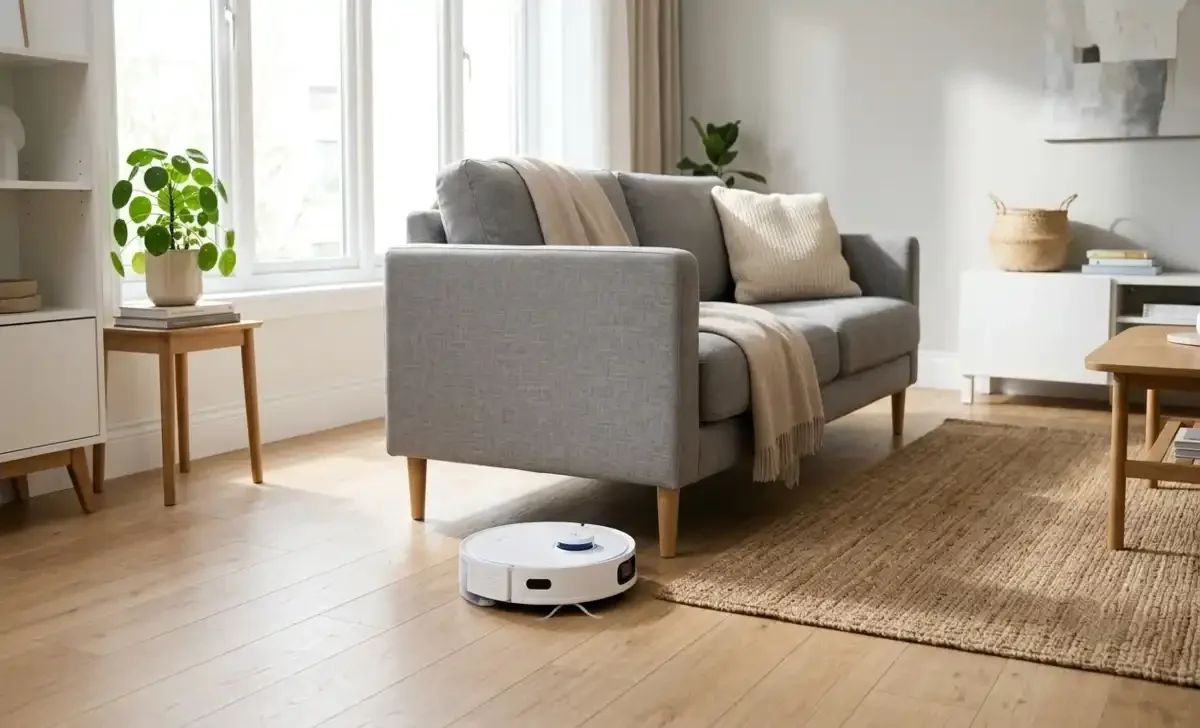
I used to spend every Saturday morning pushing a heavy upright vacuum around my apartment, cursing at the cord tangled around table legs. Then I bought my first smart vacuum, and honestly, I haven't dragged out a traditional vacuum since.
Smart vacuums have come a long way from the confused little robots that got stuck under couches and bumped into walls all day. Today's models map your home, empty their own bins, avoid pet accidents, and even mop while they clean. But with dozens of brands and price points, picking the right one feels overwhelming.
That's what this guide is for. Below, you'll find ten smart vacuums worth considering, plus honest advice on what actually matters when you're shopping, common mistakes people make, and answers to the questions I get asked most often about robot vacuums.
iRobot Roomba Combo 10 Max
The Roomba brand basically invented this category, and the Combo 10 Max still shows why iRobot built such a loyal following. It vacuums and mops in a single pass, lifting its mop pad automatically when it senses carpet so it doesn't leave your rugs soggy.
What stands out most is the mapping software. It learns your home's layout fast and lets you set no-go zones with a simple drag on the app. If you've got a home office with cables everywhere, this feature alone can save you from a jammed brush roll.
Pros:
- Excellent obstacle detection
- Auto-empty dock holds up to 60 days of debris
- Strong suction on carpets
Cons:
- Premium price tag
- Mopping isn't as deep-clean as dedicated mop robots
It's a solid pick for anyone who wants a "set it and forget it" experience without babysitting the app every week.
Roborock Qrevo Curv
Roborock has quietly become one of the strongest competitors in this space, and the Qrevo Curv is proof. Its standout feature is a mechanical leg-like arm that lifts the whole robot over thresholds and small rugs up to 4 cm high, something most robot vacuums simply can't manage.
The suction power here is genuinely impressive too, rated among the highest in its class. For homes with pets, that matters. Fur and dander build up fast, and weak suction just pushes debris around instead of collecting it.
Pros:
- Climbs obstacles other robots get stuck on
- Self-cleaning mop pads with hot water wash
- App is intuitive, even for non-tech users
Cons:
- Loud during deep-clean mode
- Large dock takes up floor space
If your home has multiple flooring types and uneven transitions, this is one of the few robots built to actually handle that.
Ecovacs Deebot X8 Pro Omni
Ecovacs has focused heavily on making the "all-in-one" dock experience less annoying, and the X8 Pro Omni delivers. The dock washes mop pads, refills the water tank, empties the dustbin, and even dries the pads with warm air so they don't smell musty.
Edge cleaning is another strong point. Corners and baseboards trip up a lot of robot vacuums, but this model extends its side brush and mop pad slightly further out to actually reach them.
Pros:
- Thorough edge and corner cleaning
- Dock handles almost all maintenance
- Good value compared to competitors with similar specs
Cons:
- App occasionally lags with real-time mapping
- Voice assistant integration can be finicky
For renters or small apartment dwellers who want strong performance without constant manual cleaning, this one's worth a look.
Eufy X10 Pro Omni
Eufy built its reputation on affordability without cutting too many corners, and the X10 Pro Omni fits that pattern. It's one of the more budget-friendly options that still includes a self-emptying, self-washing dock, which used to be a feature reserved for $1,000+ machines.
Battery life is respectable, and the vacuum-mop combo handles daily debris well. It won't outperform premium models on tough, ground-in stains, but for everyday maintenance, it holds its own.
Pros:
- Strong value for the features included
- Quiet operation
- Simple, no-frills app
Cons:
- Less powerful mapping compared to premium brands
- Mop pads need manual replacement sooner
This is a great entry point if you're testing out whether a smart vacuum fits your lifestyle before spending big.
SwitchBot K10+ Pro
If you live in a smaller space, like a studio or one-bedroom apartment, the SwitchBot K10+ Pro deserves attention. It's noticeably more compact than most competitors, which means it can slide under low furniture that traps other robots.
Despite the smaller size, it doesn't skimp on suction. It's not designed for large homes with multiple floors, but for tight layouts, it's one of the most maneuverable options out there.
Pros:
- Compact design fits tight spaces
- Fast mapping, even in cluttered rooms
- Compatible with major smart home platforms
Cons:
- Smaller dustbin needs more frequent emptying
- Not ideal for homes over 1,500 square feet
It's a smart choice if space, not square footage, is your biggest challenge.
Shark PowerDetect Pro
Shark's PowerDetect Pro leans into AI-powered object recognition, and it genuinely works better than I expected. It identifies and avoids pet waste, shoes, charging cables, and small toys instead of just running into them or, worse, smearing them across your floor.
Suction adjusts automatically depending on the surface, ramping up on carpet and easing off on hardwood to save battery. That kind of adaptive behavior used to be a luxury feature; now it's becoming standard.
Pros:
- Reliable object avoidance
- Adjustable suction based on floor type
- Backed by a well-known, trusted brand
Cons:
- Mopping feature is fairly basic
- App notifications can be excessive
Households with pets or young kids will likely appreciate this one the most.
Dreame X40 Ultra
Dreame has been pushing hard on innovation, and the X40 Ultra includes a retractable mechanical arm that extends the side brush and mop pad into corners, similar to Ecovacs but slightly more refined in execution.
It also has one of the more powerful suction ratings currently available, which makes a real difference on thick carpet or in homes with long-haired pets. The dock system handles washing, drying, and refilling automatically.
Pros:
- Excellent corner and edge cleaning
- Very high suction power
- Long runtime per charge
Cons:
- Higher price point
- Learning curve for first-time users
If deep cleaning performance is your top priority, this model consistently ranks near the top of independent reviews.
Narwal Freo X Ultra
Narwal built its name on smart mopping technology, and the Freo X Ultra is where that focus really shows. It uses separate clean and dirty water tanks so it's not just smearing dirty water across your floors, a problem that's plagued cheaper mop robots for years.
The obstacle avoidance system uses a small camera and AI processing to navigate around clutter in real time rather than relying only on pre-mapped zones.
Pros:
- Genuinely clean mopping with separated water systems
- Strong real-time obstacle avoidance
- Attractive, minimalist dock design
Cons:
- Vacuum suction is good but not class-leading
- Premium pricing
If mopping quality matters more to you than raw vacuum power, this is worth prioritizing.
Yeedi Cube
Yeedi has carved out a niche as the budget brand that doesn't feel cheap, and the Cube model backs that up. It includes a self-emptying dock at a price point that undercuts most competitors by a wide margin.
Navigation is solid, if not groundbreaking. It maps rooms accurately and remembers multi-floor layouts, which is impressive at this price tier.
Pros:
- Very affordable for a self-emptying model
- Reliable room mapping
- Easy setup process
Cons:
- No mopping function
- Basic obstacle avoidance compared to premium models
For anyone who mainly wants vacuuming automation without paying for mopping features they won't use, this is a smart budget pick.
Bissell CleanView Robot
Bissell rounds out this list as a solid entry-level option. It doesn't have the flashy features of premium models, but it handles daily vacuuming reliably and comes from a brand with decades of experience in floor care.
It's a good option for anyone dipping a toe into smart vacuums for the first time without committing to a big budget.
Pros:
- Budget-friendly
- Simple, reliable operation
- Easy to maintain
Cons:
- No self-emptying dock
- Limited smart home integration
If you just want basic automation without the bells and whistles, this covers the essentials well.
Expert Tips
After testing and researching smart vacuums extensively, here's what actually makes a difference:
- Measure your doorway thresholds before buying. Many robots struggle with anything taller than 2 cm, and that's a common return reason.
- Battery quality matters more than the spec sheet suggests. Cheaper models often use lower-grade battery cells, and global battery supply issues have made manufacturers cut corners in ways that affect long-term performance and safety. It's worth understanding the broader context behind this, and outlets like this piece on battery manufacturing overcapacity explain why prices and quality vary so much between brands right now.
- Check your home's floor plan complexity. Open layouts work well with almost any model. Homes with lots of small rooms benefit more from premium mapping software.
- Don't ignore running costs. Docks that wash mop pads with hot water and heated drying use more electricity than basic charging docks. If you're already watching your utility bills closely, it's worth factoring that in, especially as energy costs continue climbing in many regions.
- Schedule cleanings during low-traffic hours. Running your vacuum while you're out avoids the annoyance of it bumping into your feet or pets.
Common Mistakes to Avoid
Even smart shoppers get tripped up by a few recurring issues:
Buying based on price alone. The cheapest smart vacuum on the market often lacks basic obstacle avoidance, leading to more frustration than it's worth.
Skipping the app setup. A surprising number of users never properly map their home, which means the robot cleans inefficiently and misses spots.
Ignoring maintenance. Brush rolls tangle with hair, filters clog with dust, and sensors get dirty. Regular cleaning keeps performance consistent.
Overestimating battery life. Manufacturer runtime claims are usually based on hardwood floors at low suction. Real-world use, especially with carpet and max suction, cuts that time down significantly.
Not checking noise levels. Some models are noticeably louder during deep-clean or mopping modes, which matters if you work from home or have a baby napping.
Conclusion
Smart vacuums aren't a gimmick anymore. The best models genuinely cut down on cleaning time and handle floors more consistently than most people manage on their own busy schedules. Whether you go for a premium option like the Roborock Qrevo Curv or a budget-friendly pick like the Yeedi Cube, the right smart vacuum comes down to your home's layout, your flooring types, and how much automation you actually want.
Take stock of your space, set a realistic budget, and pick a model that matches your specific needs rather than chasing the flashiest features. Your future Saturday mornings will thank you.
Frequently Asked Questions
Are smart vacuums worth the money?
For most households, yes. They save real time on routine cleaning, especially in homes with pets or kids. The upfront cost is higher than a traditional vacuum, but the time saved over months usually justifies it.
How long do smart vacuums typically last?
Most quality models last three to five years with proper maintenance. Battery degradation is usually the first thing to fail, not the motor or navigation system.
Can smart vacuums replace regular deep cleaning?
Not entirely. They're excellent for daily maintenance and picking up loose debris, but they don't replace occasional deep cleaning with a traditional vacuum, especially for thick carpets or heavily soiled areas.
Do smart vacuums work well with pets?
Yes, though results vary by model. Look specifically for strong suction ratings and tangle-free brush roll designs if you have shedding pets.
Is Wi-Fi required for smart vacuums to work?
Most models can run basic cleaning cycles without Wi-Fi, but you'll lose access to scheduling, mapping, and remote control features without an internet connection.