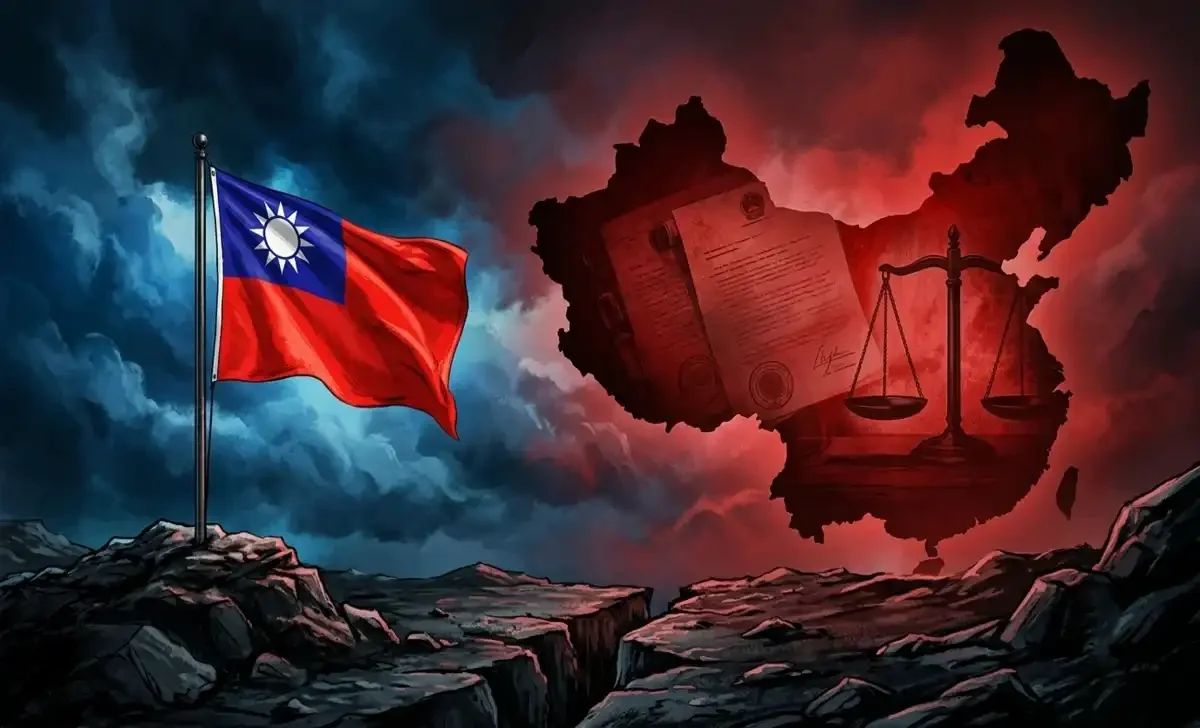
Taiwan's president just used one of the most loaded phrases in cross-strait politics, and people are paying attention.
Speaking at his party's annual convention on July 19, President Lai Ching-te called on members of his Democratic Progressive Party to oppose the "red terror" coming from Beijing. That's not a phrase politicians throw around lightly. It carries echoes of political purges and mass fear, and Lai used it deliberately.
If you've seen the headline "Lai warns of Beijing Red Terror" and wondered what's actually going on, you're in the right place. This article breaks down exactly what was said, why it happened now, and what it could mean for Taiwan, China, and anyone watching the region — including businesses, investors, and everyday people who care about global stability.
By the end, you'll understand the law that triggered this warning, Taiwan's planned response, and why this moment matters far beyond Taipei.
What Did Lai Actually Say?
Let's start with the facts. Lai Ching-te addressed the Democratic Progressive Party's national convention in Taipei. He told party members that Taiwan must work together to protect its democracy and never become part of China.
He went further, saying he expected party members to stand united on the front lines against the threat China's "red terror" poses to Taiwanese society. He also made a direct appeal to the public, stating that Taiwan must protect its democratic and free way of life and never allow "democratic Taiwan" to become "China's Taiwan".
This wasn't a one-off soundbite. Lai tied his comments to a much bigger concern: a new Chinese law that he says extends Beijing's reach well past its own borders.
What Does "Red Terror" Mean in This Context?
The phrase "red terror" has historical baggage. It typically refers to periods of politically motivated violence and repression carried out by communist governments to eliminate opposition.
Lai isn't suggesting Beijing is planning mass violence inside Taiwan. Instead, he's using the term to describe a modern version of political pressure — one built on laws, surveillance, and intimidation rather than tanks and prisons.
Lai said Taiwan will not accept the reach of "red terror" or united front infiltration into Taiwanese society. In plain terms, he's warning that Beijing is trying to influence, pressure, and eventually absorb Taiwan through non-military tools — and he wants his party and country prepared for it.
China's Ethnic Unity and Progress Promotion Law
At the center of Lai's warning is a specific piece of Chinese legislation. The Ethnic Unity and Progress Law entered into force with approval from the National People's Congress.
Lai cited this law as an escalation in Beijing's campaign to bring self-governed Taiwan under its control, describing it as a shift from simply "opposing independence" to actively pursuing "forced unification" — all dressed up in the language of ethnic unity.
Here's why that distinction matters. Opposing independence is a defensive stance. Pursuing forced unification is an active one. Lai is telling his country that Beijing's posture has shifted and that Taiwan needs to adjust its response.
Beijing's "Legal Warfare" Strategy
Lai didn't stop at naming the law. He accused Beijing of trying to fold Taiwan into its ethnic policy system, expand legal pursuit beyond China's borders, and pressure people into self-censorship.
This concept — using domestic law to reach people outside your own territory — is sometimes called "long-arm jurisdiction." Taiwan's Foreign Ministry said the law attempts to use Chinese domestic legislation to exercise long-arm jurisdiction and transnational repression against people in Taiwan and other countries, and warned that its broadly worded restrictions could encourage self-censorship.
Think of it like this: if a law lets one government claim legal authority over critics living in another country, that's not just a domestic policy issue. It becomes an international one, and it puts pressure on foreign governments, companies, and individuals, too.
The 110+ Cases of Cross-Border Pressure
Lai's warning wasn't abstract. He backed it up with numbers. He said the Chinese Communist Party has already carried out more than 110 cases of cross-border pressure against Taiwan, and warned that this is likely to expand.
He also flagged who could be affected next. Foreign governments, officials, lawmakers, organizations, and companies could all become vulnerable to arbitrary pressure or sanctions under this expanding legal framework.
That's a notable escalation in tone. It moves the conversation from "this affects Taiwan" to "this could affect anyone who deals with Taiwan." For multinational companies and foreign officials, that's the kind of detail that shapes real decisions about risk.
Military and Psychological Pressure on Taiwan
Legal warfare is just one part of the picture. Lai also addressed the military side of Beijing's pressure campaign. He said China has relentlessly used both military intimidation and psychological warfare against Taiwan over the past year, calling annexation a core part of China's broader national strategy.
He connected this directly to regional stability, saying Beijing's goal extends to dominating the Western Pacific and challenging the current rules-based international order.
This matters because it frames Taiwan not as an isolated dispute, but as one piece of a much larger geopolitical picture — one that touches shipping routes, trade, and security arrangements across Asia.
Taiwan's Planned Countermeasures
So what is Taiwan actually going to do about it? Lai laid out a general direction rather than a detailed plan. He said his government would establish prevention strategies, countermeasures, and protection mechanisms, and deepen cooperation with other democracies.
He added that Taiwan would closely monitor developments, build early warning mechanisms, and review countermeasures to protect the public and safeguard national interests.
Separately, DPP lawmakers have proposed a three-part resolution outlining possible safeguards, though the specifics were still developing at the time of the speech.
Practical takeaway: This is still an early-stage policy. Expect follow-up legislation, ministry-level guidance, and diplomatic outreach over the coming months rather than an immediate, sweeping law.
Why Lai Chose to Speak in Taiwanese, Not Mandarin
This is a small detail with a big symbolic weight. Lai delivered his "red terror" remarks in Taiwanese, also known as Hokkien or Hoklo, rather than Mandarin, the main language of government.
Language choices in Taiwanese politics are rarely accidental. Speaking in Taiwanese, rather than Mandarin, reinforces the message of a distinct Taiwanese identity — separate from mainland Chinese culture and governance. It's a subtle but deliberate way of underlining his central point: Taiwan is not China's Taiwan.
International and Regional Reactions
As of now, China's Taiwan Affairs Office has not immediately responded to requests for comment following Lai's speech.
That silence doesn't mean nothing is happening behind the scenes. Beijing has previously rejected criticism of the ethnic unity law and maintains that its legal system has no jurisdiction in Taiwan — a claim Taipei firmly disputes.
Beijing views Taiwan as an inviolable part of Chinese territory, a position that frequently puts it at odds with Lai and the DPP's stance on Taiwan's separate identity. Given the pattern of past disputes, expect a formal response from Chinese state media or the Taiwan Affairs Office in the coming days, likely rejecting Lai's characterization outright.
Why This Matters Beyond Taiwan
It's tempting to file this under "regional politics" and move on. That would be a mistake.
Taiwan sits at the center of global semiconductor production, and any instability there ripples through electronics, automotive, and defense supply chains worldwide. Rising tension also feeds into broader debates about how the world views the balance of power between Beijing and Washington — a topic explored in more depth in this breakdown of global public opinion on China versus the US.
There's also an economic angle worth watching. China's domestic industries, including sectors dealing with battery overcapacity, are under pressure to find new markets, and political friction with Taiwan and its allies can complicate that search. Add in ongoing strain over the US-China trade gap, and you start to see how a political speech in Taipei connects to decisions being made in boardrooms and trade offices thousands of miles away.
Expert Tips
- Don't treat "red terror" as hyperbole. Lai used a historically loaded term deliberately, to signal that Taiwan sees this as a serious, organized campaign — not routine political friction.
- Watch the legal angle, not just the military one. Long-arm jurisdiction laws are harder to spot than military drills, but they can have a wider international reach.
- Follow the DPP's three-part resolution. That's where the concrete policy details will emerge over the next few months.
- Pay attention to language choices in Taiwanese politics. They often carry as much meaning as the policy content itself.
- Track corporate exposure. If you work with companies operating in or near Taiwan, understand how cross-border legal pressure could affect contracts, staff, or partners.
Common Mistakes to Avoid
- Assuming "red terror" means imminent war. Lai's comments focus mainly on legal and psychological pressure, not a military invasion warning.
- Ignoring the ethnic unity law. It's the actual trigger behind this speech, and skipping it means missing the real story.
- Treating this as only a Taiwan-China issue. The long-arm jurisdiction angle means foreign governments and companies could be affected, too.
- Overlooking Beijing's likely response. Silence right after the speech doesn't mean the issue is settled; a formal rebuttal is likely to follow.
- Confusing this with past DPP rhetoric. This speech ties directly to a specific new law, making it more concrete than general pro-independence statements.
Conclusion
Lai Ching-te's warning about Beijing's "red terror" isn't just political theater. It's a direct response to a real law with real cross-border implications, wrapped in language meant to rally his party and alert the public.
The core message is simple: Taiwan believes China's pressure campaign has evolved from opposing independence to actively pursuing unification, using legal tools that reach beyond its own borders. Taiwan's response is still taking shape, but the direction is clear — more monitoring, more countermeasures, and closer ties with allied democracies.
If you're following cross-strait relations, don't stop at the headline. Keep an eye on the DPP's forthcoming resolution, Beijing's official response, and how other democracies react to the long-arm jurisdiction claims. This story is far from over.
Frequently Asked Questions
What does "red terror" mean in Lai's speech about Beijing?
It refers to a modern campaign of legal, political, and psychological pressure that Lai says Beijing is using to push Taiwan toward unification, rather than traditional military violence.
What law triggered Lai's "red terror" warning?
China's Ethnic Unity and Progress Promotion Law, which Taiwan says expands Beijing's legal reach beyond its own borders.
Is Taiwan preparing new laws in response?
DPP lawmakers have proposed a three-part resolution outlining possible safeguards, though full details had not been finalized at the time of Lai's speech.
Has China responded to Lai's comments?
China's Taiwan Affairs Office had not immediately commented following the speech, though Beijing has previously rejected similar criticism of the law.
Why does this matter outside of Taiwan?
Because the law's long-arm jurisdiction claims could affect foreign governments, companies, and individuals, and because Taiwan's stability directly affects global supply chains and regional security.